
Bishop Cotton School, Shimla
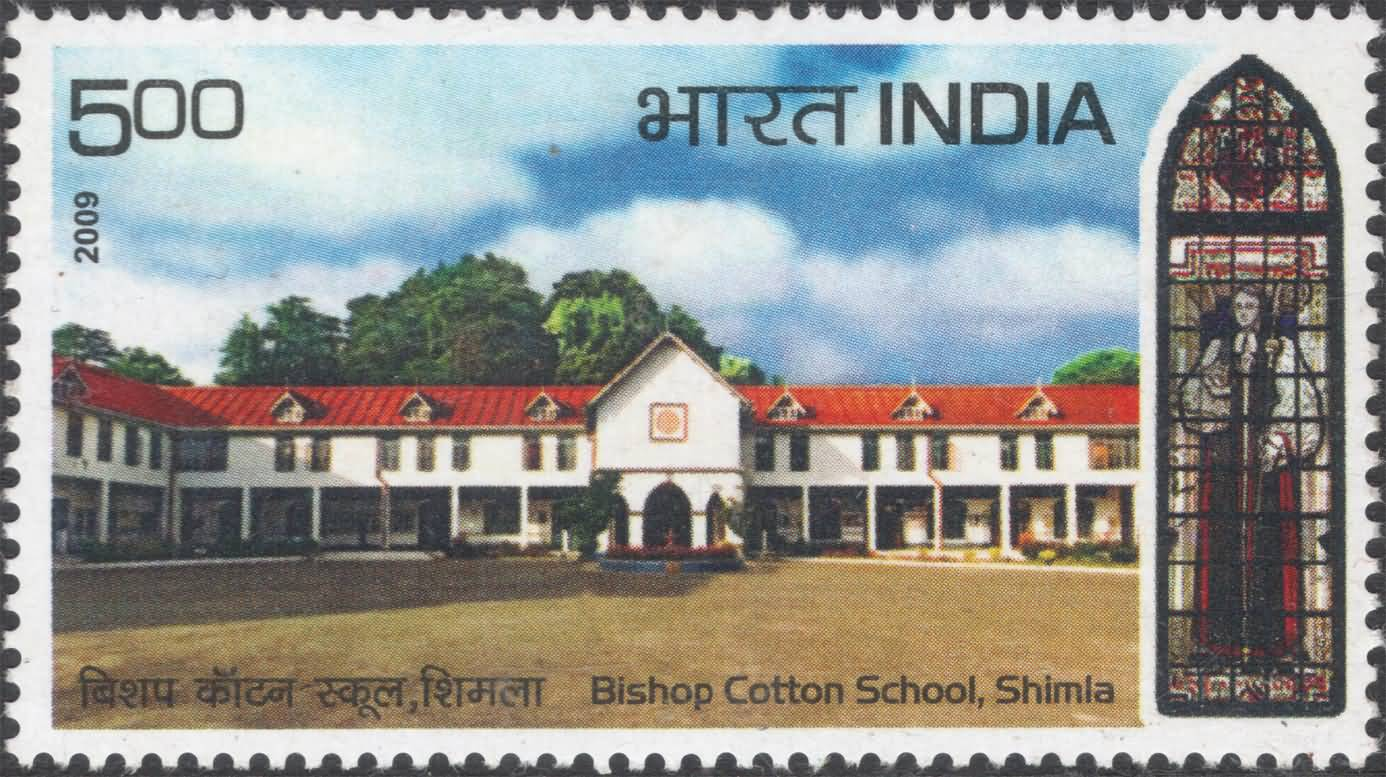
Technical Data
| Date of Issue | October 16, 2009 |
|---|---|
| Denomination | Rs. 5 |
| Quantity | 400,000 |
| Perforation | 13 |
| Printer | Security Printing Press, Hyderabad |
| Printing Process | Wet Offset |
| Watermark | No Watermark |
| Colors | Multicolor |
| Credit (Designed By) | Shri Kamleshwar Singh |
| Catalog Codes |
Michel IN 2410 Stamp Number IN 2350 Stanley Gibbons IN 2350 WADP Numbering System - WNS IN063.2009 |
| Themes | Anniversaries and Jubilees | Buildings | Schools | Stained-glass |
Pioneer of Public School Education in Asia
The concept of a “Public School” originated in England as institutions established to educate and prepare children for public service. In the mid-19th century, such schools were rare even in England—institutions like Eton College had fewer than 500 students. In India, education was largely limited to private schools and military asylums serving local communities.
Recognising the need for a similar institution in India, the Bishop of Calcutta initiated a movement on 28 July 1859 to establish a public school in a Himalayan hill station. Funds were raised through church collections across the Diocese, leading to the founding of the school at Jutog on land and buildings granted by the Viceroy. Three additional private houses were purchased from the Indian Public School Fund.
The school formally opened on 16 March 1863. Though initially referred to as the Shimla Public School in correspondence, it never officially bore that name. The first student, Frederic Taylor, joined on 18 March 1863. That year, 35 boys were admitted, and the number rose to 65 by year’s end.
Establishment at Knollswood
The foundation stone of the permanent campus at Knollswood Spur was laid on 26 September 1866 by John Lawrence. Tragically, shortly afterward, the school’s founder, George Edward Lynch Cotton, drowned in an accident in Assam on 6 October 1866. In 1867, the institution was renamed Bishop Cotton School in his memory.
The school moved to Knollswood in September 1868, marking the beginning of a distinguished educational legacy.
Educational Innovations
Bishop Cotton School holds the distinction of being the first public school in Asia to introduce:
- The House system
- Organised games
- The prefectural system
These were implemented almost simultaneously with similar developments in England.
In May 1905, a devastating fire destroyed most of the campus, sparing only a few buildings. The school was rebuilt and reopened in July 1907. The chapel, originally constructed in 1871, was rebuilt and resumed use in April 1908.
Growth and Inclusivity
The institution expanded steadily:
- In 1926, a hostel for the sons of Shimla Hill Chiefs was constructed, later becoming the College section preparing students for Intermediate examinations.
- In 1937, a Preparatory School was established through the acquisition of Ayrelif Girls School in Chotta Shimla.
The first Indian student admitted was Suren Tagore in 1881, followed by Vishnu Singh in 1883. Over time, Indian students rose to leadership positions, including School Captains such as R.J. Gandhi (1928), Harry Chukerbuti (1936), Jehangzeb Khan (1941), and Hasan Agha (1946–47).
Distinguished Alumni and Legacy
Bishop Cotton School has produced a remarkable array of leaders and achievers, including ambassadors, UN commanders, Members of Parliament in India and England, Generals, Admirals, Air Marshals, industrialists, authors, a Chief Minister, senior civil servants, and an Air Chief.
As a pioneer of public school education in Asia, Bishop Cotton School has played a significant role in shaping modern education in India.
In recognition of its historic contribution to education, the Department of Posts has issued a commemorative postage stamp honouring Bishop Cotton School, Shimla.
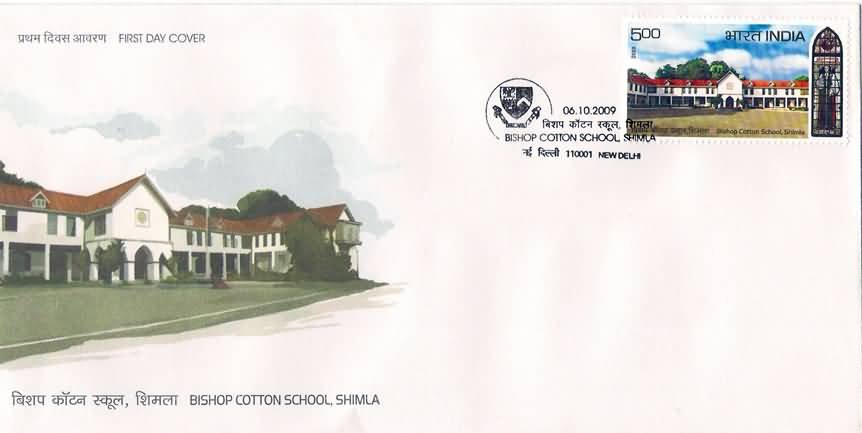
First Day Cover
Leave a Comment
You must be logged in to post a comment.