Cancer Awareness Day
Technical Data
| Date of Issue | November 7, 2001 |
|---|---|
| Denomination | Rs. 4 |
| Quantity | 3,000,000 |
| Perforation | comb 13 |
| Printer | Eagle Press Ltd. |
| Printing Process | Offset Lithography |
| Watermark | No Watermark |
| Colors | Multicolor |
| Credit (Designed By) | Shri Kamleshwar Singh |
| Catalog Codes |
Michel IN 1872 Stamp Number IN 1940 Yvert et Tellier IN 1637 Stanley Gibbons IN 2037 |
| Themes | Cancer (Disease) | Healthcare | People | Stylized Figures / Persons | Women |
Promoting Early Detection and Prevention
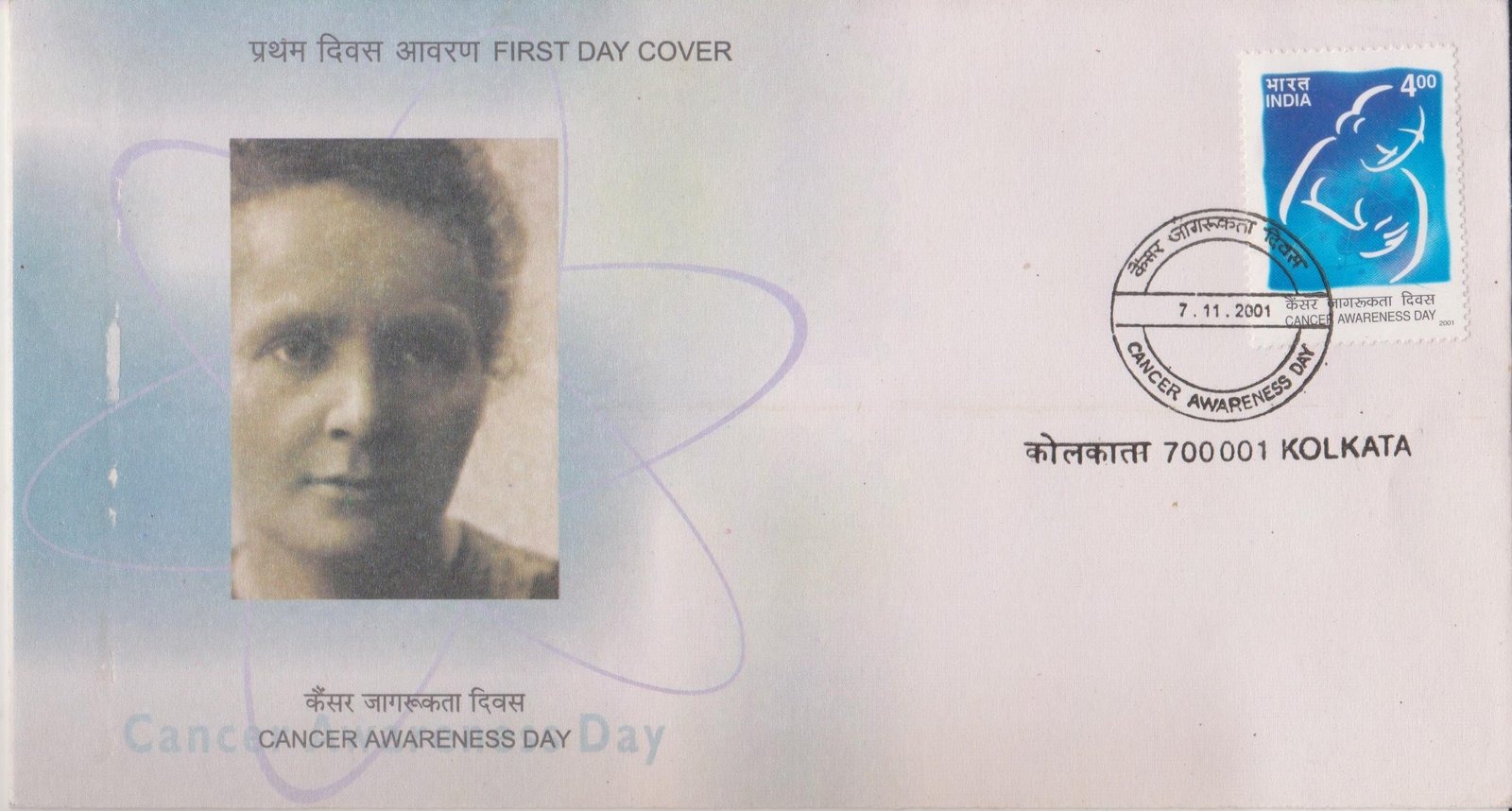
Cancer Awareness Day is observed on 7th November, marking the birth anniversary of Marie Curie, whose groundbreaking discovery of radium revolutionized the treatment of malignant tumors. This day highlights the urgent need to spread awareness about cancer, one of the most serious non-communicable diseases affecting people worldwide.
Understanding Cancer and Its Global Impact
Cancer is a disease characterized by the uncontrolled growth of abnormal cells, particularly in epithelial tissues. It continues to spread globally, posing a significant public health challenge.
Worldwide, cancer accounts for nearly 12% of all deaths. In developed countries, it is the second leading cause of death, responsible for about 21% of total mortality. In developing nations, it ranks third, contributing to approximately 9.5% of deaths.
Cancer Burden in India
In India, cancer has emerged as one of the leading causes of death. At any given time, there are an estimated 15 to 20 lakh cancer cases in the country. Each year, over 7 lakh new cases are reported, with around 3 lakh deaths attributed to the disease.
According to the National Cancer Registry Programme, the most common cancer sites include:
- Men: Oral cavity, lungs, esophagus, and stomach
- Women: Cervix, breast, and oral cavity
Notably, cancers of the oral cavity and lungs in men, and cervix and breast in women, account for more than 50% of cancer-related deaths in India.
Importance of Early Detection
Cancer is more common in later stages of life, and with increasing life expectancy, awareness becomes even more critical. The encouraging fact is that many cancers are curable if detected early.
Practices like regular screenings and self-examinations—especially breast self-examination—can significantly improve survival rates and treatment outcomes.
National Cancer Control Programme
To combat the growing cancer burden, the Government of India launched the National Cancer Control Programme in 1975. The program focuses on:
- Spreading awareness and education
- Promoting early detection through screening and self-examination
- Strengthening treatment facilities
- Enhancing the skills of healthcare professionals
Role of Marie Curie in Cancer Treatment
Marie Curie’s discovery of radium and radioactivity laid the foundation for modern cancer treatment methods. Soon after her discovery, radium began to be used in treating cancer, marking a major breakthrough in medical science.
Commemoration Through Postage Stamp
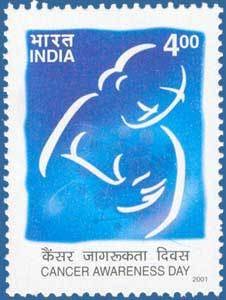
To spread awareness and emphasize the importance of early detection, India Post issued a commemorative postage stamp on Cancer Awareness Day. The stamp symbolically represents a woman performing breast self-examination, encouraging proactive health practices.
Spreading Awareness for a Healthier Future
Cancer Awareness Day serves as a reminder that awareness, early detection, and timely treatment can save lives. Through continued efforts by organizations and individuals, it is possible to reduce the burden of cancer and create a healthier society.
First Day Cover