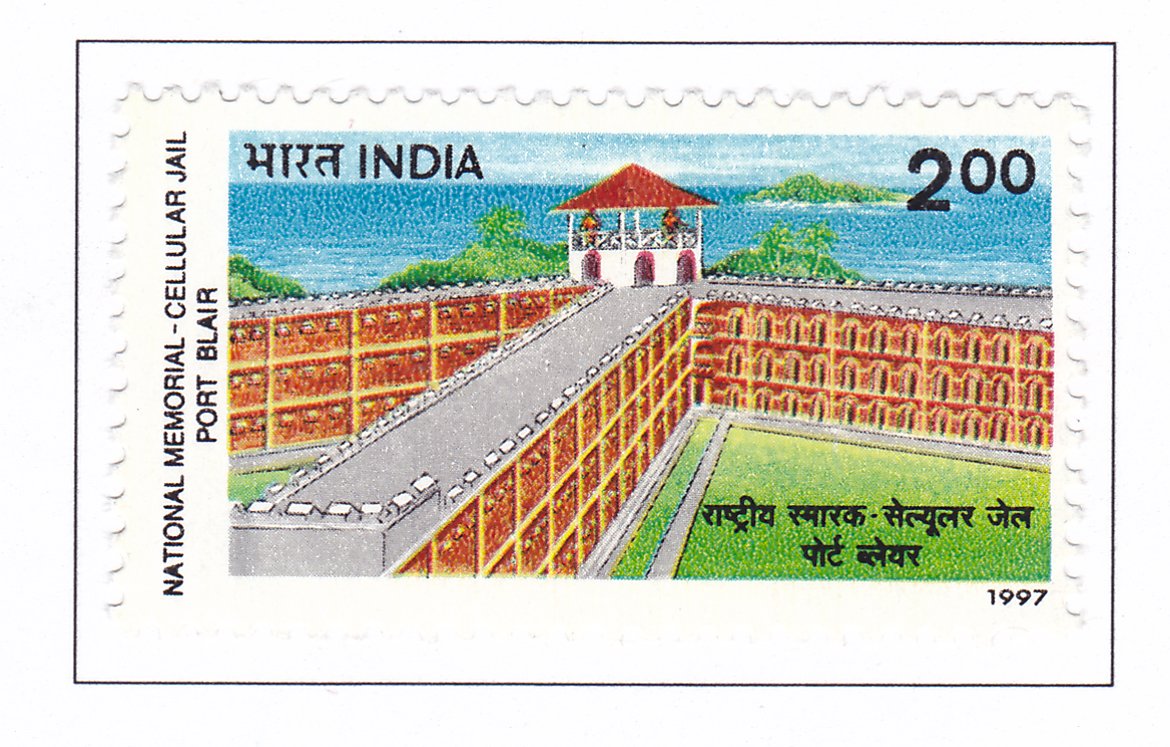
National Memorial – Cellular Jail, Port Blair
Technical Data
| Date of Issue | December 20, 1997 |
|---|---|
| Denomination | Rs. 2 |
| Quantity | 700,000 |
| Perforation | comb 13 |
| Printer | Security Printing Press, Nashik |
| Printing Process | Photogravure |
| Watermark | No Watermark |
| Colors | Multicolor |
| Credit (Designed By) | |
| Catalog Codes |
Michel IN 1602 Stamp Number IN 1663 Yvert et Tellier IN 1368 Stanley Gibbons IN 1766 |
| Themes | Buildings | Prisons |
Symbol of India’s Freedom Struggle
Located in Port Blair, the Cellular Jail stands as one of the most powerful symbols of India’s struggle for independence. This historic prison bears witness to the immense sacrifices and suffering of countless freedom fighters who were imprisoned by British colonial rule.
Known as the dreaded Kala Pani or “black waters,” the Cellular Jail remains a sacred place of remembrance and patriotism. Today, it serves as a National Memorial and an important pilgrimage site for Indians honoring the heroes of the freedom movement.
Why It Is Called Cellular Jail
The name Cellular Jail comes from its unique architectural design. Unlike ordinary prisons, it consisted entirely of individual cells with no dormitories.
Each prison cell measured approximately:
- 13½ feet long
- 7 feet wide
Every cell had:
- A front door with iron grating
- A small ventilator measuring 3 feet by 1 foot
- Ventilation placed nearly 10 feet above the ground
The prison was deliberately designed to isolate inmates from one another. Each wing faced the rear side of another wing, preventing communication among prisoners and intensifying their solitary confinement.
British Rule and the Horrors of Cellular Jail
The British Government sent those they considered “dangerous prisoners” to the Cellular Jail. Most were Indian revolutionaries and political activists fighting for freedom.
Conditions inside the jail were brutal:
- Food was inadequate and often unfit for consumption
- No writing or reading materials were allowed
- Letters from families were censored
- Newspapers were restricted or withheld
- Prisoners faced physical and mental torture
Many inmates suffered extreme hardship. Some lost their sanity, while others ended their lives rather than continue enduring humiliation and cruelty.
Freedom Fighters Imprisoned in Cellular Jail
Several prominent Indian freedom fighters were incarcerated at the Cellular Jail, including:
- Barindra Kumar Ghosh
- Upendra Nath Banerjee
- Hem Chandra Das
- Indubhushan Roy
- Ullaskar Datta
- Bibhuti Bhushan Sarkar
- Vinayak Damodar Savarkar
- Prithivi Singh Azad
- Bhai Parmanand
- Vaman Joshi
- Shambu Nath Azad
Revolutionaries connected to the Chittagong Armoury Raid, Meerut Conspiracy Case, and other resistance movements were also imprisoned here.
Cellular Jail Museum Today
Today, the Cellular Jail houses a museum displaying valuable historical records and artifacts, including:
- Photographs of imprisoned freedom fighters
- Newspaper reports exposing jail atrocities
- Paintings depicting prisoner suffering
- Prison utensils, vessels, and uniforms
- Tools and machines prisoners were forced to operate
These exhibits preserve the memory of the courage, sacrifice, and resilience shown by India’s freedom fighters.
Cellular Jail as a National Memorial
The Cellular Jail is now a National Memorial dedicated to all who suffered for India’s independence. It reminds every visitor of the cost of freedom and the strength of those who fought for it.
Commemorative Stamp of Cellular Jail
The Department of Posts issued a special commemorative stamp of Cellular Jail to honor its historic place in India’s freedom struggle.
Visit Cellular Jail Port Blair
A visit to the Cellular Jail in Port Blair is more than a tourist experience—it is a journey into the heart of India’s independence movement and a tribute to the brave souls who sacrificed everything for the nation.
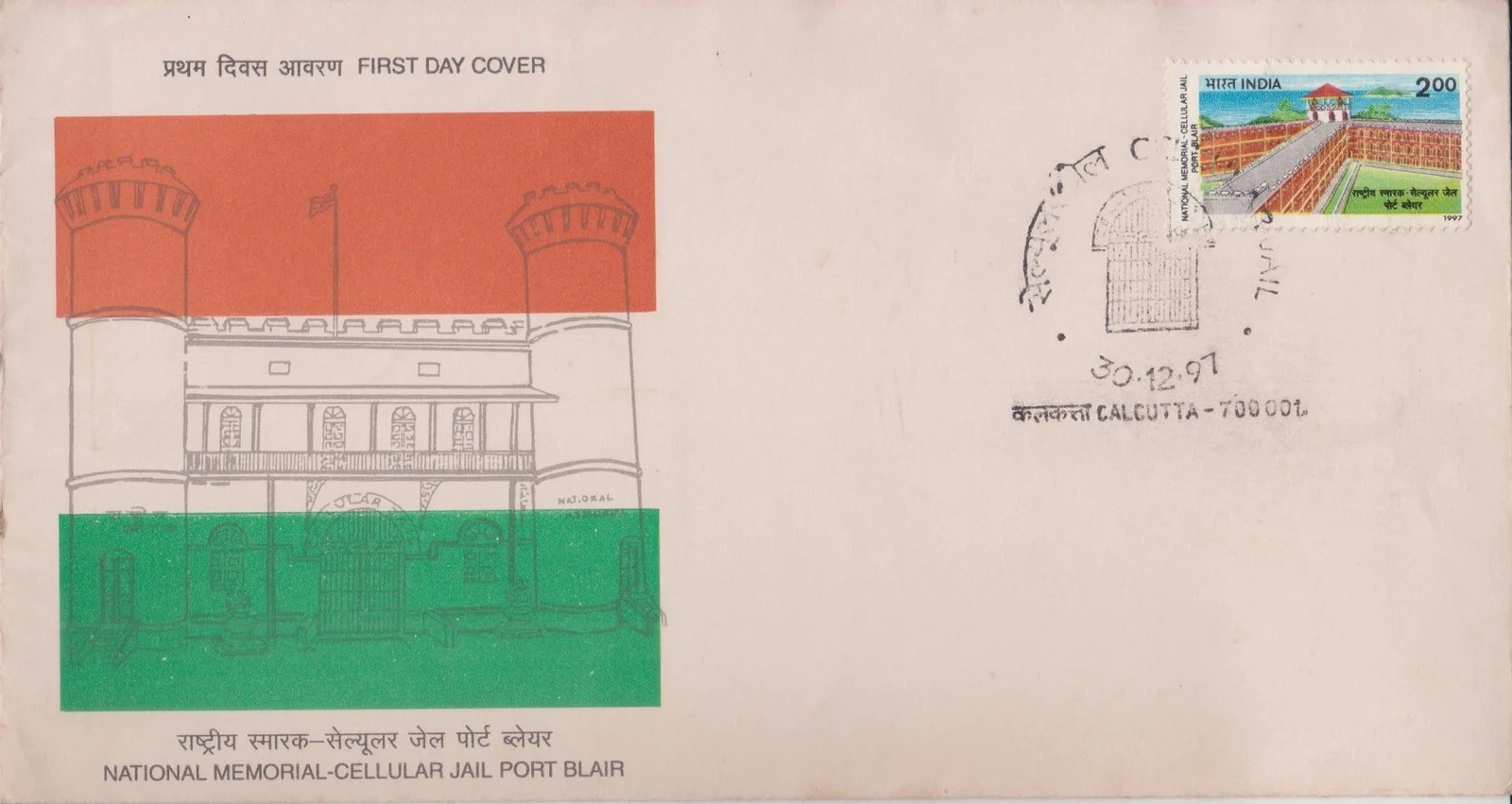
First Day Cover