
Census of India
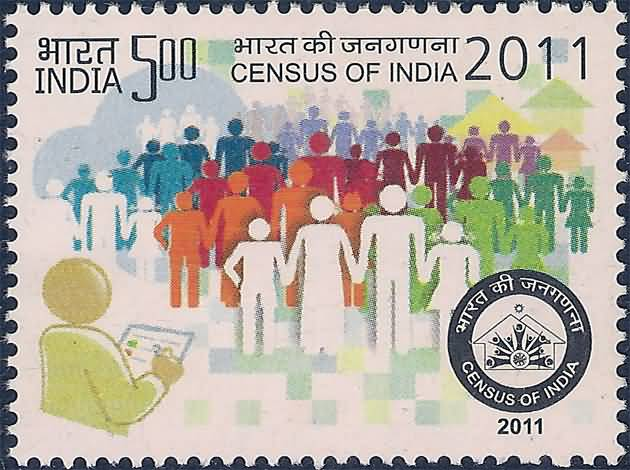
Technical Data
| Date of Issue | February 8, 2011 |
|---|---|
| Denomination | Rs. 5 |
| Quantity | 400,000 |
| Perforation | 13½ |
| Printer | Security Printing Press, Hyderabad |
| Printing Process | Wet Offset |
| Watermark | No Watermark |
| Colors | Multicolor |
| Credit (Designed By) | Shri Kamleshwar Singh |
| Catalog Codes |
Michel IN 2553 Stamp Number IN 2490 Yvert et Tellier IN 2316 Stanley Gibbons IN 2795 WADP Numbering System - WNS IN007.2011 |
| Themes | Census of Population | Stylized Figures / Persons |
A Landmark in India’s Statistical History
Introduction
The Population Census of India 2011, commencing on 9 February 2011, was the 15th Census in the unbroken series since 1872, which marked the beginning of modern census operations in the country. Over the decades, census-taking and data dissemination in India have continuously evolved, adapting to changing administrative needs and technological advancements.
A New Era in Census Methodology
The 2011 Census marked the beginning of a new era with the adoption of modern technologies for data capture, processing, handling and dissemination. These advancements enabled faster and more efficient compilation of census results, significantly improving accuracy and accessibility of information. The integration of technology transformed not only the census-taking process but also the crucial stages of data management.
India’s Growing Population
India is among the most populous countries in the world. According to the 2001 Census, the population stood at 1.02 billion, and it was expected to reach nearly 1.20 billion by 2011. Enumerating such a vast and diverse population across the length and breadth of the country is a phenomenal task. The census remains the only exercise that accounts for every individual, irrespective of gender, age, caste, community, ethnicity or place of residence.
An Uninterrupted National Record
It is a matter of pride that India has maintained an uninterrupted decennial census tradition for more than a century. This continuous record provides invaluable insights into the country’s demographic evolution and social transformation over time.
Importance of Census Data
Census data serves as a vital foundation for national planning and policy formulation. It provides detailed information on demographic, social, economic and housing parameters. Housing data assists in assessing housing shortages and living conditions, literacy and education statistics highlight areas requiring focused intervention, while data on economic activity supports manpower and employment planning.
Constitutional and Legislative Significance
Population figures from the 2001 Census, including those of Scheduled Castes (SCs) and Scheduled Tribes (STs), have been used to determine the allocation of seats in Parliament and State Legislatures. Given its wide-ranging implications, census enumeration must be both complete and accurate, as there is no scope for repetition. The framework for census operations is governed by the Indian Census Act, 1948, under which the Central Government provides resources and oversight.
Census Operations and Enumeration Method
India follows the ‘canvasser method’ of census-taking, unlike the ‘householder method’ used in many other countries. Due to the scale of operations, more than two million enumerators along with supervisors at multiple levels are engaged. The magnitude of this exercise necessitates extensive use of technology at every possible stage.
Comprehensive Data at the Grassroots Level
The Census of India 2011 provides a comprehensive picture of the country’s social, economic and demographic characteristics, as well as living conditions at national, state and local levels. Importantly, it offers detailed data down to the village level in rural areas and ward level in urban areas, a feature unique to census operations.
Commemorative Postage Stamp
In recognition of the significance of this national exercise, India Post is pleased to commemorate the occasion by issuing a postage stamp on “Census of India 2011.”
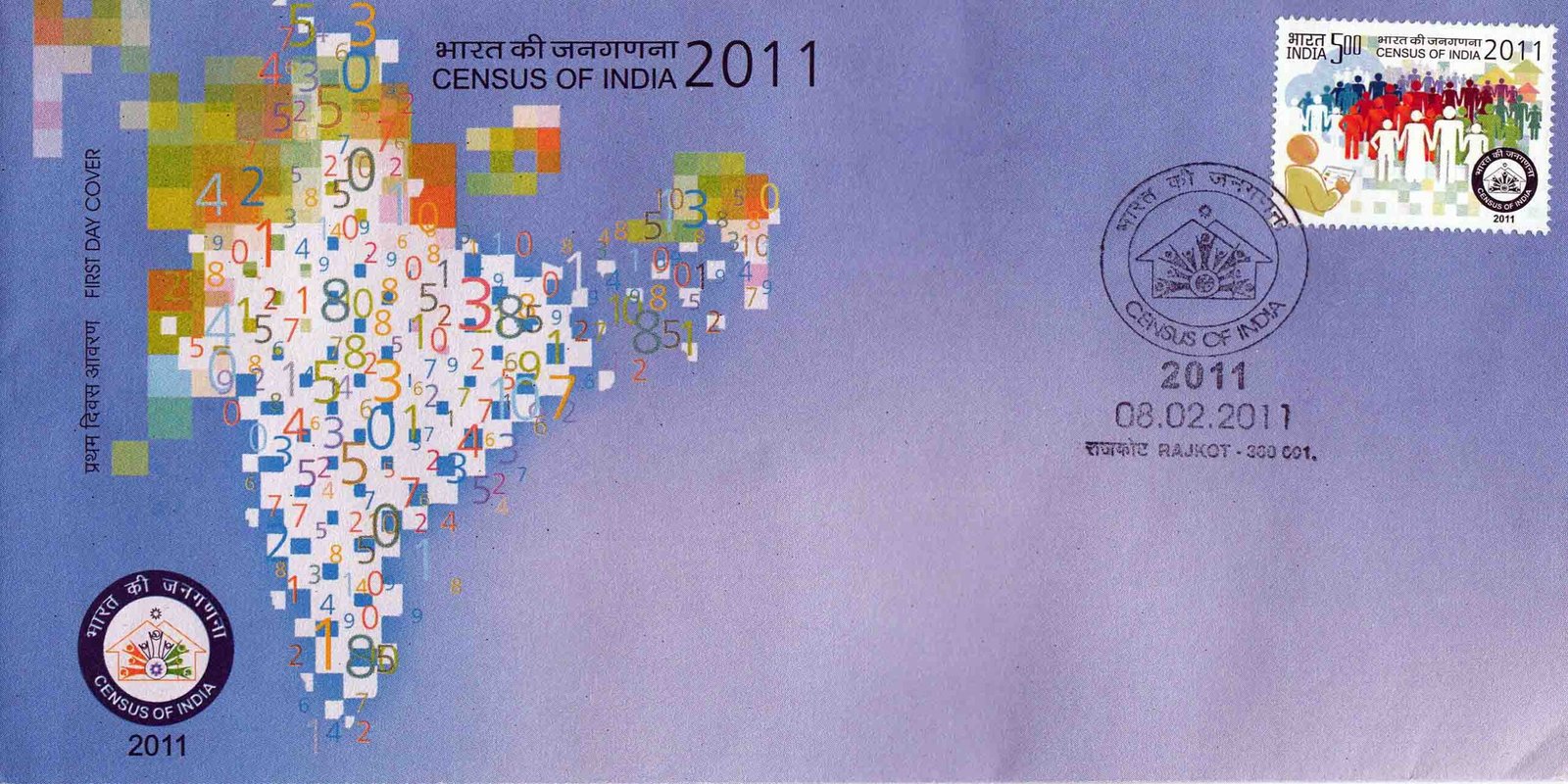
First Day Cover
Leave a Comment
You must be logged in to post a comment.