
Children’s Day Picnic
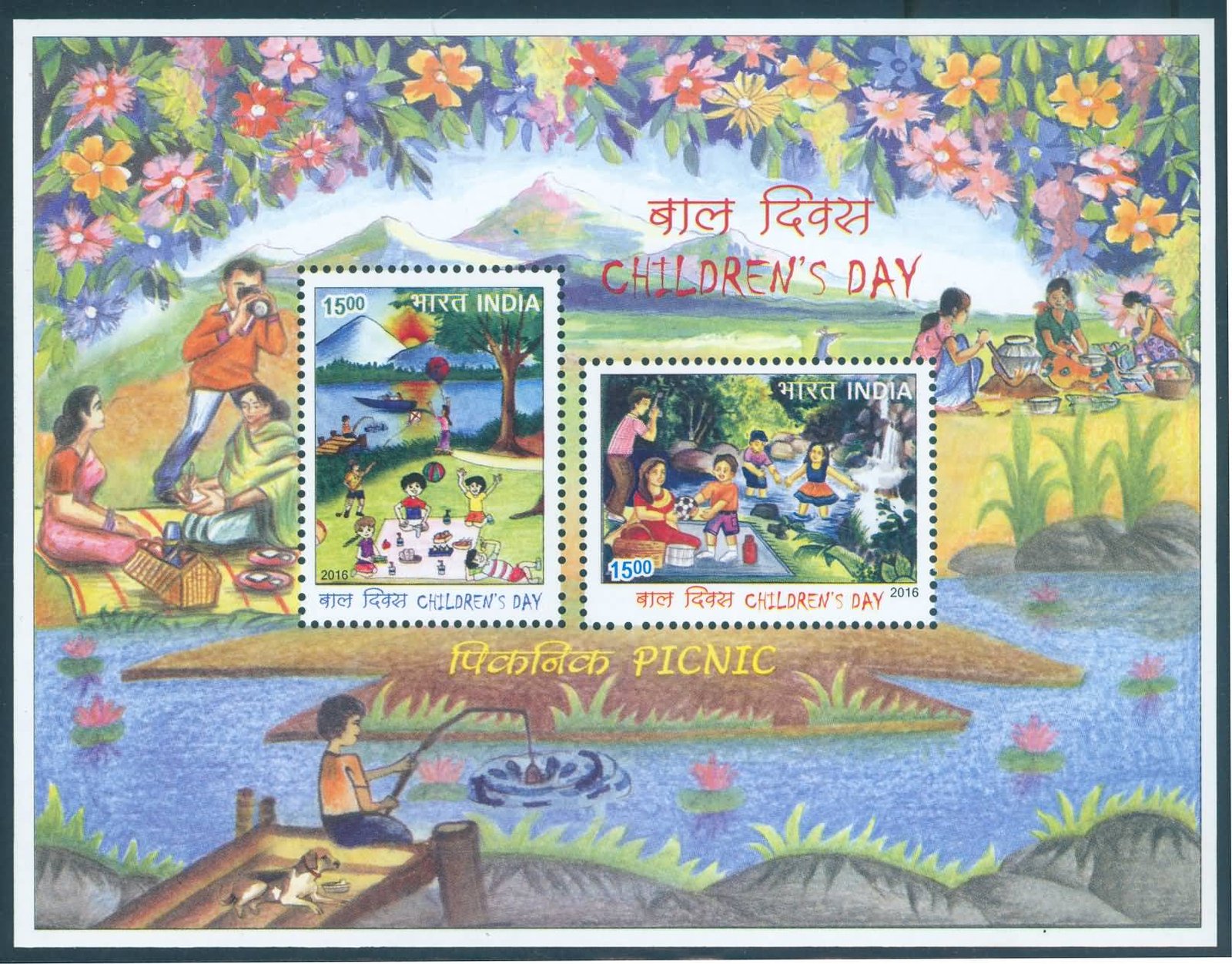
Technical Data
| Date of Issue | November 14, 2016 |
|---|---|
| Denomination | Rs. 30 |
| Quantity | 100,000 |
| Perforation | 13¾ |
| Printer | Security Printing Press, Hyderabad |
| Printing Process | Wet Offset |
| Watermark | No Watermark |
| Colors | Multicolor |
| Credit (Designed By) | Ms. Nenu Gupta |
| Catalog Codes |
Michel IN BL148 Yvert et Tellier IN BF135 Stanley Gibbons IN MS3192 |
| Themes | Children | Children's Play | Families | Rivers |
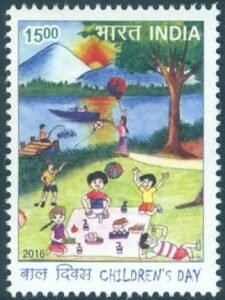
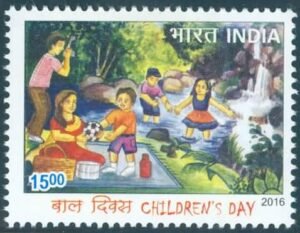
Stamps in this Miniature Sheet
A Celebration of Nature, Togetherness and Joy
Introduction
Picnics, tours, trips and excursions are integral parts of human life. They offer much-needed relief from daily routines and provide opportunities to reconnect with nature. As Shakespeare beautifully expressed, nature itself is a book—one with sermons in stones, tongues in trees, and countless lessons in flowing brooks. A picnic captures this spirit: freedom from the concrete jungle and a joyful escape into the lap of greenery.
Historical Origins and Evolution of the Picnic
The idea of a shared outdoor meal has existed for centuries.
According to the Oxford English Dictionary, the term “picnic” initially referred to a fashionable social gathering where everyone contributed food, with the first known English usage appearing in 1748. Over time, this concept evolved from elite indoor gatherings to outdoor meals enjoyed in natural settings.
Etymology
The French connection is strong. Larousse Gastronomique suggests that “picnic” may have emerged from clipped French words:
- pique (to pick),
- piquant (sharp), and
- nique (a small thing of little value).
Though not definitively proven, the explanation aligns with the idea of bringing simple, self-contributed food outdoors.
In Arts and Literature
In literature, early references such as Oliver Goldsmith’s The Vicar of Wakefield (1766) described picnics as simple outdoor meals enjoyed in rustic surroundings. Writers of the Romantic period deepened the association between nature and pleasure, reinforcing the cultural charm of dining outdoors.
The Idea of Picnic Across Cultures
The joy of picnicking transcends borders and languages.
Different cultures use different expressions to describe this delightful activity:
- Italian: scampagnata (holiday in the countryside)
- Spanish: comida campestre (meal in the country)
- Korean: so pong (a little meal in the country)
- Japanese: pikunikku, often connected with the tradition of hanami (cherry blossom picnics)
Despite linguistic variations, the essence remains universal—sharing food, cherishing companionship, and embracing nature.
Picnics in Modern Life
Today, picnics are enjoyed by families, schools, colleges, companies, and communities. They bring people together in a relaxed environment, encouraging bonding, laughter and recreation.
Benefits of Picnics
- Mental Refreshment: They relieve stress and rejuvenate the mind.
- Social Interaction: Picnics strengthen family ties and friendships.
- Educational Value: Students gain a refreshing break from routine studies.
- Recreation: Outdoor games, music, and simple activities add to the fun.
Public parks often support picnicking with amenities such as tables, grills, water facilities, garbage bins and restrooms. Potluck-style picnics—where everyone brings a dish—remain common and cherished.
Picnics and Nature Conservation
Picnics are inseparable from nature, and their survival depends on protecting natural spaces.
As urbanisation spreads, untouched green areas with streams, shade and clean air are dwindling. Preserving these environments is essential to ensure that future generations can enjoy the simple pleasure of eating and playing outdoors.
Commemorative Postage Stamps on the Theme “Picnic”
To celebrate the cultural and emotional significance of picnics, the Department of Posts organized a nationwide competition inviting designs for Commemorative Stamps, a Miniature Sheet, First Day Cover and Brochure.
Based on winning entries, two stamps and associated philatelic materials on the theme “Picnic” were released. The designs were contributed by:
Mr. Gauravdev HB, Ms. Sukanya Behera, Ms. Soujanya Hati, Ms. Yamini K, Mr. Ankan Sarkar, Mr. Sat Prakash Singh, Ms. Saniya Muhammed, Ms. Pransheeta, Mr. B. N. Nivas Nag, Ms. Alisha Raghav, Ms. Supriya Prasanna Tendulkar, Ms. Arishma Saifi, and Ms. Pahul Preet Kaur.
Conclusion
Picnics remain a timeless celebration of nature, companionship and simple pleasures. Whether viewed through cultural traditions, linguistic evolution or modern recreation, picnics remind us of the joy of stepping outdoors and sharing moments of happiness. Preserving nature ensures that this cherished tradition continues to enrich lives across generations.
Leave a Comment
You must be logged in to post a comment.