
Children’s Day 1999
Technical Data
| Stamp Set | Children's Day |
|---|---|
| Date of Issue | November 14, 1999 |
| Denomination | Rs. 3 |
| Quantity | 700,000 |
| Perforation | comb 14 |
| Printer | Security Printing Press, Nashik |
| Watermark | No Watermark |
| Colors | Multicolor |
| Catalog Codes |
Michel IN 1720 Stamp Number IN 1781 Yvert et Tellier IN 1487 Stanley Gibbons IN 1883 |
| Themes | Animals (Fauna) | Children | Elephants | Mammals | Paintings | Rhinoceroses |
Theme, Significance, and Special Stamp
National Children’s Day 1999 was commemorated by the India Post with a special postage stamp, continuing its annual tradition of celebrating Children’s Day on 14th November. This initiative highlights India’s social and moral responsibility toward the welfare, rights, and development of children.
Importance of Children’s Day in India
Children’s Day in India reflects the nation’s deep commitment to child welfare, which is also embedded in its constitutional values. A structured approach to child development began with the First Five-Year Plan and later evolved into the National Policy for Children (1974). This policy outlines key principles to ensure the well-being of children across the country.
Over the years, special stamps issued on Children’s Day have focused on important themes such as:
- Nutrition and health
- Shelter and basic needs
- Education and recreation
- Children’s literature and art
- Empowerment of the girl child
These themes emphasize holistic development and awareness about children’s rights.
Theme of National Children’s Day 1999
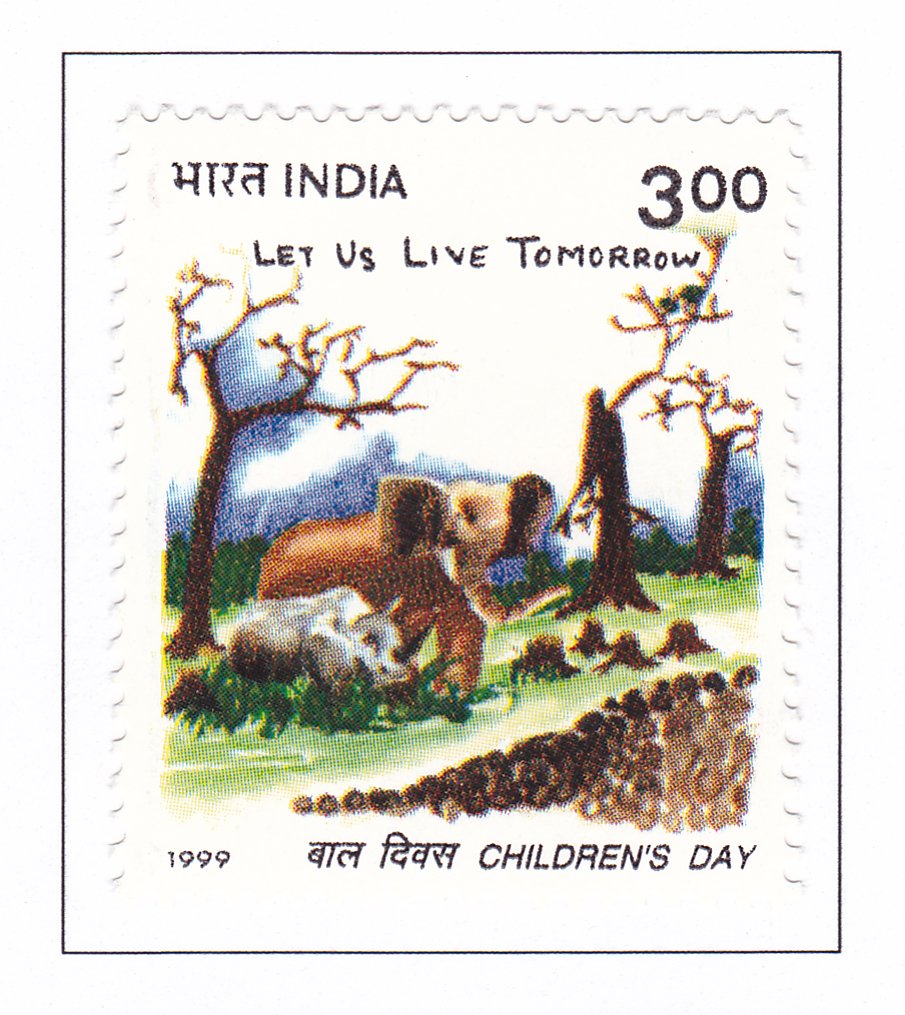
The highlight of National Children’s Day 1999 was a unique stamp design based on a painting by Rishikesh Gohain, a young winner of a nationwide stamp design competition organized by India Post.
The theme for the Millennium Issue was “India 2000: Vision of the Future”, reflecting global concerns about environmental protection and peaceful coexistence. The artwork presented a child’s vision of the future with a simple yet powerful message: “Let us live tomorrow.”
This message promotes:
- Global peace and harmony
- Environmental conservation
- Protection of ecosystems
- Sustainable living for future generations
Message and Global Relevance
The 20th century witnessed devastating events such as world wars and increasing violence, along with the development of destructive technologies. Against this backdrop, the theme of National Children’s Day 1999 encourages reflection on building a safer and more sustainable world.
The stamp conveys the idea that all life forms are interconnected, and the destruction of one threatens the survival of others. It echoes the ancient Indian philosophy of “वसुधैव कुटुम्बकम्”—the world is one family—promoting unity and coexistence across borders.
Role of Society in Child Development
While government initiatives play a crucial role in child welfare, the message of National Children’s Day 1999 stresses the importance of collective responsibility. National institutions, voluntary organizations, local bodies, and individuals must work together to ensure a better future for children.
Through this special stamp issue, India Post reinforces the idea that society must provide children with the best opportunities for growth, safety, and happiness.
Additional Highlights
The First Day Cover released alongside the stamp featured another award-winning artwork by Kuhu Agarwal, also based on the theme “India 2000: Vision of the Future.”
Conclusion
National Children’s Day 1999 stands out as a meaningful celebration that combines art, awareness, and responsibility. Through the vision of children, it delivers a powerful message about peace, environmental protection, and the shared duty of humanity to create a better world for future generations.