
Civil Service
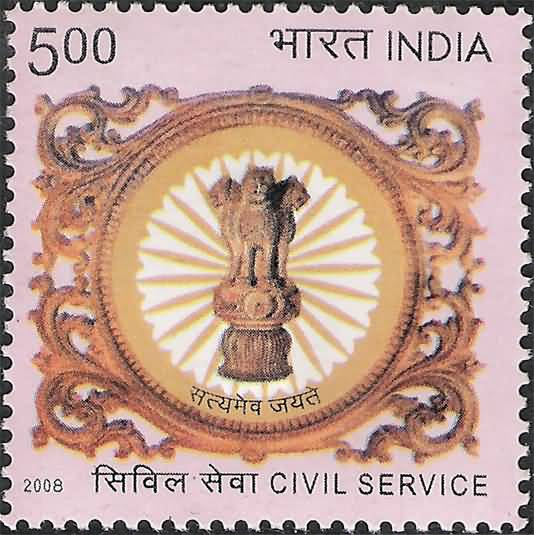
Technical Data
| Date of Issue | April 21, 2008 |
|---|---|
| Denomination | Rs. 5 |
| Quantity | 800,000 |
| Perforation | 13 |
| Printer | India Security Press, Nasik |
| Printing Process | Photo Gravure |
| Watermark | No Watermark |
| Colors | Multicolor |
| Credit (Designed By) | Sh. Sankha Samanta |
| Catalog Codes |
Michel IN 2267 Stamp Number IN 2237 Stanley Gibbons IN 2471 WADP Numbering System - WNS IN011.2008 |
| Themes | Architecture |
The Steel Frame of Governance
“A king can reign only with the help of others; one wheel alone does not move a chariot.” This profound observation by Kautilya in the Arthashastra underscores a timeless truth: governance depends not merely on authority, but on capable and committed administrators. Though articulated in the context of monarchy, the principle applies universally—no state can function effectively without a well-structured and competent civil service.
Across history, the configuration of authority and recruitment systems has varied—from hereditary appointments to merit-based selection. Yet, the importance of an organized bureaucracy has remained constant. One of the earliest examples of a merit-based civil service was established in imperial China during the Sui Dynasty under Emperor Wen (581–604 AD). This system, further refined during the Song Dynasty, introduced competitive written examinations to recruit officials. To ensure fairness, even handwriting was masked by copyists so that evaluation remained impartial.
The Chinese model influenced European administrative systems in the 18th century. Interestingly, the first structured European civil service emerged not in Europe but in India under the East India Company. Its administrators, known as “Honourable East India Company Civil Servants,” were promoted through examinations to curb corruption and favoritism.
Subsequently, the Imperial Civil Service of India was constituted based on the recommendations of the Public Service Commission (1886–87), followed by the Provincial and Subordinate Civil Services under the Aitchison Commission. By 1934, India’s administrative structure comprised seven All India Services and several Central Departments, laying the foundation for modern governance.
Civil Services in Independent India
Today, the Civil Service forms the permanent executive of the Indian state. The All India Services, Central Services, and State Civil Services together create the backbone of administration and governance. They perform sovereign functions and operate across diverse sectors—from rural development to railways, commerce to communications, and foreign policy to fiscal reforms.
The vision of Sardar Vallabhbhai Patel was instrumental in shaping India’s administrative ethos. He regarded the Civil Services as the “steel frame” of the nation, essential for maintaining unity and cohesion in a federal structure. Guided by Weberian principles of integrity, impartiality, impersonality, and merit, the Civil Services have consistently contributed to nation-building.
Adapting to a Changing World
As India has evolved, so too has the role of its Civil Service. Economic liberalization, financial reforms, deregulation, public-private partnerships, and the emergence of regulatory bodies have transformed the governance landscape. Rising public expectations and global competition demand innovation, transparency, and technological integration. The Civil Service has responded by embracing systemic reforms, digital governance, and citizen-centric approaches to administration.
Civil Services Day and Commemorative Postage Stamp
Every year, 21st April is observed as Civil Services Day—an occasion for civil servants to reaffirm their commitment to public service and excellence. It provides an opportunity for reflection, recognition of outstanding performance, and strategic planning to meet contemporary challenges.
To honour the invaluable contribution of the Civil Services to national development, the Department of Posts has issued a commemorative postage stamp. This philatelic tribute celebrates the enduring spirit of dedication, integrity, and service that defines India’s Civil Service—truly the steel frame of the nation.
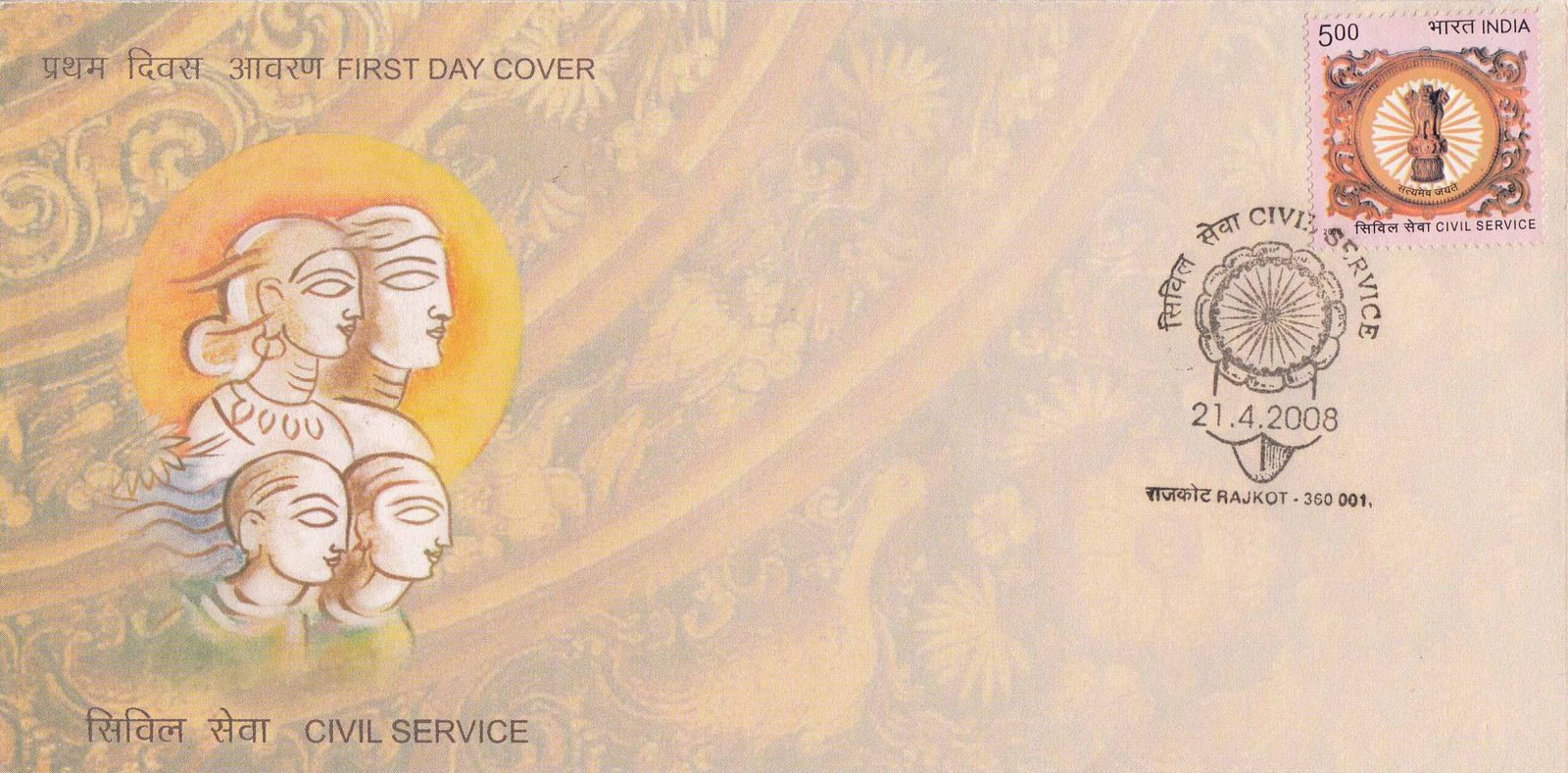
First Day Cover
Leave a Comment
You must be logged in to post a comment.