
Statues
Technical Data
| Date of Issue | December 21, 2010 |
|---|---|
| Denomination | Rs. 5 |
| Quantity | 300,000 |
| Perforation | 13 |
| Printer | India Security Press, Nashik |
| Printing Process | Wet Offset |
| Watermark | No Watermark |
| Colors | Multicolor |
| Credit (Designed By) | Sh. Sankha Samanta |
| Catalog Codes |
Michel IN 2538 Stamp Number IN 2476 Stanley Gibbons IN 2778 WADP Numbering System - WNS IN084.2010 |
| Themes | Museums | Statues |
Introduction to Sculptural Traditions
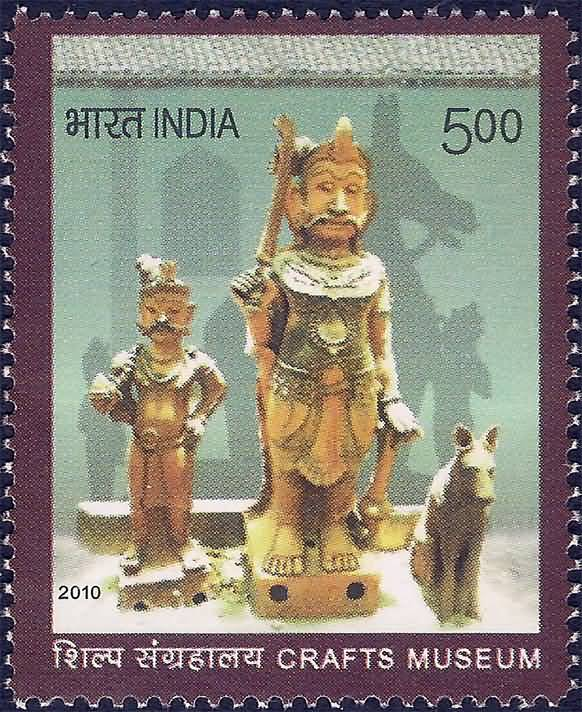
The statues displayed at the National Handicrafts and Handlooms Museum (NHHM), New Delhi, reflect the depth, diversity, and continuity of India’s traditional craft heritage. Established in 1956 as a resource centre for handicrafts and handlooms, the museum was designed not only to preserve artefacts but also to support the revival and development of traditional art forms. Within this broader mission, sculptural works form an important and visually striking component of its collection.
Rich Collection of Traditional Statues
With a vast collection of over 32,000 artefacts, the museum houses numerous statues representing regional, tribal, and folk traditions from across India. These sculptural pieces are crafted in materials such as wood, terracotta, metal, and stone, showcasing the skill and creativity of Indian artisans. Each statue embodies local beliefs, cultural narratives, and ritual practices, offering insight into the social and spiritual life of different communities.
Bhuta Sculpture and Folk Galleries
One of the key highlights of the museum is the Bhuta Sculpture Gallery, which features ritualistic and spirit-related statues from various parts of India. These sculptures represent local deities and guardian spirits, reflecting strong cultural and religious traditions.
The Folk and Tribal Gallery further displays statues that illustrate indigenous art forms and symbolic expressions. These works reveal how sculpture serves not merely as decoration but as an essential element of community identity and belief systems.
Village Complex and Contextual Display
The museum’s Village Complex enhances the experience by placing statues within recreated rural settings. The fourteen huts and courtyards, representing different Indian states, provide a realistic context where sculptural elements appear as part of daily life and architecture. This immersive approach helps visitors understand statues as living components of tradition rather than isolated museum objects.
Living Craft and Demonstration Programme
The National Handicrafts and Handlooms Museum regularly invites craftsmen from various states to participate in live demonstration programmes. Through these sessions, visitors can witness the process of creating sculptural forms using traditional techniques. This initiative reinforces the museum’s mission of sustaining living craft traditions while educating the public.
Commemorative Postage Stamp on NHHM
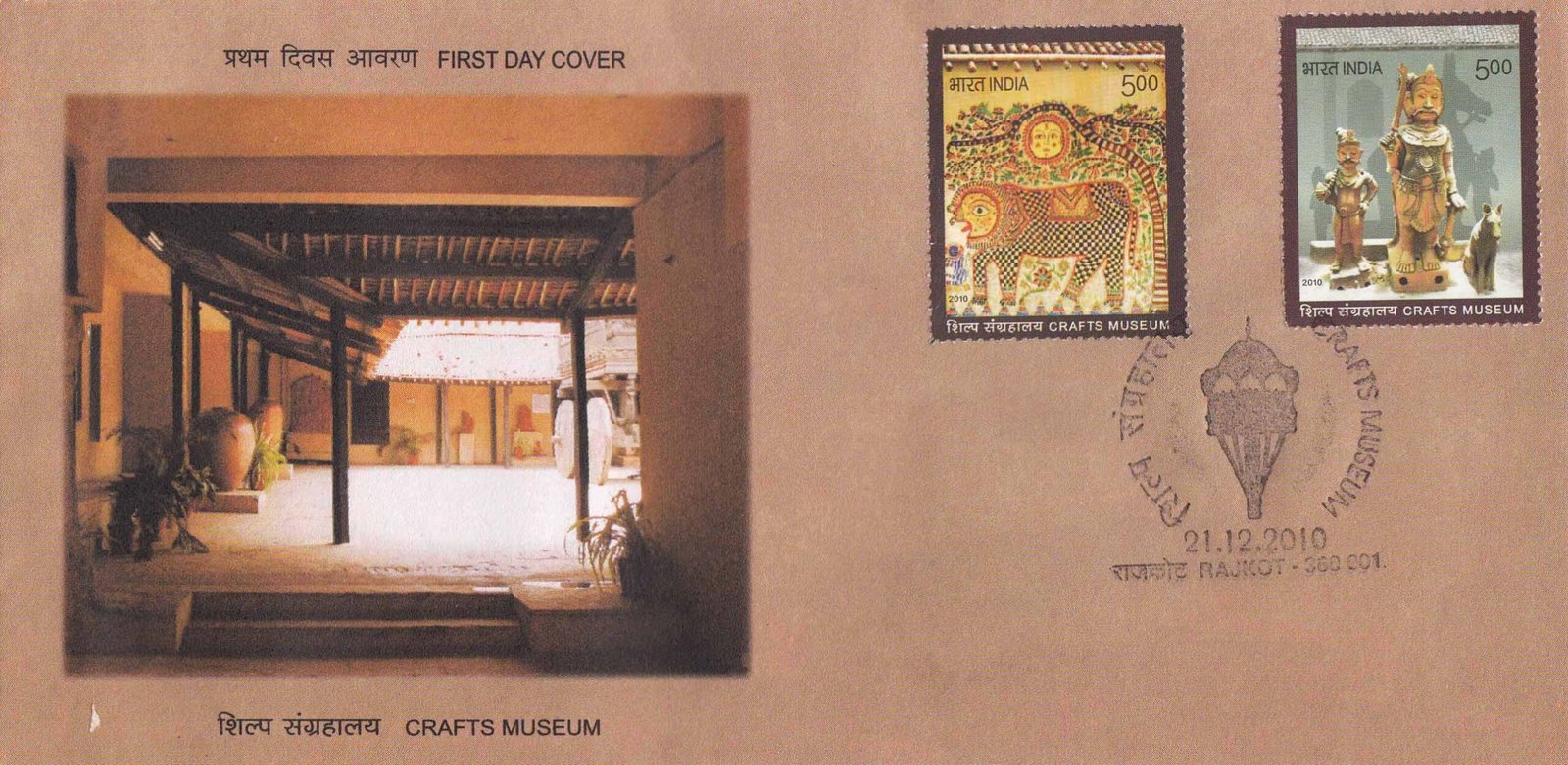
In recognition of its significant contribution to preserving India’s cultural heritage, a commemorative postage stamp was issued on the National Handicrafts and Handlooms Museum. The stamp issue honours one of the largest craft museums in India and celebrates its role in safeguarding traditional arts, including India’s rich sculptural legacy.
Legacy of Sculptural Heritage
The statues at the National Handicrafts and Handlooms Museum stand as enduring symbols of India’s artistic excellence and cultural diversity. Through preservation, research, and public engagement, the museum continues to promote and protect the timeless tradition of Indian sculpture for future generations.
First Day Cover
Leave a Comment
You must be logged in to post a comment.