
Dilwara Temples
Technical Data
| Stamp Set | Heritage Jain Temples |
|---|---|
| Date of Issue | October 14, 2009 |
| Denomination | Rs. 5 |
| Quantity | 400,000 |
| Perforation | 13 |
| Printer | Security Printing Press, Hyderabad |
| Printing Process | Wet Offset |
| Watermark | No Watermark |
| Colors | Multicolor |
| Credit (Designed By) | Sh. Sankha Samanta |
| Catalog Codes |
Michel IN 2414 Stamp Number IN 2354 Stanley Gibbons IN 2635 WADP Numbering System - WNS IN067.2009 |
| Themes | Temples |
Marble Masterpiece of Jain Architecture
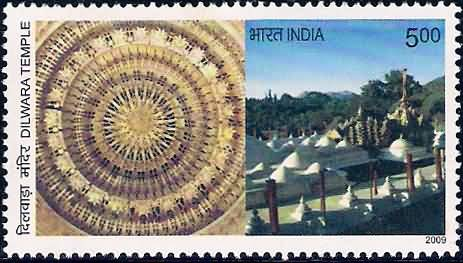
The Dilwara Jain Temples, located near Mount Abu in Rajasthan amidst the forested hills of the Aravalli Range, are among the most sacred pilgrimage sites for Jains worldwide. Built between the 11th and 13th centuries AD, these temples are renowned for their breathtaking marble architecture and astonishingly intricate carvings.
Though their exteriors appear simple and restrained, the interiors reveal an unparalleled richness of craftsmanship. The opulent entranceways, minutely carved ceilings, delicately sculpted pillars, doorways, arches, and panels overwhelm visitors with their beauty and detail. The marble carving is so refined that in certain places it appears almost translucent.
The Five Temples of Dilwara
The Dilwara complex consists of five temples, each dedicated to a Jain Tirthankar:
- Vimal Vasahi (1021 AD) – Dedicated to Sri Adinath (Rishabha Dev), the first Jain Tirthankar. Built by Vimal Shah, minister of the Chalukya ruler Bhimdev I of Gujarat, this is the oldest and most celebrated temple. Its Rang Mandap features twelve richly decorated pillars and ceilings adorned with lotus petals, floral designs, scenes from Jain and Hindu mythology, sixteen Vidyadevis (Goddesses of Knowledge), and the exquisitely carved Navchowki ceilings.
- Luna Vasahi (1230 AD) – Dedicated to Shri Neminath, the 22nd Tirthankar. Built by the Porwad brothers Vastupala and Tejapala, ministers of the Vaghela ruler Virdhaval, this temple mirrors the layout of Vimal Vasahi. Its Rang Mandap ceiling features a grand ornamental pendant surrounded by concentric carvings of Tirthankars and monks. The Hathishala (Elephant Cell) houses ten beautifully sculpted marble elephants.
- Pittalhar Temple – Named after its massive statue of Rishabha Dev made of five metals, primarily brass (pital).
- Parshvanath (Khartar Vasahi) Temple (1458–59) – The tallest shrine at Dilwara, featuring intricately carved mandaps with sculptures of dikpals, vidyadevis, yakshinis, and shalabhanjikas.
- Mahavir Swami Temple (1582) – Dedicated to Sri Mahavir, the 24th Tirthankar. Its distinctive feature is the painted decoration on the upper walls of the mandap, created in 1764 by artists from Sirohi.
Architectural Brilliance
Each temple stands within a walled courtyard with a central shrine surrounded by smaller shrines. The ceilings, especially in the Rang Mandaps, are masterpieces—featuring concentric rings of carvings, lotus motifs, floral patterns, celestial figures, and mythological scenes.
The artistry achieved at Dilwara represents the pinnacle of marble carving. Every pillar, dome, and arch demonstrates extraordinary precision and devotion. The temples embody both architectural opulence and spiritual serenity, offering a profound contrast between the grandeur of craftsmanship and the simplicity of the deities they enshrine.
A Living Heritage
The Dilwara Temples are not only architectural wonders but also living centres of faith and meditation. They stand as timeless symbols of devotion, artistic genius, and cultural heritage in Rajasthan.
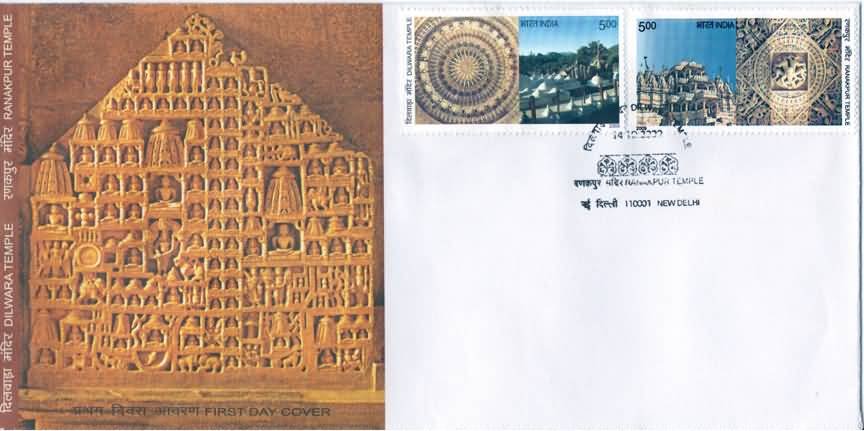
In recognition of their exceptional historical, religious, and architectural importance, India Post has issued a commemorative postage stamp honouring the Heritage Jain Temple of Dilwara.
First Day Cover
Leave a Comment
You must be logged in to post a comment.