
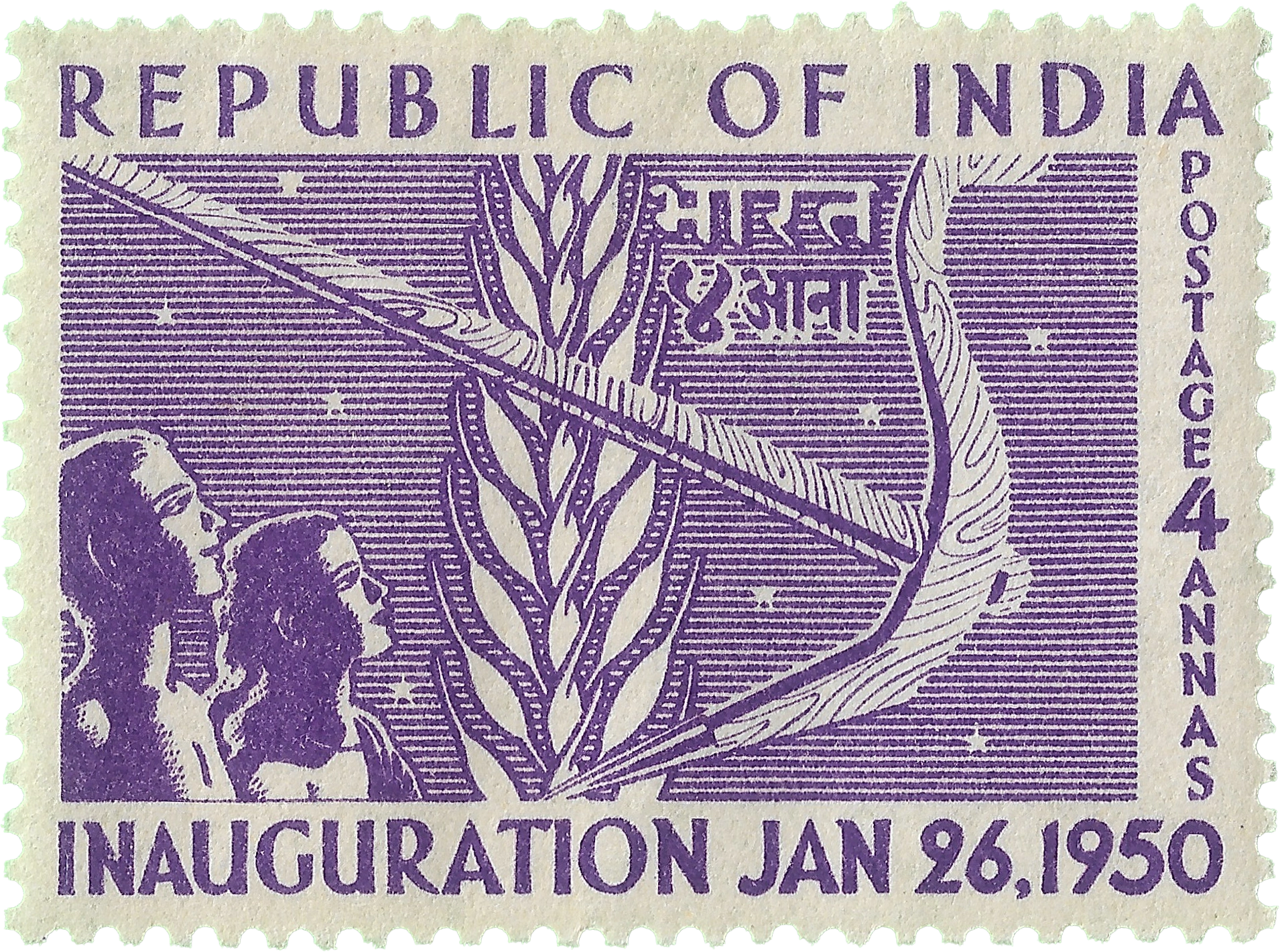
Ear of Corn and Plough
Technical Data
| Stamp Set | Inauguration of Republic of India |
|---|---|
| Date of Issue | January 26, 1950 |
| Denomination | 4 ANNAS |
| Quantity | 6,900,000 |
| Perforation | comb 13 |
| Printer | India Security Press,Nasik |
| Watermark | Star of India Multiple [Up] |
| Colors | Purple |
| Catalog Codes |
Michel IN 213 Stamp Number IN 229 Yvert et Tellier IN 29 Stanley Gibbons IN 331 |
| Themes | Agricultural Machinery | Agriculture | Cereals | Food | People | Special Occasions | Stars |
Symbol of India’s Agricultural Strength
The 4 Annas Stamp is a significant part of the Republic of India 1950 commemorative stamp series, issued by India Post to celebrate the inauguration of India as a republic on 26 January 1950.
Design and Symbolism
The stamp features an ear of grain placed vertically at the center, with an indigenous ploughshare positioned diagonally against a star-spangled background. This powerful imagery symbolizes India’s identity as an agricultural nation, highlighting the importance of farming and rural livelihoods in the country’s economy.
The design reflects the central role of agriculture in sustaining the nation and supporting its development during the early years of independence.
Purpose and Usage
The 4 annas stamp was specifically issued for:
- Registration services
It played an important role in official and secure postal communication.
Colour and Features
- Colour: Violet
- Series: Republic of India Inauguration (1950)
- Inscription: “Republic of India” and “Inauguration January 26, 1950”
- Includes “POSTAGE” and denomination in English, along with “BHARAT” and value in Hindi (Devanagari script)
Philatelic Importance
This commemorative stamp is valued for its symbolic representation of India’s agrarian roots. As part of a historic series, it highlights the priorities of a newly independent nation focused on agricultural growth and self-sufficiency.
Conclusion
The 4 Annas Stamp stands as a tribute to India’s agricultural heritage and economic foundation. Its meaningful design and historical relevance make it an important collectible in Indian philately.