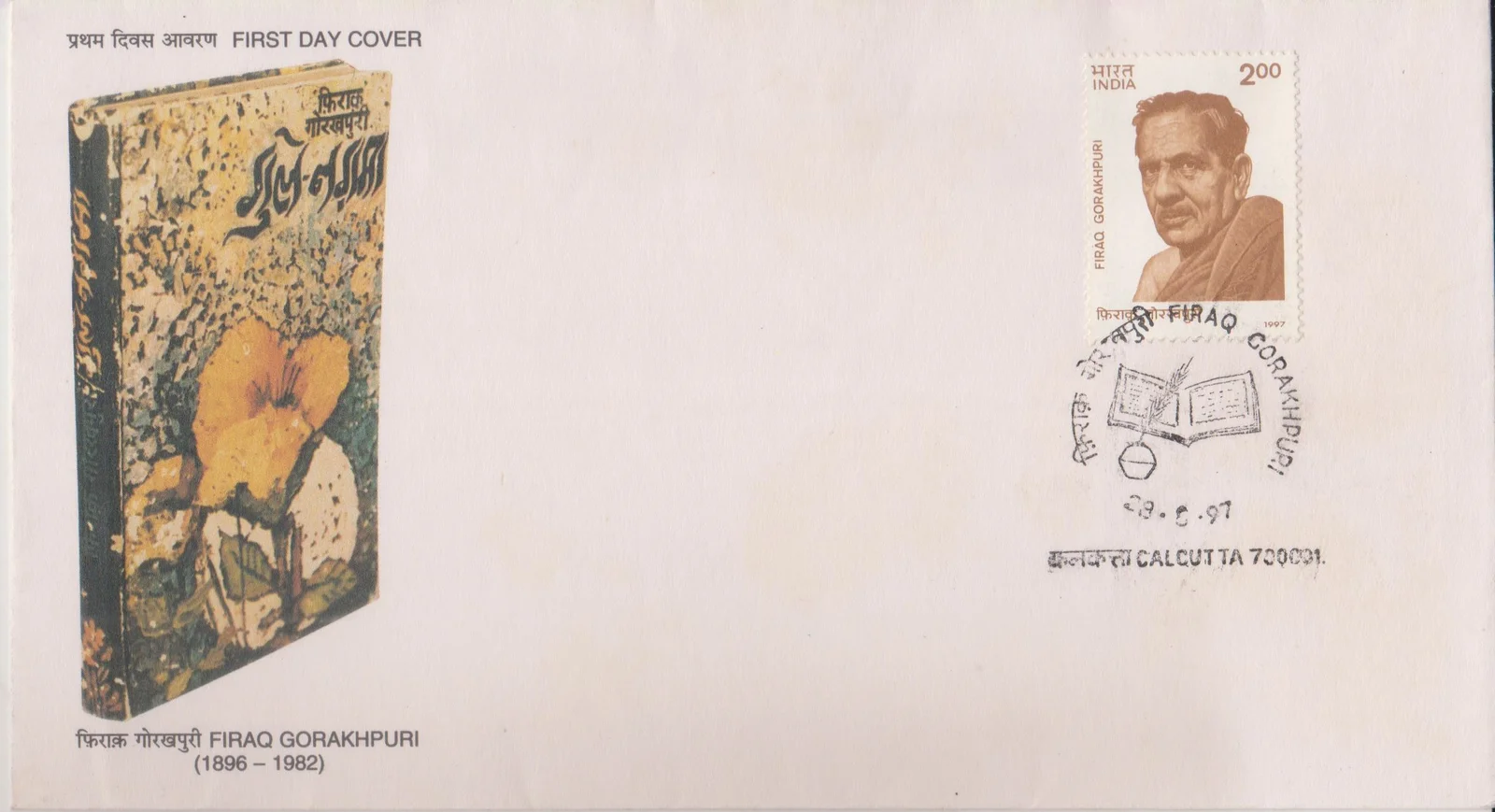
Firaq Gorakhpuri (1896-1982)
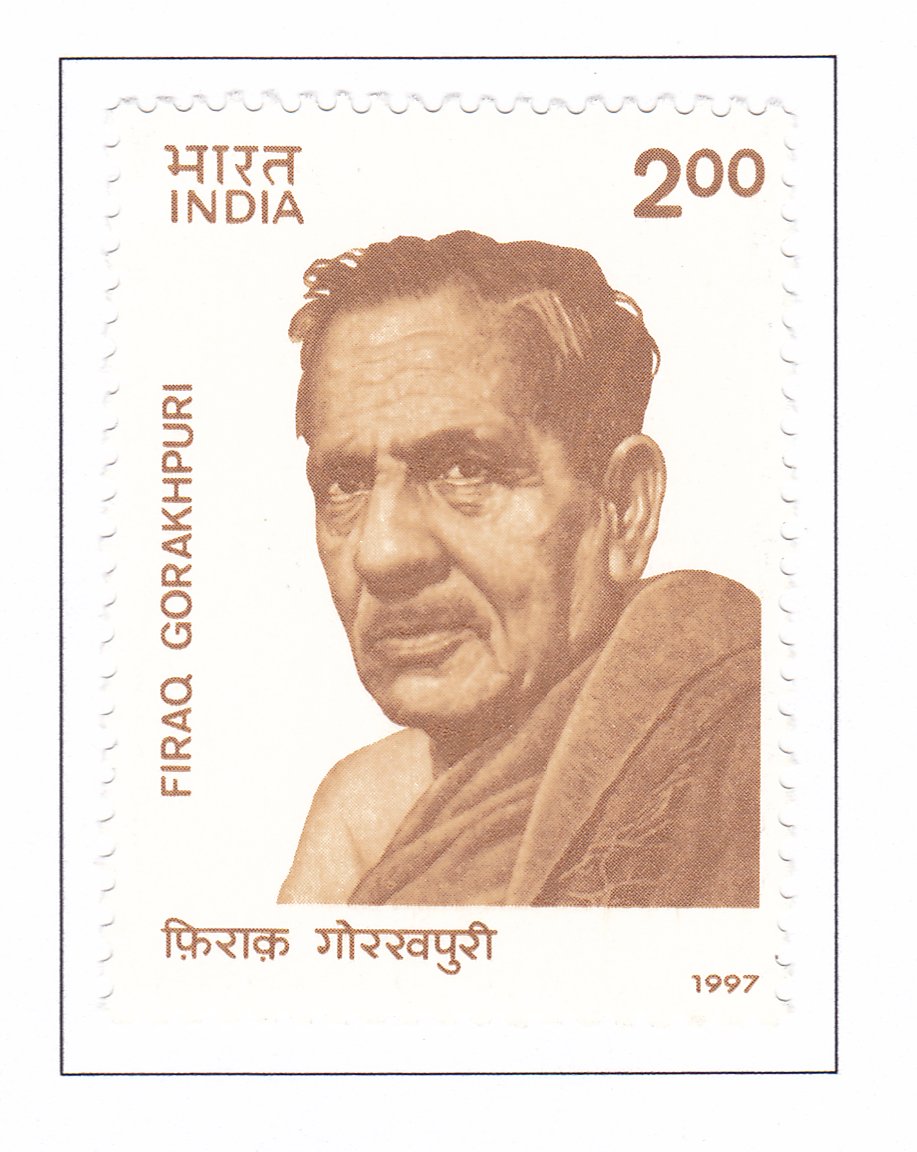
Technical Data
| Stamp Set | Birth Centenary |
|---|---|
| Date of Issue | August 28, 1997 |
| Denomination | Rs. 2 |
| Quantity | 400,000 |
| Perforation | comb 13 x 13½ |
| Printer | Security Printing Press, Nashik |
| Printing Process | Photogravure |
| Watermark | No Watermark |
| Colors | Light brown |
| Credit (Designed By) | |
| Catalog Codes |
Michel IN 1565 Stamp Number IN 1621 Yvert et Tellier IN 1337 Stanley Gibbons IN 1729 |
| Themes | Anniversaries and Jubilees | Famous people | Literary People (Poets and Writers) | Men |
Legendary Urdu Poet, Scholar, and Literary Icon
Firaq Gorakhpuri, born as Raghupati Sahay, was one of the greatest poets in Urdu literature and a towering figure in modern Indian letters. Celebrated for his lyrical brilliance, intellectual depth, and cultural vision, he brought international recognition to Urdu poetry.
Born in 1896 in a distinguished literary family in Gorakhpur, he became famous under the pen name Firaq Gorakhpuri.
Early Life and Freedom Movement
After completing his education, Firaq Gorakhpuri was nominated to the Civil Service. However, inspired by patriotism, he chose to join India’s freedom movement instead.
He was imprisoned in 1920 for nationalist activities. After his release, he worked for the Indian National Congress as one of its Under Secretaries for five years.
Literary Career and Influences
While participating in public life, Firaq continued writing in Urdu and developed close associations with some of the greatest literary figures of his time, including:
- Premchand
- Hasrat Mohani
- Daya Narain Nigam
- Tej Bahadur Sapru
Later, he joined the University of Allahabad as Lecturer in English, where he served with distinction until retirement.
Revolutionizing Urdu Poetry
Firaq Gorakhpuri is widely credited with modernizing Urdu poetry and introducing fresh themes rooted in Indian culture and universal human emotions.
A passionate supporter of:
- National integration
- Hindu-Muslim unity
- Cultural harmony
- Literary modernism
He transformed Urdu poetry into a vehicle of modern thought while preserving its lyrical elegance.
Fusion of East and West
His writing reflected a rare blend of influences from:
- Classical Indian culture
- Sanskrit poetry and Shringara Rasa
- The Bhakti movement
- English Romantic poets
- Hindi, Persian, and world literature
This fusion of Eastern and Western traditions gave a new emotional depth and modern sensibility to the Urdu ghazal.
Famous Works of Firaq Gorakhpuri
A prolific writer of prose and poetry, his major literary works include:
- Gul-e-Naghma (1959) – His most celebrated poetic collection
- Ruh-e-Kayenaat (1945)
- Ramz-o-Kinayaat (1946)
For nearly four decades, he dominated the Urdu literary world and was regarded as a living legend.
Awards and Honors
Firaq Gorakhpuri received some of India’s highest literary honors, including:
- Sahitya Akademi Award in 1960
- Jnanpith Award in 1969
- Padma Bhushan in 1981 from the Government of India
Death and Legacy
Firaq Gorakhpuri passed away on 3 March 1982.
He remains remembered as one of the greatest voices of Urdu poetry, whose work promoted love, unity, intellect, and cultural harmony.
Commemorative Postage Stamp
The Department of Posts issued a commemorative postage stamp in memory of Firaq Gorakhpuri to mark the conclusion of his birth centenary celebrations.
First Day Cover