Indipex Asiana 2000- Flora and Fauna

Technical Data
| Date of Issue | March 31, 2000 |
|---|---|
| Denomination | Rs. 24 |
| Perforation | comb13¼ x 13½ |
| Printer | Calcutta Security Printers Ltd |
| Printing Process | Offset Lithography |
| Watermark | No Watermark |
| Colors | Multicolor |
| Credit (Designed By) | Sh. Ramesh Sukumar |
| Catalog Codes |
Michel IN BL9 Stamp Number IN 1814a Yvert et Tellier IN BF8 Stanley Gibbons IN MS1917 |
Stamps in this Miniature Sheet
Celebrating India’s Philatelic Heritage and the Natural Treasures of the North-East
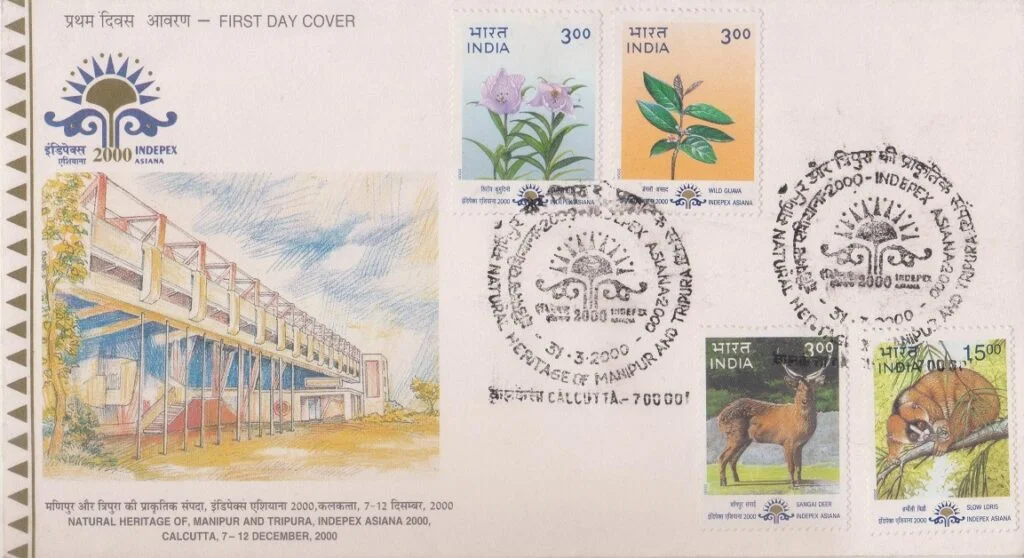
In December 2000, India hosted one of the most significant philatelic events of the new millennium—Indepex–Asiana 2000 Organised by the India Post in association with the Philatelic Congress of India, and under the patronage of the Federation of Inter-Asian Philately and recognition of the Fédération Internationale de Philatélie, the exhibition took place from 7 to 12 December 2000 at the iconic Netaji Indoor Stadium.
This was only the second Asian International Stamp Exhibition hosted by India, making it a landmark event in the world of philately. The exhibition held special meaning because it celebrated two historic milestones—the completion of 50 years of the Republic of India and the dawn of a new millennium.
A Logo Filled with Meaning
The official logo of Indepex–Asiana 2000, designed by Sankha Samanta, beautifully captured the spirit of a new beginning. It portrays the first sunrise of the millennium rising over the sea at Katchal Island.
The ocean waves are drawn in the style of alpana, the traditional folk art of West Bengal, while the nine rays of the sun symbolize the “navaras” or nine emotions described in the ancient Indian text Natyashastra. The logo also resembles a blossoming flower, expressing hope, joy, and the endless fascination of stamp collecting.
A Tribute to the Rich Biodiversity of North-East India
To mark this prestigious exhibition, India Post issued a stunning set of four commemorative stamps showcasing the rare flora and fauna of Manipur and Tripura. These stamps drew national attention to the extraordinary biodiversity of India’s North-East.
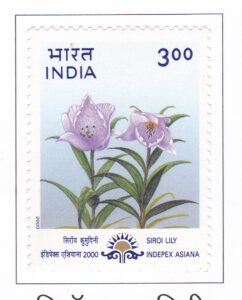
The Graceful Siroi Lily
The first stamp features the rare and enchanting Siroi Lily, found only in the mist-covered Siroi Hills of Manipur. Blooming for only a few weeks each spring, this delicate flower is celebrated for its soft beauty and rarity.
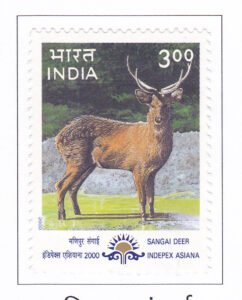
The Dancing Deer of Manipur
The second stamp portrays the elegant Sangai, the famous brow-antlered deer of Manipur. Known as the “dancing deer” because of its graceful movements, the Sangai survives only in the floating meadows of Keibul Lamjao National Park.
Once believed to be extinct, the Sangai became a symbol of hope after conservation efforts helped increase its population from just 14 animals in 1974 to over 150 by 2000.
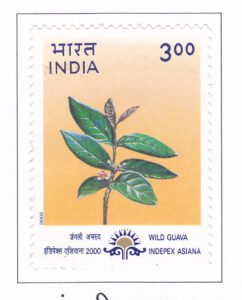
The Rare Wild Guava
The third stamp highlights the little-known Wild Guava of Tripura. Though smaller and more sour than the common guava, this rare plant is unique to the region. Sadly, the species faces threats from deforestation and firewood collection, making its conservation especially important.
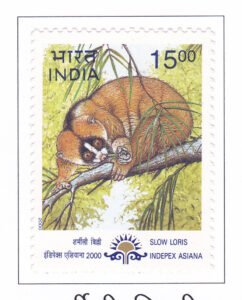
The Mysterious Slow Loris
The fourth stamp showcases the charming yet elusive Slow Loris, a nocturnal primate found in Tripura and nearby parts of North-East India. With its large shining eyes, soft fur, and distinctive dark stripe along its back, the Slow Loris is one of the most fascinating creatures of the region.
Sleeping through the day and emerging only at dusk, it adds an air of mystery to the forests of the North-East.
A Miniature Sheet and First Day Cover
Along with the four stamps, India Post also released a beautiful miniature sheet that celebrated both Indepex–Asiana 2000 and the “Explore India in the Millennium Year” campaign of the Ministry of Tourism.
The First Day Cover featured the grand Netaji Indoor Stadium and the official exhibition logo, making it a treasured keepsake for collectors.
A Historic Stamp Issue
This commemorative set holds a special place in Indian philately because it was the first stamp issue to bear the official logo of Indepex–Asiana 2000. More than just stamps, these miniature works of art celebrate India’s natural heritage, its cultural identity, and the excitement of entering a new millennium
First Day Cover