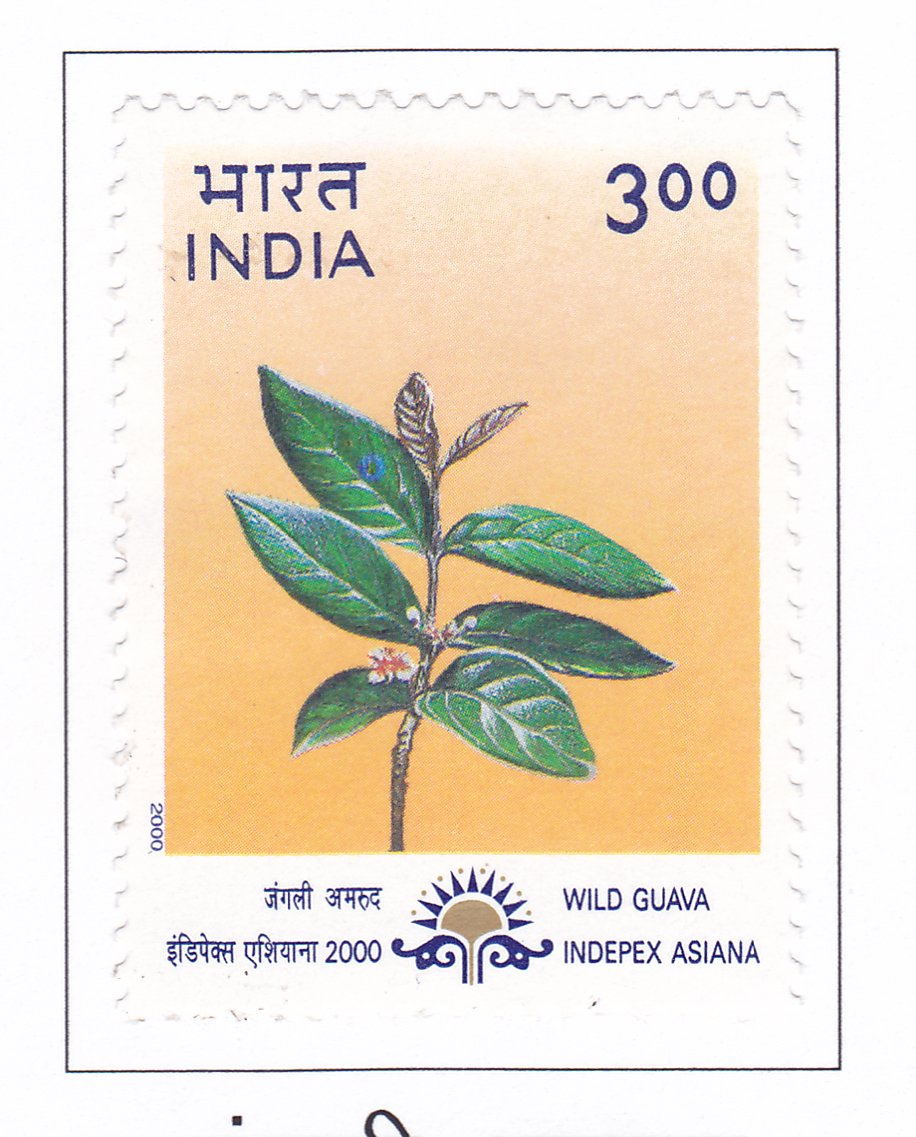
Wild Guava (Psidium guineense)
Technical Data
| Stamp Set | Indipex Asiana 2000 International Stamp Exhibition, Calcutta |
|---|---|
| Date of Issue | March 31, 2000 |
| Denomination | Rs. 3 |
| Quantity | 1,000,000 |
| Perforation | comb 13¼ x 13½ |
| Printer | Calcutta Security Printers Ltd |
| Printing Process | Offset Lithography |
| Watermark | No Watermark |
| Colors | Multicolor |
| Credit (Designed By) | Sh. Ramesh Sukumar |
| Catalog Codes |
Michel IN 1752 Stamp Number IN 1812 Yvert et Tellier IN 1518 Stanley Gibbons IN 1915 |
| Themes | Philatelic Exhibitions | Plants (Flora) |
Introduction
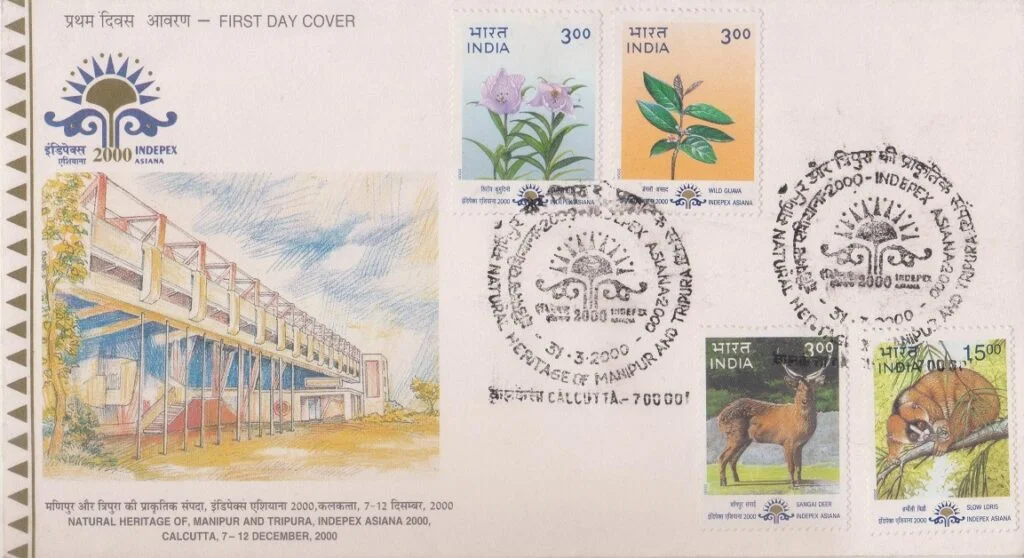
The Wild Guava is a rare and little-known plant found in the forests of Tripura. It was featured on a commemorative postage stamp issued by India Post during Indepex–Asiana 2000. The stamp was issued to highlight the rich natural heritage and biodiversity of North-East India.
Appearance
Wild Guava is smaller and bushier than the common guava plant. Although it usually grows as a shrub, it can develop into a small tree if protected properly.
The fruit of the Wild Guava is edible, but it is much smaller than the ordinary guava and has a distinctly sour taste.
Habitat and Distribution
The Wild Guava is found only in Tripura, making it a rare species of India. It grows naturally in forested areas and survives best in undisturbed habitats.
Because of its limited distribution, the plant is considered extremely valuable from the point of view of biodiversity and conservation.
Threats
The survival of the Wild Guava is under serious threat. Large numbers of these plants are being destroyed because of constant cutting of forests for firewood and other human activities.
As a result, the species is gradually becoming endangered in its natural habitat.
Conservation
Recognizing the importance of the Wild Guava, special efforts for its protection have been proposed. Conserving the forests of Tripura and protecting the remaining plants are necessary to ensure that this rare species does not disappear.
Importance of the Stamp
The Wild Guava stamp was issued to create awareness about the unique and endangered plants of North-East India. Through this stamp, India Post drew attention to a species that is rarely known outside Tripura but forms an important part of the region’s natural wealth.
Conclusion
The Wild Guava is a rare botanical treasure of Tripura. Though small in size, it has great ecological importance. The commemorative stamp reminds us that even lesser-known plants deserve care and protection so that they may continue to survive for future generations.
First Day Cover