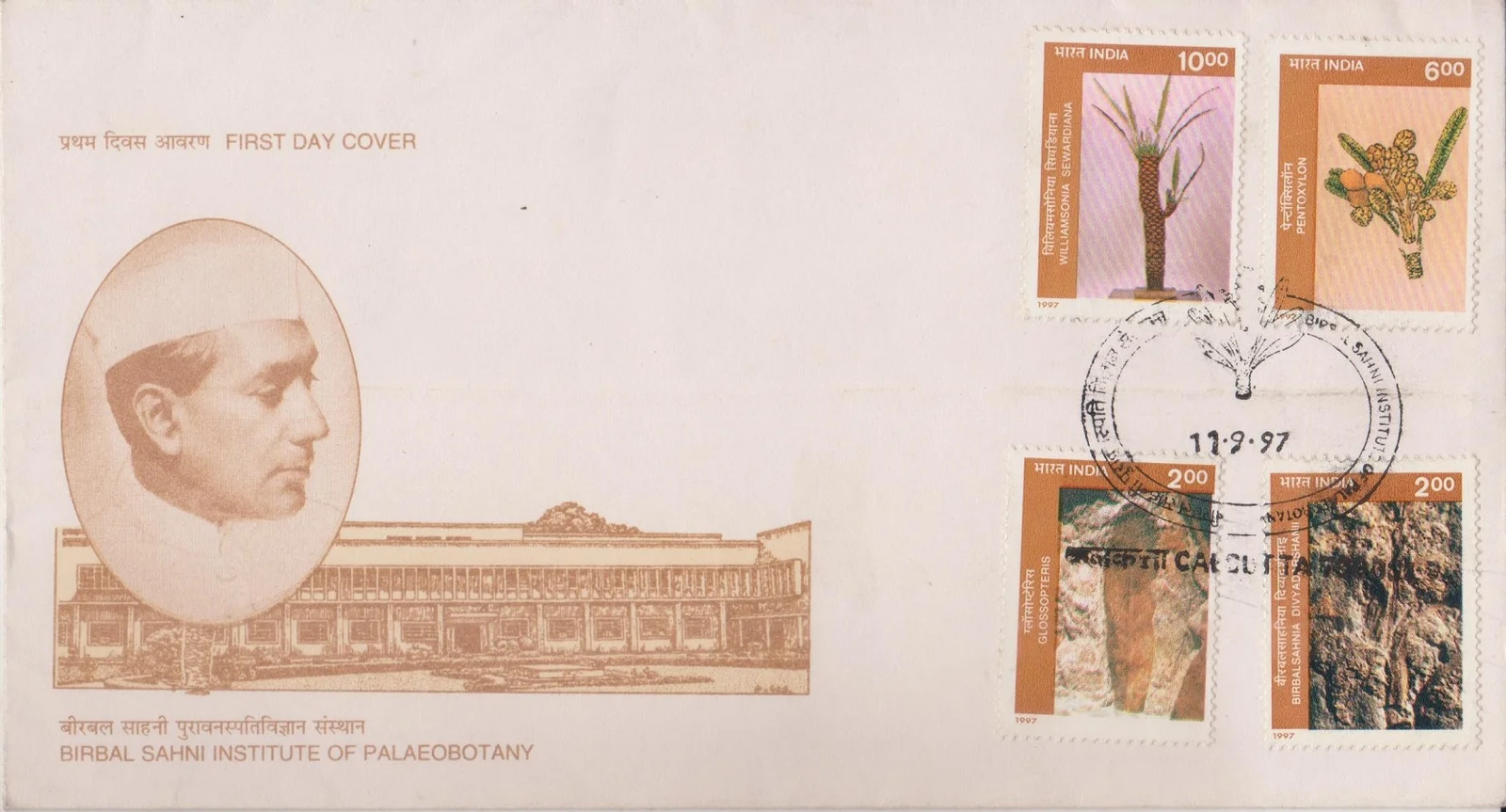
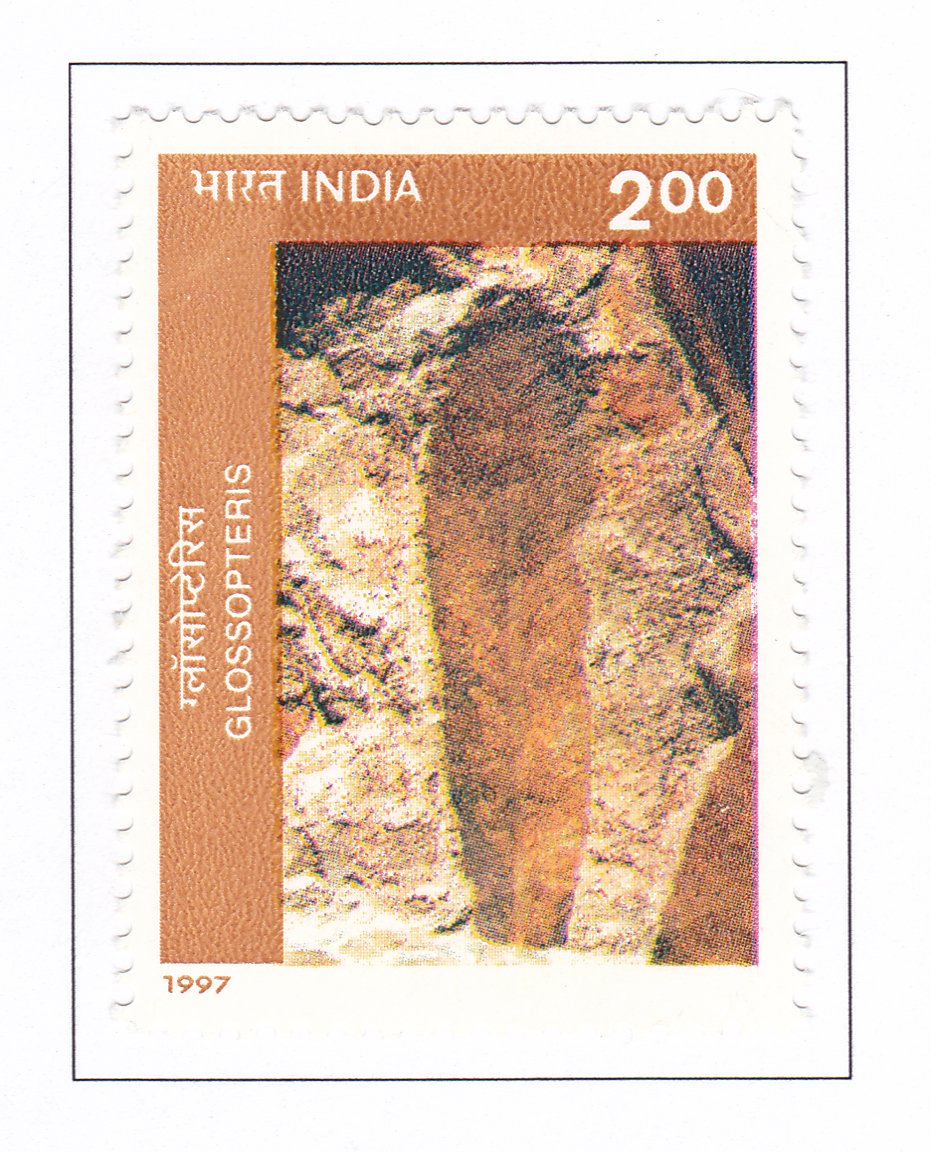
Fossil of Glossopteris
Technical Data
| Stamp Set | 50th Ann. of Birbal Sahni Institute of Palaeobotany, Lucknow |
|---|---|
| Date of Issue | September 11, 1997 |
| Denomination | Rs. 2 |
| Quantity | 400,000 |
| Perforation | comb 13 x 13½ |
| Printer | Security Printing Press, Nashik |
| Printing Process | Photogravure |
| Watermark | No Watermark |
| Colors | Multicolor |
| Credit (Designed By) | |
| Catalog Codes |
Michel IN 1569 Stamp Number IN 1623 Yvert et Tellier IN 1339 Stanley Gibbons IN 1733 |
| Themes | Anniversaries and Jubilees | Fossils | Plants (Flora) |
Introduction
Glossopteris is one of the most important fossil plants discovered in the Indian subcontinent. It is recognized by its distinctive tongue-shaped leaves and represents an extinct group of vascular plants that once flourished across vast regions of the ancient world.
Geological Age
The fossil of Glossopteris belongs to the Permian period, approximately 250 to 280 million years ago. During this era, the Earth’s continents were joined together in a massive southern landmass known as Gondwanaland.
Ancient Distribution
Glossopteris vegetation was spread across areas that now form India, South America, Antarctica, Africa, and Australia. The widespread occurrence of these fossils became important evidence supporting the theory of continental drift and the existence of Gondwanaland.
Importance in India
In ancient times, Glossopteris forests covered large parts of peninsular India. Over millions of years, this vegetation was buried and transformed, contributing significantly to the rich coal reserves found in India today.
Scientific Significance
The study of Glossopteris fossils helps scientists understand prehistoric climates, plant evolution, and the geological history of continents. It remains one of the most valuable fossils in palaeobotanical research.
Commemorative Stamp
The Department of Posts included the fossil of Glossopteris in a commemorative stamp series issued on the Golden Jubilee of the Birbal Sahni Institute of Palaeobotany, Lucknow, highlighting the rich plant fossil heritage of India.
First Day Cover