
Peacock Motif 19th-century Indian Minakari
Technical Data
| Date of Issue | November 28, 2003 |
|---|---|
| Denomination | Rs.22 |
| Perforation | comb 13 x 13½ |
| Printer | Calcutta Security Printers Ltd |
| Printing Process | Offset Lithography |
| Watermark | No Watermark |
| Colors | Multicolor |
| Credit (Designed By) | Shri Kamleshwar Singh Smt. Alka Sharma |
| Catalog Codes |
Michel IN 2001 Stamp Number IN 2040b Yvert et Tellier IN 1766 Stanley Gibbons IN 2176 WADP Numbering System - WNS IN058.03 |
| Themes | Art | Birds | Jewelery | Joint Issues | Peacocks |
Introduction
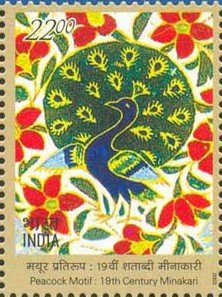
The peacock motif is a celebrated element in traditional Indian art and jewellery, symbolising beauty, grace and refinement. This elegant design reflects the richness of India’s artistic heritage and the remarkable craftsmanship of its artisans. The motif is prominently featured in a commemorative postage stamp issued as part of a joint philatelic issue between India and France, highlighting cultural traditions of both nations.
Artistic Tradition of Meenakari
The peacock design shown on the Indian stamp comes from a 19th-century jewellery piece crafted using the Meenakari technique. Meenakari involves decorating metal surfaces with colourful enamel combined with precious stones and gems, producing intricate and vibrant designs.
This art form developed during the reign of the Mughal emperor Shah Jahan, whose aesthetic vision encouraged the refinement of enamelling into a sophisticated artistic craft. Under royal patronage, artisans created a wide variety of objects ranging from jewellery and ornaments to royal thrones.
Design and Symbolism
The stamp depicts a beautifully crafted peacock, a bird long associated with elegance and splendour in Indian culture. The motif forms part of the Meenakari work on the reverse side of a ‘Sarpech’, a traditional turban ornament used by Mughal nobles and royalty. The ornament is set with emeralds and features delicate enamel decoration, reflecting the high level of artistic skill achieved by Indian craftsmen.
The motifs used in Meenakari commonly include flowers, plants, scrolling vines and animal figures. Among these, the peacock holds special significance due to its aesthetic appeal and symbolic representation of grace and prosperity.
Centre of Craftsmanship
The city of Jaipur, popularly known as the Pink City, has long been an important centre for Meenakari craftsmanship. Skilled artisans in Jaipur perfected the enamelling technique, producing jewellery pieces admired for their colour, detail and elegance.
The particular piece from which the peacock design is derived forms part of the exquisite collection preserved at the National Museum.
Philatelic Significance
By featuring the peacock motif on a postage stamp, India Post celebrates the refinement and intricacy of Indian jewellery art. The stamp highlights the country’s rich tradition of decorative craftsmanship while also commemorating the cultural partnership between India and France.
Conclusion
The peacock motif in Meenakari jewellery represents the elegance and artistic brilliance of Indian craftsmanship. Its depiction on the commemorative stamp not only honours this traditional art form but also showcases India’s cultural heritage to the world.