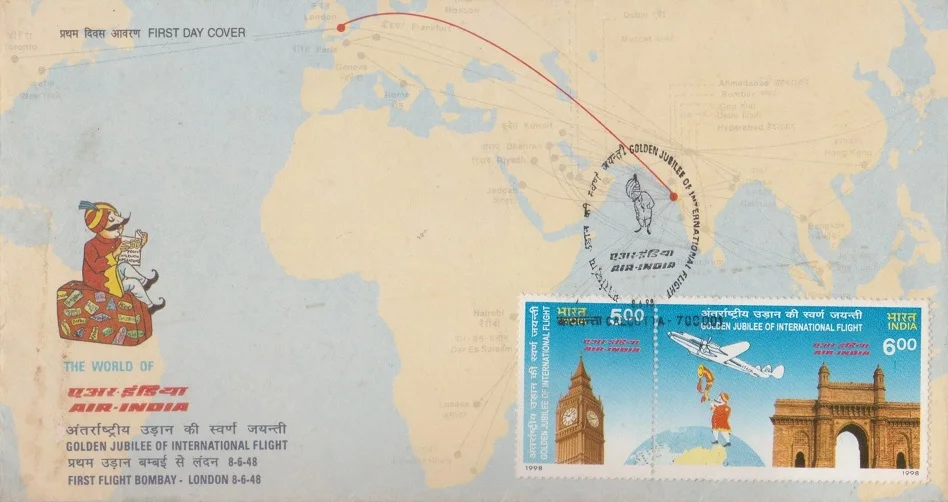
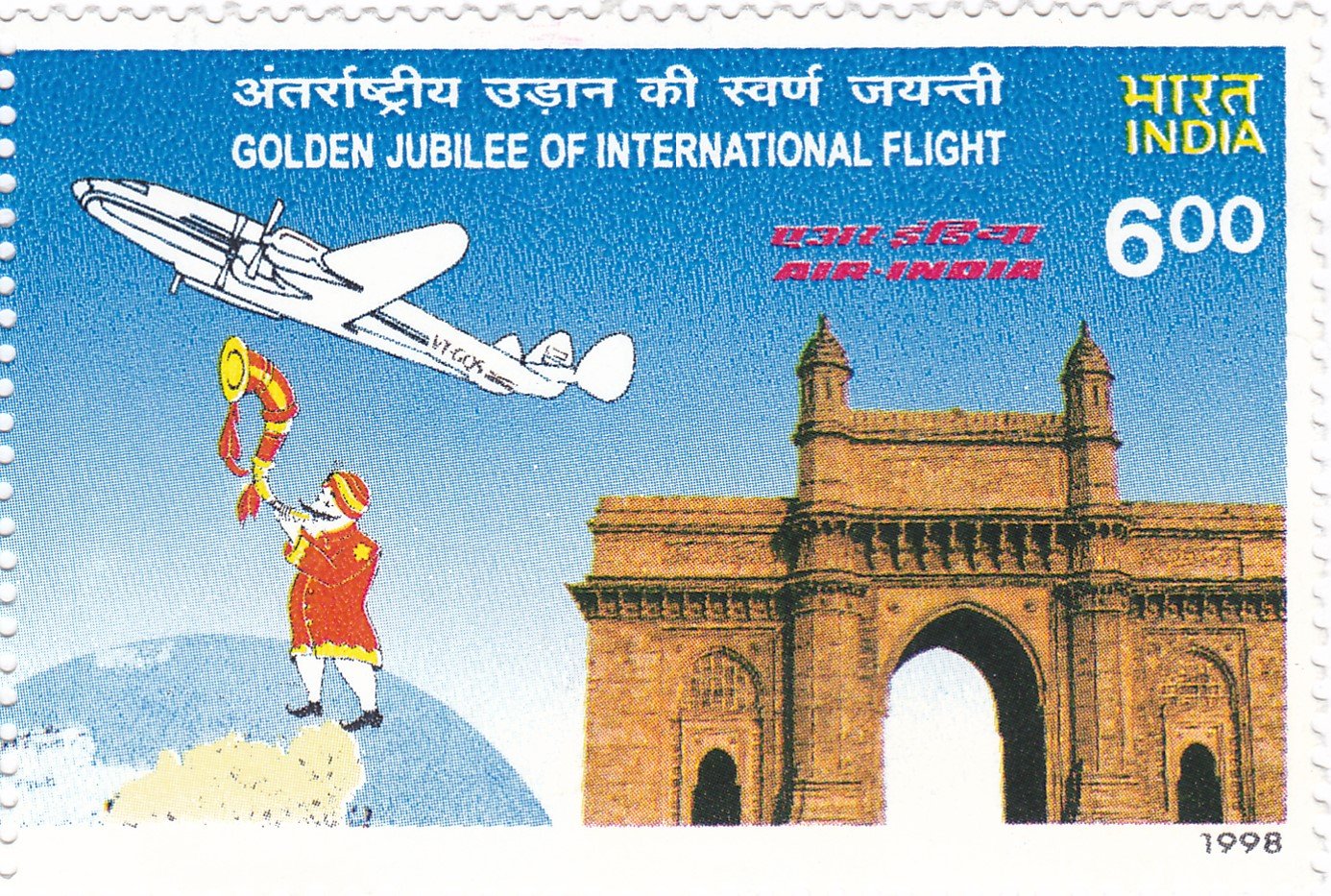
Gateway of India, Bombay
Technical Data
| Date of Issue | June 8, 1998 |
|---|---|
| Denomination | Rs. 6 |
| Quantity | 700,000 |
| Perforation | comb 13 x 13½ |
| Printer | Security Printing Press, Nashik |
| Printing Process | Photogravure |
| Watermark | No Watermark |
| Colors | Multicolor |
| Credit (Designed By) | |
| Catalog Codes |
Michel IN 1630 Stamp Number IN 1685 Yvert et Tellier IN 1396 Stanley Gibbons IN 1794 |
| Themes | Aircraft | Airlines | Anniversaries and Jubilees | Aviation | Buildings | Globes |
Golden Jubilee of International Flight
The Gateway of India, Bombay stands as one of India’s most iconic landmarks and a lasting symbol of the nation’s connection with the world. Its association with the Golden Jubilee of International Flight celebrates fifty years of India’s entry into global civil aviation through the historic first international journey of Air India.
On 8 June 1948, Air India operated India’s first international commercial flight from Bombay to London via Cairo and Geneva. This milestone marked the beginning of a new era in Indian aviation and placed India firmly on the world air travel map.
Gateway of India and Bombay’s Global Identity
Located on the waterfront of Mumbai (formerly Bombay), the Gateway of India has long represented welcome, travel, and international exchange.
As Bombay was the departure point of Air India’s maiden overseas flight, the monument became closely linked with India’s growing presence in international transport and commerce.
The Gateway of India symbolized:
- India opening its doors to the world
- Bombay as the country’s premier international city
- Progress in travel and communication
- National pride after independence
Golden Jubilee of International Flight
The Golden Jubilee of International Flight commemorated fifty years since the launch of India’s first overseas airline service in 1948.
Historic Flight Details
- Date: 8 June 1948
- Airline: Air India
- Route: Bombay – Cairo – Geneva – London
- Aircraft: Lockheed Constellation
This journey connected newly independent India with Europe and demonstrated the country’s aviation ambitions.
Bombay: Birthplace of India’s International Air Travel
Bombay played a central role in the development of Indian civil aviation. As a major commercial and maritime center, it naturally became the launch city for Air India’s international operations.
From Bombay, Air India grew into one of the world’s respected airlines, known for:
- Professional service
- Indian hospitality
- Global routes
- Technical excellence
The city’s image, together with the Gateway of India, became inseparable from India’s travel identity.
Symbolism of the Gateway of India
During the Golden Jubilee celebrations, the Gateway of India represented more than architecture. It reflected:
- A gateway to international skies
- India’s confidence after independence
- The spirit of travel and modern progress
- The beginning of global aviation success
Just as ships once entered Bombay Harbour through this landmark, aircraft now connected India to the world through the skies.
Commemorative Stamp
To honor this major aviation milestone, the Department of Posts issued commemorative postage stamps marking the Golden Jubilee of the First Air India International Flight.
The theme linked the pride of Indian aviation with the historic importance of Bombay and the Gateway of India.
Conclusion
The Gateway of India, Bombay – Golden Jubilee of International Flight represents the meeting of heritage and progress. From the shores of Bombay to the skies above continents, India’s first international flight in 1948 opened new horizons. The Gateway of India remains a powerful symbol of that journey—India stepping confidently onto the global stage.
First Day Cover