
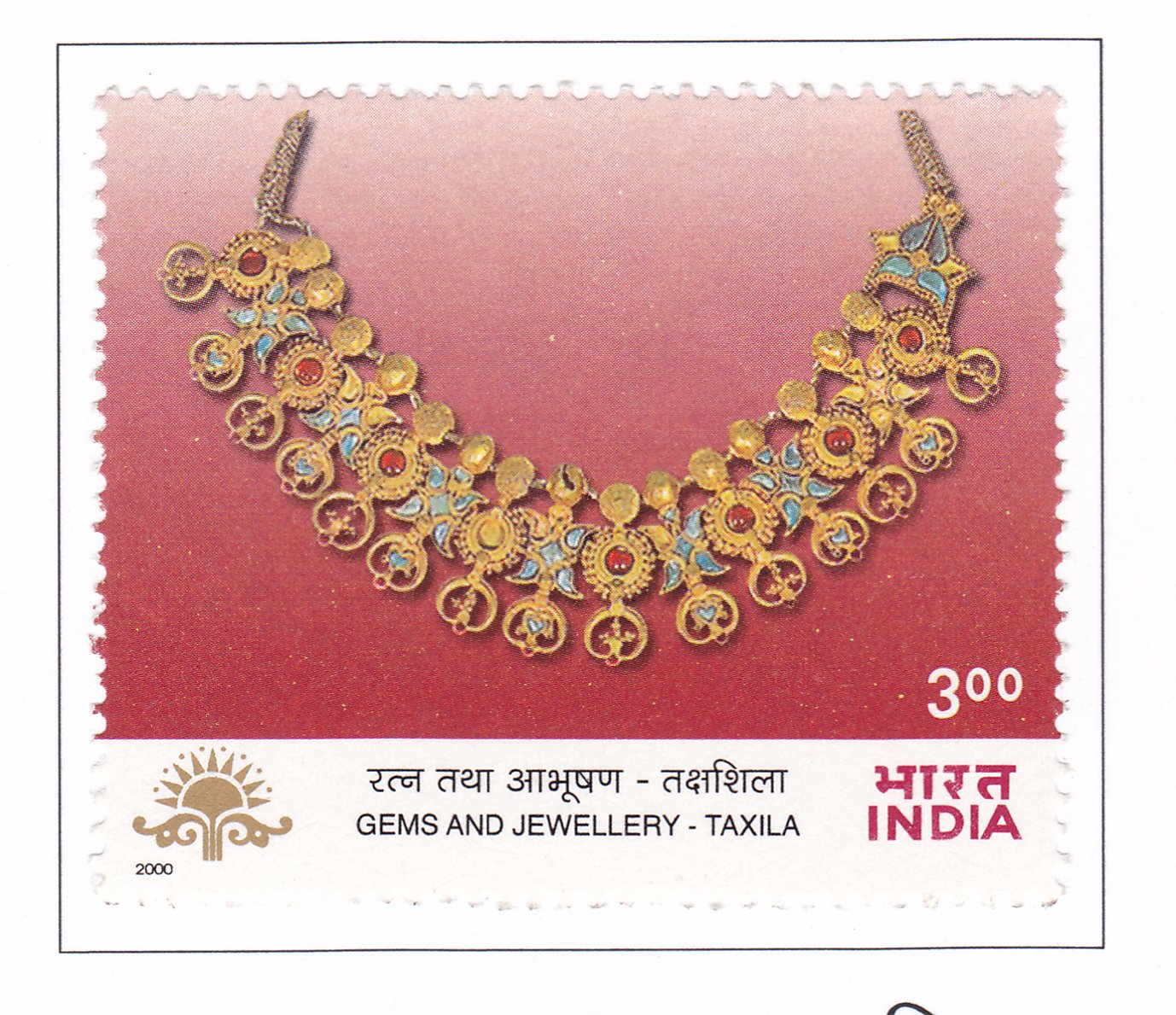
Gold Necklace from Taxila
Technical Data
| Date of Issue | December 7, 2000 |
|---|---|
| Denomination | Rs. 3 |
| Quantity | 3,000,000 |
| Perforation | comb 13½ |
| Printer | Calcutta Security Printers Ltd |
| Printing Process | Offset Lithography |
| Watermark | No Watermark |
| Colors | Multicolor |
| Credit (Designed By) | Shri Kamleshwar Singh |
| Catalog Codes |
Michel IN 1801 Stamp Number IN 1860 Yvert et Tellier IN 1566 Stanley Gibbons IN 1967 |
| Themes | Jewelery | Philatelic Exhibitions |
Ancient Indian Jewellery Craftsmanship
The Gold Necklace (c. 1st century AD) from Taxila is a remarkable example of early Indian jewellery artistry. It is featured in the commemorative stamp series “Indian Gems & Jewellery”, issued during the Indepex Asiana 2000, highlighting India’s rich heritage in gem and jewellery making.
Historical Background
By the 1st century AD, India had already established itself as a major center for jewellery production and trade. Regions like Taxila were known for their skilled artisans and flourishing craftsmanship, contributing significantly to the global exchange of precious ornaments and gemstones.
Craftsmanship and Techniques
The Gold Necklace from Taxila reflects advanced jewellery-making techniques developed in ancient India. These include:
- Repoussé work (designs hammered from the reverse side)
- Granulation (decorative patterns using tiny gold beads)
- Filigree work (delicate metal threads forming intricate designs)
- Bezel settings for securing gemstones
Such techniques demonstrate the high level of expertise achieved by ancient Indian goldsmiths.
Materials and Design
Gold was the primary material used in crafting this necklace, often complemented by precious and semi-precious stones. The design showcases fine detailing and artistic precision, reflecting both aesthetic beauty and technical excellence.
Cultural Significance
Jewellery in ancient India was not only ornamental but also a symbol of wealth, status, and cultural identity. The Gold Necklace from Taxila represents the sophistication of early Indian society and its deep-rooted tradition of adornment.
Stamp Recognition
This exquisite ornament is depicted on one of the six commemorative stamps issued by India Post under the “Indian Gems & Jewellery” series. The stamp honors the craftsmanship and historical importance of ancient Indian jewellery.
Conclusion
The Gold Necklace from Taxila stands as a testament to India’s advanced goldsmithing skills and rich artistic legacy. Its intricate design and historical significance make it a valuable representation of ancient Indian jewellery traditions.