
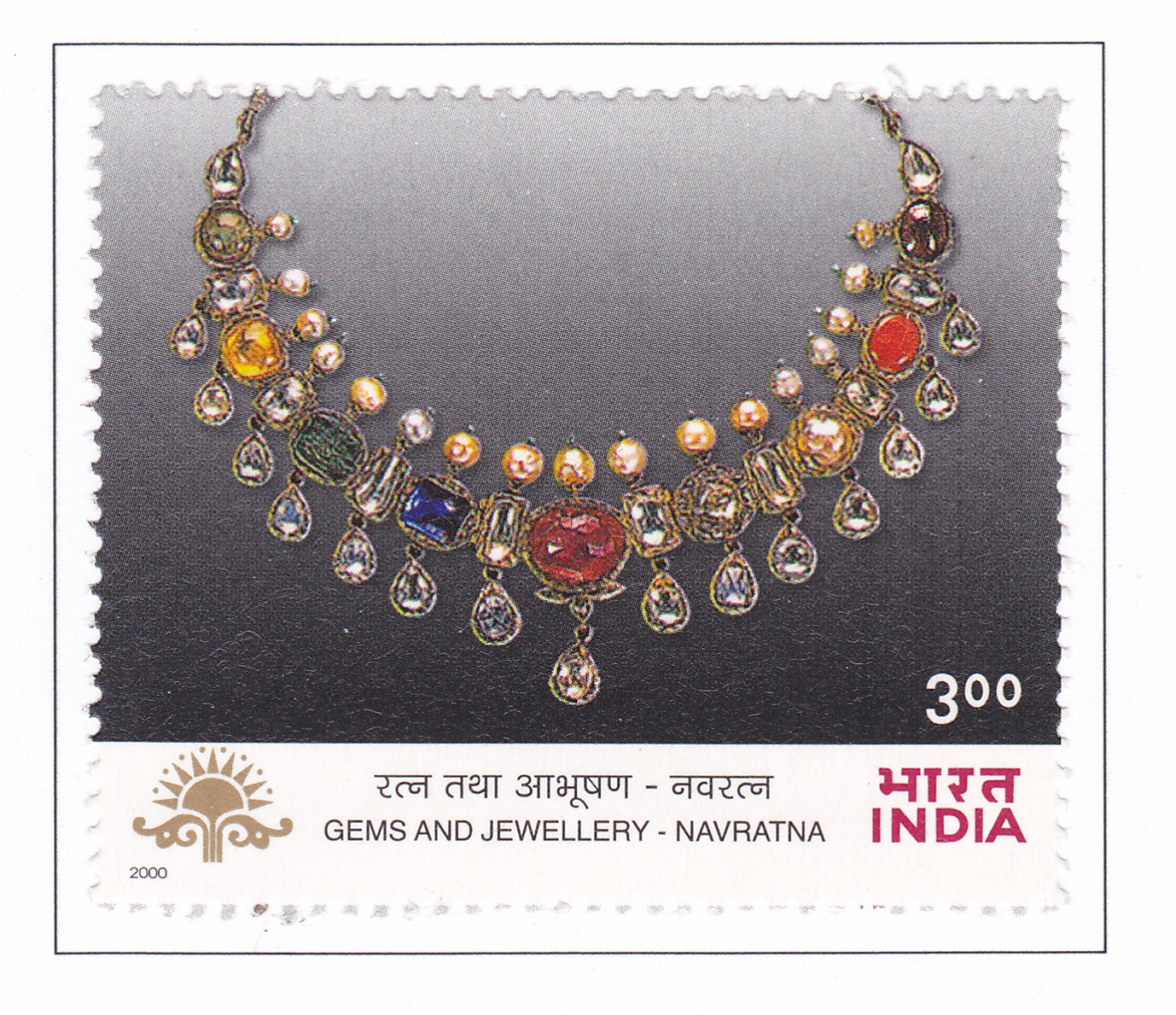
Navaratna Necklace
Technical Data
| Date of Issue | December 7, 2000 |
|---|---|
| Denomination | Rs. 3 |
| Quantity | 3,000,000 |
| Perforation | comb 13½ |
| Printer | Calcutta Security Printers Ltd |
| Printing Process | Offset Lithography |
| Watermark | No Watermark |
| Colors | Multicolor |
| Credit (Designed By) | Shri Kamleshwar Singh |
| Catalog Codes |
Michel IN 1802 Stamp Number IN 1861 Yvert et Tellier IN 1568 Stanley Gibbons IN 1969 |
| Themes | Jewelery | Philatelic Exhibitions |
Symbolism, Design, and Cultural Significance
The Navaratna Necklace (18th century AD) is a unique and culturally significant piece of Indian jewellery, representing a blend of spirituality, tradition, and artistic excellence. It is featured in the commemorative stamp series “Indian Gems & Jewellery”, issued during the Indepex Asiana 2000.
Meaning and Symbolism
The term Navaratna means “nine gems.” This concept is deeply rooted in traditional Indian beliefs, where each gemstone represents a celestial body and its ruling deity. The necklace symbolizes the cosmic connection between humans, planets, and divine forces.
The nine gems typically included are:
- Ruby
- Pearl
- Coral
- Emerald
- Topaz
- Diamond
- Sapphire
- Zircon
- Cat’s eye
These stones were often set in their natural, uncut form and were believed to possess mystical, healing, and protective properties.
Historical Background
The concept of Navaratna jewellery is linked to ancient Indian gemology, known as Ratnashastra, where gemstones were associated with spiritual and medicinal benefits. Over time, this tradition became popular in royal and cultural settings.
During the Mughal Empire, jewellery design flourished, and Navaratna ornaments gained prominence due to their symbolic value and aesthetic appeal.
Design and Craftsmanship
Navaratna necklaces are known for their intricate design and careful arrangement of nine gemstones. Crafted primarily in gold, these necklaces often feature detailed workmanship and balanced placement of gems to enhance both beauty and symbolic harmony.
The craftsmanship reflects the advanced skills of Indian jewellers, combining artistic design with spiritual meaning.
Cultural Importance
Navaratna jewellery has long been associated with protection, prosperity, and well-being. It was commonly worn as:
- Necklaces
- Rings
- Pendants
- Bangles
Such ornaments were believed to balance planetary influences and bring harmony to the wearer’s life.
Stamp Recognition
The Navaratna Necklace (18th century AD) is one of the six commemorative stamps issued by India Post under the “Indian Gems & Jewellery” series. This stamp highlights the spiritual and artistic richness of India’s jewellery heritage.
Conclusion
The Navaratna Necklace is more than just an ornament—it is a symbol of India’s deep-rooted traditions, blending astrology, spirituality, and craftsmanship. Its inclusion in the commemorative stamp series reflects its enduring cultural and historical importance.