Geneva Conventions
Technical Data
| Stamp Set | Golden Jubliees |
|---|---|
| Date of Issue | August 12, 1999 |
| Denomination | Rs. 15 |
| Quantity | 700,000 |
| Printer | Security Printing Press, Nashik |
| Printing Process | Photogravure |
| Watermark | No Watermark |
| Colors | Black | Red |
| Credit (Designed By) | Shri. jatin Das |
| Catalog Codes |
Michel IN 1693 Stamp Number IN 1754 Yvert et Tellier IN 1460 Stanley Gibbons IN 1856 |
| Themes | Anniversaries and Jubilees | Children | Red Cross and Red Crescent | Weapons |
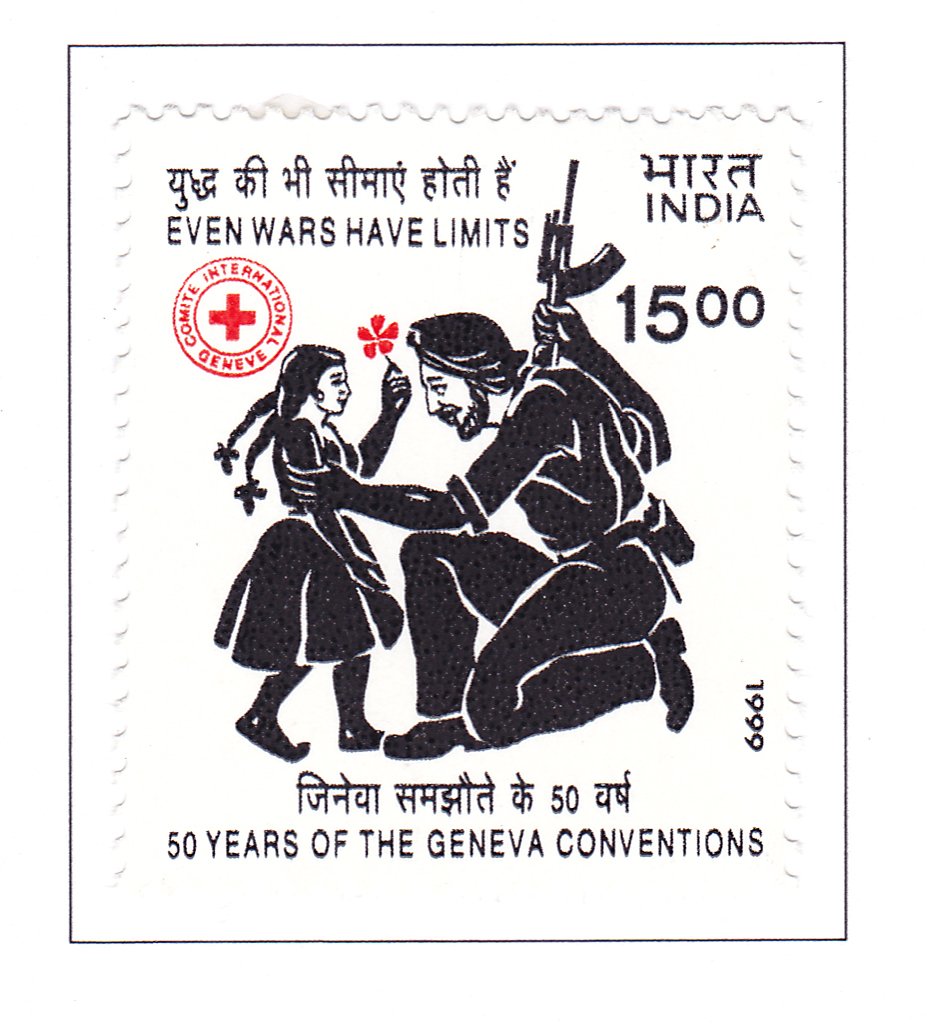
India has long upheld the values of humanity, dignity, and compassion—even in times of conflict. As one of the first countries to sign the Geneva Conventions, India has played a significant role in promoting international humanitarian law. To mark this commitment, the Department of Posts issued a commemorative postage stamp celebrating the 50th anniversary of the 1949 Geneva Conventions.
The Importance of the Geneva Conventions
The Geneva Conventions are among the most widely accepted international legal instruments, designed to protect human dignity during armed conflicts. Their primary aim is to ensure humane treatment and survival in war situations.
The four conventions of 1949 cover:
- First Convention: Protection of wounded and sick members of armed forces, along with medical personnel and chaplains.
- Second Convention: Protection of shipwrecked, wounded, and sick military personnel at sea.
- Third Convention: Safeguards for prisoners of war.
- Fourth Convention: Protection of civilians in enemy or occupied territories.
India’s Contribution to Humanitarian Law
India’s association with humanitarian principles dates back to its ancient civilization. Traditional Indian texts such as the Vedas, Upanishads, Smritis, and epics like the Mahabharata and Ramayana reflect early concepts of ethical warfare and the protection of non-combatants.
These ancient doctrines emphasized:
- The distinction between combatants and non-combatants
- Protection of civilians and non-military structures
- Ethical conduct during warfare
Such principles closely align with modern humanitarian laws outlined in the Geneva Conventions.
India’s Commitment in Modern Times
In the post-independence era, India has consistently upheld the spirit of the Geneva Conventions during conflicts. A notable example is the humane treatment of approximately 93,000 prisoners of war following the Indo-Pakistani War of 1971.
This reflects India’s strong adherence to international humanitarian standards and its dedication to protecting human rights, even during wartime.
Commemorative Stamp Significance
To honour this legacy, the Department of Posts released a special stamp titled:
“50th Anniversary of the 1949 Geneva Conventions”
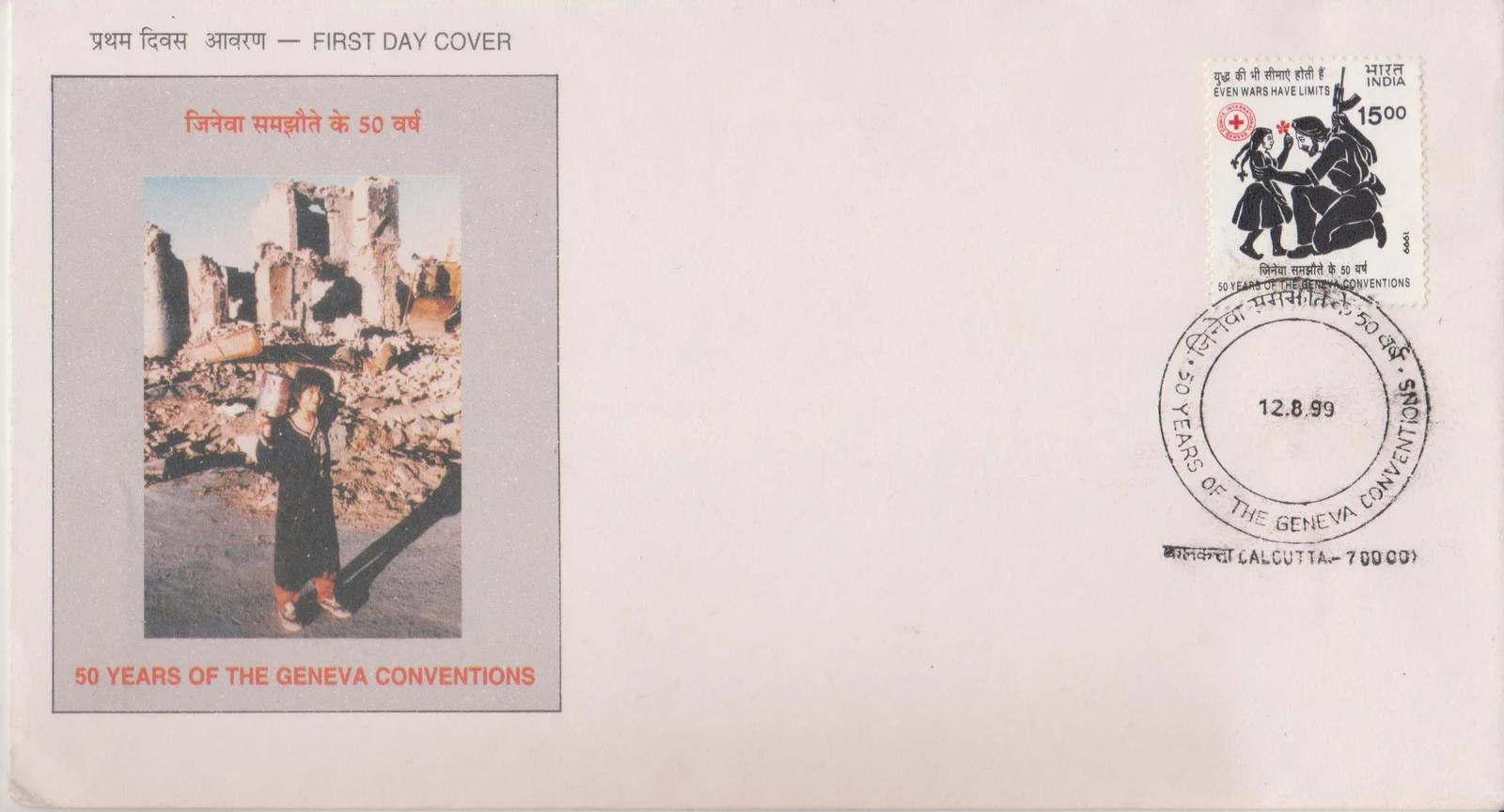
The design of the stamp and its First Day Cover symbolically represent India’s commitment to humanitarian values and the protection of human dignity in times of conflict.
A Symbol of Humanity in War
The commemorative stamp serves as a reminder that even in the harsh realities of war, humanity must prevail. India’s long-standing respect for ethical conduct—rooted in both ancient traditions and modern international law—continues to guide its actions on the global stage.
This stamp not only celebrates a historic milestone but also reinforces the universal message of peace, dignity, and compassion.
First Day Cover