
Geographical Indication Registered Handicraft Products

Technical Data
| Date of Issue | December 31, 2018 |
|---|---|
| Denomination | Rs. 25 |
| Quantity | 110,750 |
| Perforation | 14¼ x 14¼ |
| Printer | Security Printing Press, Hyderabad |
| Printing Process | Wet Offset |
| Watermark | No Watermark |
| Colors | Multicolor |
| Credit (Designed By) | Shri Kamleshwar Singh |
| Catalog Codes |
Michel IN BL206 Stamp Number IN 3102a Yvert et Tellier IN BF193 Stanley Gibbons IN MS3587 |
| Themes | Crafts | Elephants | Glass and Earthenware | Gods and goddesses | Metalworking | Musical Instruments | Textile |
Stamps in this Miniature Sheet
GI Handicraft Stamps of India – Celebrating Traditional Artistry
A Geographical Indication (GI) is a name or sign that identifies products originating from a specific region, known for their unique quality, reputation, or craftsmanship. To protect these traditional treasures, India — as a member of the World Trade Organization (WTO) — enacted the Geographical Indications of Goods (Registration and Protection) Act, 1999, effective from 15 September 2003.
The GI tag ensures that only authorized users within the designated region can produce and market those products under their registered names, preserving both heritage and authenticity. Darjeeling Tea was India’s first GI-tagged product (2004–05). Since then, hundreds of unique crafts and goods have been added to the list, each representing India’s vast cultural diversity.
In recognition of this legacy, the Department of Posts issued a special set of Commemorative Postage Stamps on GI Registered Handicraft Products, highlighting India’s traditional artistry and craftsmanship.
GI Registered Handicraft Products Featured on Stamps
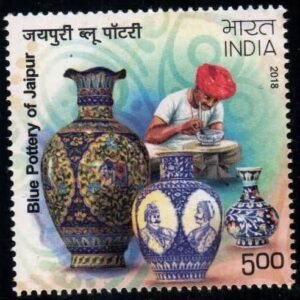
1. Blue Pottery of Jaipur
Originating from Persia and Afghanistan in the 14th century, Blue Pottery found a new home in Jaipur during the Mughal era. This art form, characterized by the use of Multani Mitti (Fuller’s Earth) and a distinctive blue glaze, combines Persian decorative elegance with Mongol and Chinese techniques.
Patronized by the rulers of Jaipur, blue pottery became a royal craft. Its unique quality lies in being low-fired, unglazed, and hygienic, making it both beautiful and functional. The Blue Pottery of Jaipur Stamp celebrates this enduring tradition of delicacy and grace.
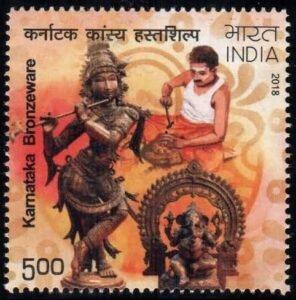
2. Karnataka Bronzesware
The art of bronze casting flourished in Karnataka under dynasties such as the Chalukyas, Rashtrakutas, Hoysalas, and Vijayanagara rulers. The region became known for its exquisite metal icons crafted through the lost-wax casting method, where molten metal is poured into molds formed from intricate wax models.
Bronze sculptures from Karnataka are revered worldwide — from the Sringeri Temple to museums in Boston, New York, Berlin, and Birmingham. Each icon is not merely a work of art but a spiritual representation, passed down through generations of master craftsmen.
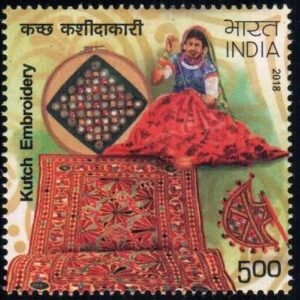
3. Kutch Embroidery
A vibrant expression of culture and identity, Kutch Embroidery originated in Kutch, Gujarat, influenced by diverse communities migrating from Iran, Iraq, Greece, Afghanistan, and Germany. Traditionally crafted by women, each embroidered piece tells a story through geometric patterns, vivid colours, and symbolic motifs — peacocks, camels, temples, and dancing figures.
This art form is passed from mothers to daughters, preserving tradition while empowering women economically and socially. The Kutch Embroidery Stamp honours this colourful legacy of craftsmanship and storytelling.
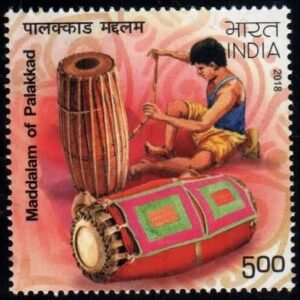
4. Maddalam of Palakkad
The Maddalam, a classical drum of South India, holds divine significance as it is often associated with Lord Shiva’s cosmic dance. Originating in the 13th century, it produces deep, resonant tones symbolizing the sacred sound of ‘Om’ or ‘Aum’.
Chiselled from jackfruit wood and decorated with brass, the Maddalam is an essential part of Kerala’s percussion ensembles like Panchavadyam. The Maddalam of Palakkad Stamp celebrates the rhythm of tradition that continues to echo through South India’s cultural performances.
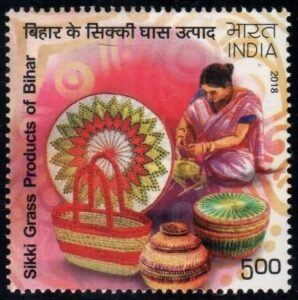
5. Sikki Grass Products of Bihar
Known as the “golden grass” of Bihar, Sikki grows in the marshy lands of Madhubani and Darbhanga districts. Women artisans craft eco-friendly, biodegradable items such as baskets, coasters, dolls, toys, wall hangings, and jewellery from its delicate golden fibres.
The use of natural dyes and motifs inspired by local flora, fauna, and folklore makes each piece a reflection of Bihar’s artistic heritage. The Sikki Grass Craft Stamp showcases how sustainable art and cultural heritage intertwine beautifully in India’s traditional crafts.
Conclusion
The GI Handicraft Stamps of India are more than just postal collectibles — they are miniature tributes to the craftsmanship, identity, and cultural pride of India’s artisans. Each stamp serves as a reminder of how traditional skills continue to thrive, inspiring future generations to cherish and protect their regional heritage.
Leave a Comment
You must be logged in to post a comment.