
Greetings 2009
Technical Data
| Date of Issue | December 11, 2009 |
|---|---|
| Denomination | Rs. 20 |
| Quantity | 400,000 |
| Perforation | 13 |
| Printer | India Security Press, Nasik |
| Printing Process | Wet Offset |
| Watermark | No Watermark |
| Colors | Multicolor |
| Credit (Designed By) | Sh. Sankha Samanta |
| Catalog Codes |
Michel IN BL76 Stanley Gibbons IN MS2668 Phila-India IN 2549 |
| Themes | Greetings |
Stamps in this Miniature Sheet
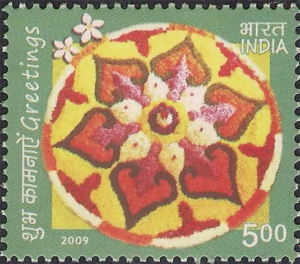
Rangoli, Kolam and the Timeless Tradition of Floor Paintings
Indian folk art, including wall paintings and floor art, dates back nearly 5,000 years. Among the most beautiful and enduring traditions are Rangoli, Kolam, Alpana, and floral floor decorations, created to welcome guests and bring prosperity, positivity, and divine blessings into the home.
These traditional art forms continue to flourish across India, preserving cultural identity and regional diversity.
Rangoli: The Colourful Floor Art of Western India
The word Rangoli is derived from Rang (colour) and Aavalli (row of colours or coloured creepers). Although Rangoli originated in Maharashtra, today it is practiced across India.
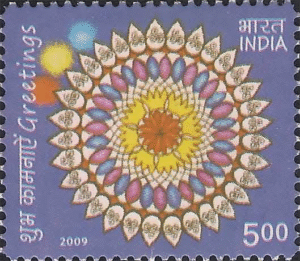
In western states such as Maharashtra, Gujarat, and Rajasthan, Rangoli designs are characterized by vibrant colour-filled patterns that stand out against the floor surface. Traditionally, small designs of about 2 feet by 2 feet were created. Over time, Rangoli evolved into large, intricate compositions covering entire courtyards and floors.
Common Motifs in Rangoli
Rangoli patterns are often inspired by nature, including:
- Peacocks
- Swans
- Mango motifs
- Flowers and creepers
Originally, colours were derived from natural materials such as tree bark, leaves, indigo, mud, turmeric, rice powder, and brick powder. Today, synthetic dyes in bright shades are commonly used.
Rangoli can create:
- A flat appearance using coloured powders
- A 3D effect using cereals, pulses, coriander seeds, and natural grains
Kolam: Sacred Geometric Art of South India
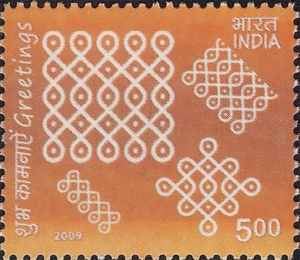
Kolam is predominantly practiced in Tamil Nadu, Karnataka, and Andhra Pradesh. Unlike colour-filled Rangoli, Kolam designs are usually geometric and symmetrical, created using continuous lines—straight, wavy, or curved.
Kolams are typically drawn using:
- Dry rice powder
- Rice paste
The white rice flour contrasts beautifully with the ground and serves an ecological purpose—it feeds ants and small creatures, symbolizing harmony with nature and coexistence.
The Ritual of Drawing Kolam
Every morning and evening, women clean the threshold of their homes and draw Kolams freehand. The art is traditionally taught to girls from a young age and requires skill, precision, and practice.
On festive occasions, elaborate Kolams are drawn at the entrance, often outlined in red brick paste known as kavi to enhance their grandeur.
A famous festive Kolam depicts the Sun God in his chariot drawn by 8–16 white horses, created during Pongal or Sankranti (14th–15th January) to mark the Sun’s northward journey from the Tropic of Capricorn to the Tropic of Cancer.
Floral Floor Art of Kerala
In Kerala, floor art takes the form of intricate floral designs, especially during the harvest festival of Onam.
Using fresh flowers such as marigolds, chrysanthemums, daisies, roses, jasmine, and leaves, communities create stunning floral patterns known as Pookalam. During the Onam week, the designs grow larger and more elaborate each day as more participants join in.
A special flower called Thumba, often referred to as the “Vishnu foot,” is considered essential in traditional Onam floral arrangements.
Yantra Kolams: Sacred Energy Designs
Some Kolams are drawn as Yantras, a Sanskrit term meaning “instrument” or sacred geometric design. These patterns are created around sacred fire pits during religious ceremonies.
Among the most popular are Nava Graha Kolams, representing the nine planets. These geometric designs include triangles, circles, and multi-petalled lotus patterns in vibrant colours, symbolizing cosmic balance and spiritual energy.
The Beauty of Imperfection in Folk Art
One of the most charming aspects of Indian folk art is its individuality. Unlike rigid classical forms, small imperfections in Rangoli or Kolam become embellishments, making each design unique.
Every artwork reflects the personality and hand of its creator—steady, delicate, or expressive—transforming each pattern into a deeply personal experience.
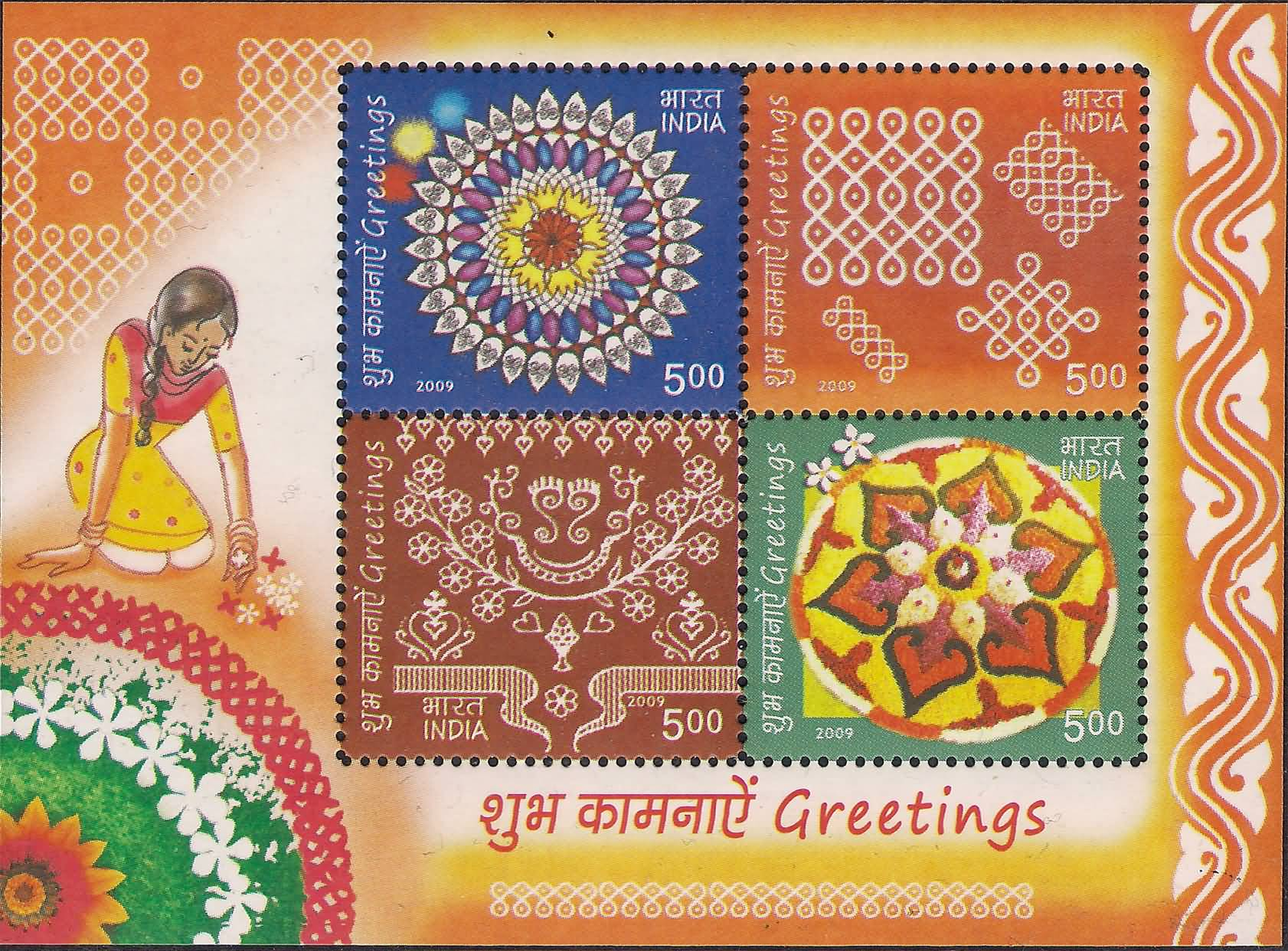
Miniature Sheet of Special Postage Stamps on Folk Art for Greetings
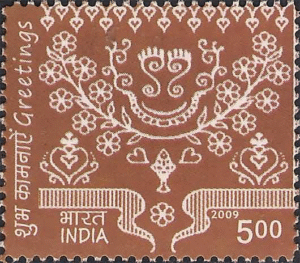
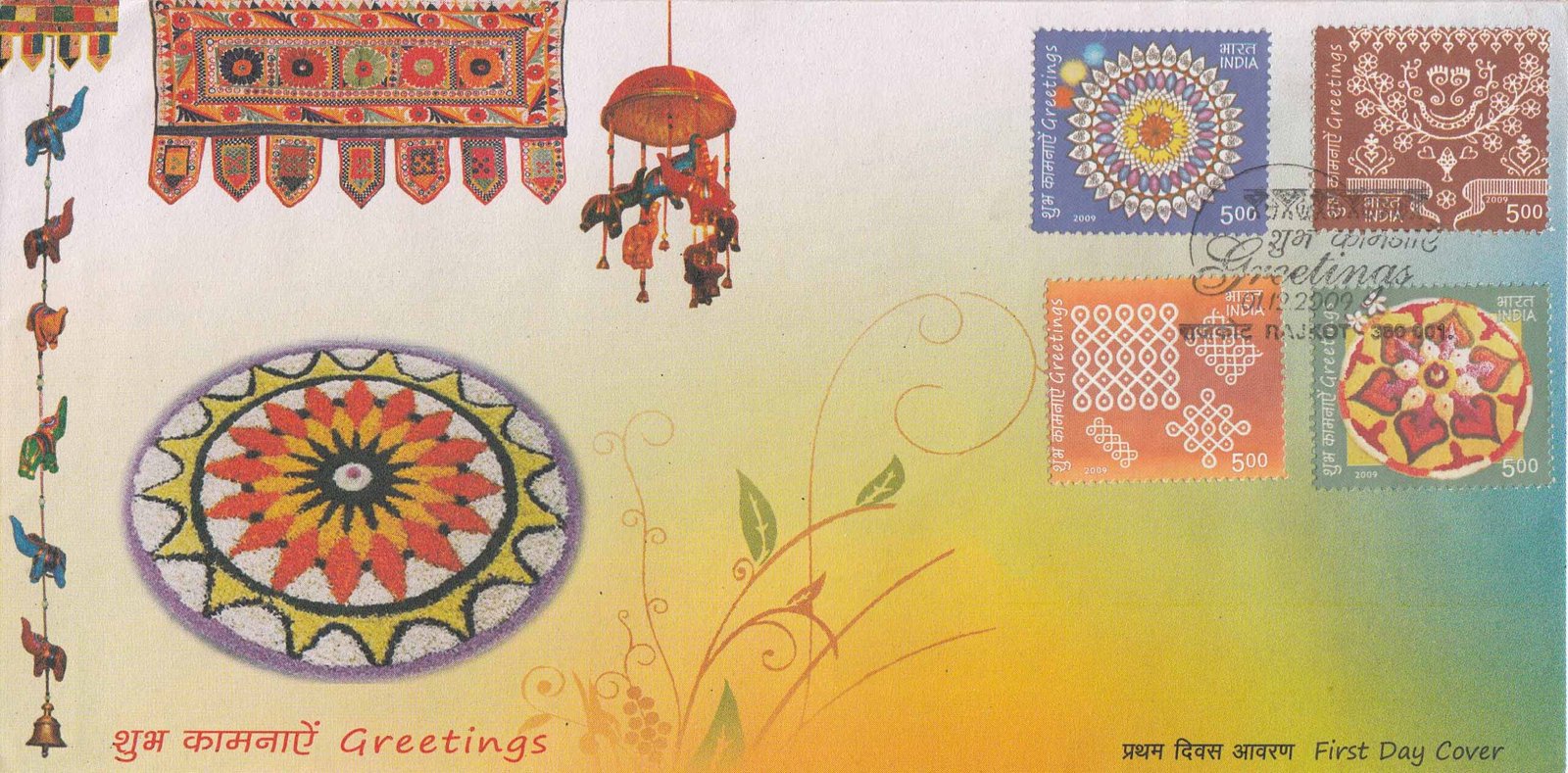
To celebrate India’s rich cultural heritage, India Post issued a Miniature Sheet consisting of four special postage stamps on Folk Art for Greetings.
These special stamps beautifully showcase traditional Indian floor art forms such as Rangoli and Kolam, promoting the spirit of festivity, cultural diversity, and artistic expression.
By issuing this Miniature Sheet, India Post honors the timeless tradition of Indian folk art and encourages its preservation for future generations.
Conclusion
Indian folk art, particularly Rangoli and Kolam, represents a harmonious blend of art, spirituality, ecology, and daily life. Rooted in tradition yet evolving with time, these floor paintings continue to welcome prosperity, celebrate festivals, and express creativity across generations.
Through initiatives like special commemorative postage stamps, this vibrant cultural legacy continues to inspire and reach audiences worldwide.
First Day Cover
Leave a Comment
You must be logged in to post a comment.