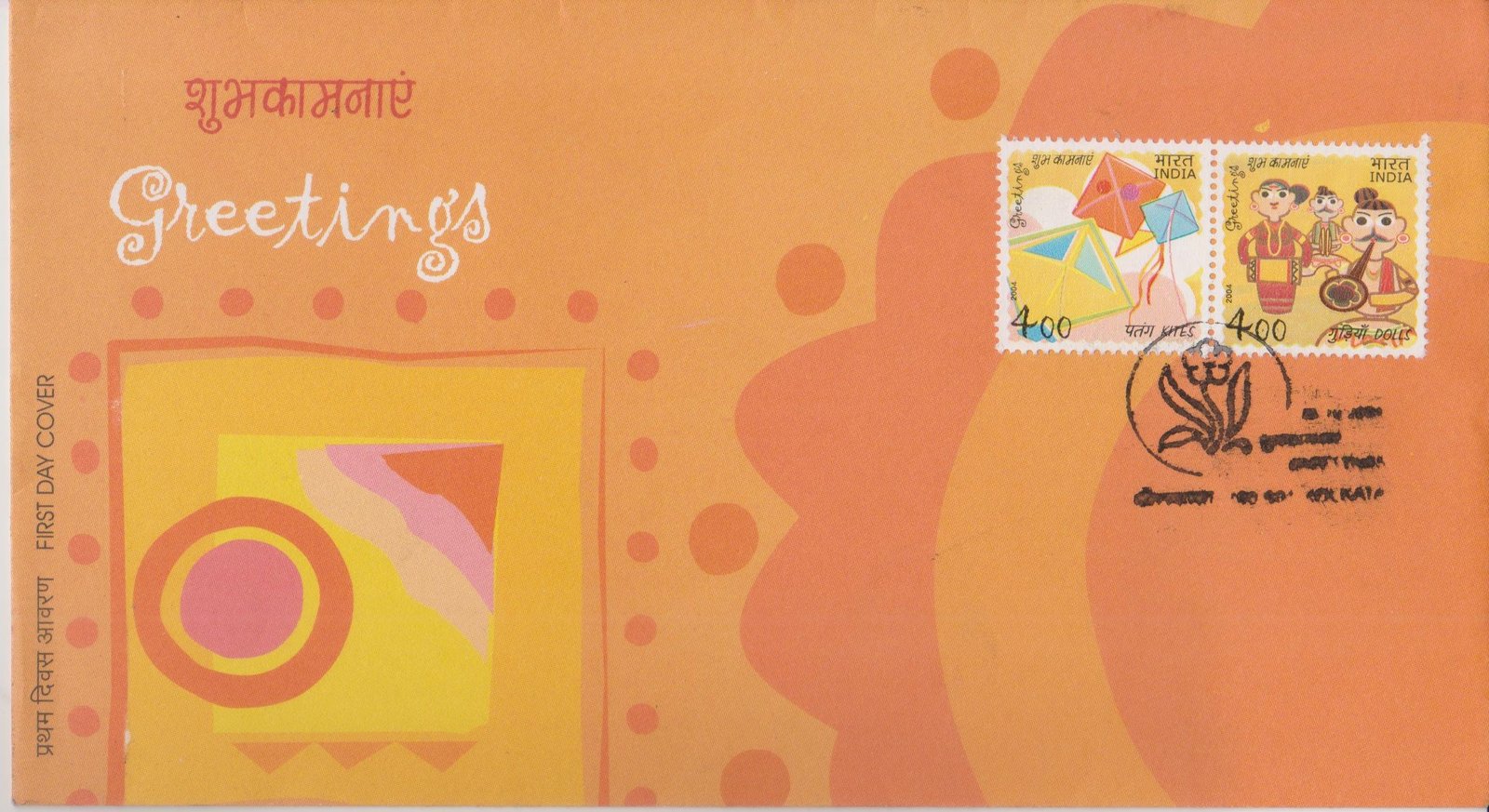
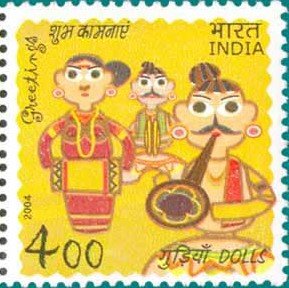
Greetings – Dolls
Technical Data
| Date of Issue | October 25, 2004 |
|---|---|
| Denomination | Rs. 4 |
| Quantity | 800,000 |
| Perforation | comb 13½ |
| Printer | Security Printing Press, Nashik |
| Printing Process | Photogravure |
| Watermark | No Watermark |
| Colors | Multicolor |
| Credit (Designed By) | Shri Kamleshwar Singh Smt. Alka Sharma |
| Catalog Codes |
Michel IN 2056 Stamp Number IN 2083b Yvert et Tellier IN 1821 Stanley Gibbons IN 2236 WADP Numbering System - WNS IN042.04 |
| Themes | Greetings | Toys |
Celebrating India’s Cultural Heritage
The exchange of greetings has long been a meaningful way of expressing emotions, goodwill, and festive cheer. Over the centuries, greetings have evolved from handwritten messages on leaves and scrolls to beautifully designed greeting cards sent through the post. To celebrate this tradition, India Post introduced special Greetings Stamps that convey joy and good wishes during festive occasions.
Among these special issues is a commemorative postage stamp featuring dolls, released as part of the Greetings stamp series. The stamp highlights the cultural richness and artistic heritage represented by traditional dolls of India.
Dolls in Indian Culture
Dolls have long served as a vibrant medium for expressing art, culture, and tradition. Across centuries, they have been used to depict various aspects of social life, regional customs, and historical narratives. In India, dolls beautifully reflect the diversity of costumes, traditions, and lifestyles found across the country.
The tradition of doll-making in India dates back thousands of years. From ancient times to the modern era, dolls have evolved in both form and material. Early dolls were crafted from stone, clay, or wood, while later versions were made using cloth, papier-mâché, and other artistic materials.
Dolls as Cultural Ambassadors
Indian dolls serve as cultural ambassadors, representing the rich artistic traditions of different regions. Through dolls, artisans portray traditional attire, folklore characters, and scenes from everyday life.
Over the 5,000-year history of Indian civilization, dolls have played an important role in preserving and showcasing cultural identity. They capture the colourful diversity of Indian society and help pass traditions from one generation to the next.
Today, dolls continue to fascinate people of all ages around the world. Beyond being toys, they also act as decorative art pieces and educational tools, helping people understand different cultures and traditions.
Greetings Stamp on Dolls
To celebrate the cultural significance of dolls and the tradition of sharing greetings, India Post issued a Greetings commemorative postage stamp featuring dolls. The stamp reflects the artistic beauty and cultural symbolism associated with traditional Indian dolls.
Through this stamp, India Post highlights the importance of culture, creativity, and festive communication, reminding us that greetings are not just messages but expressions of warmth, tradition, and shared happiness.
First Day Cover