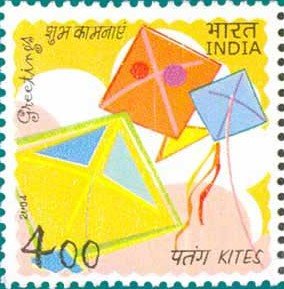
Greetings – Kites
Technical Data
| Date of Issue | October 25, 2004 |
|---|---|
| Denomination | Rs. 4 |
| Quantity | 800,000 |
| Perforation | comb 13½ |
| Printer | Security Printing Press, Nashik |
| Printing Process | Photogravure |
| Watermark | No Watermark |
| Colors | Multicolor |
| Credit (Designed By) | Shri Kamleshwar Singh Smt. Alka Sharma |
| Catalog Codes |
Michel IN 2055 Stamp Number IN 2083a Yvert et Tellier IN 1820 Stanley Gibbons IN 2205 WADP Numbering System - WNS IN041.04 |
| Themes | Greetings | Kites | Toys |
Celebrating Joy and Tradition
The tradition of exchanging greetings has long been a meaningful way of expressing emotions, goodwill, and festive spirit. Over time, greetings have evolved from handwritten messages on leaves and scrolls to modern greeting cards and digital communication. Recognizing the cultural importance of this tradition, India Post introduced Greetings Stamps to celebrate special occasions and convey messages of happiness and goodwill.
Among these special issues is a commemorative postage stamp featuring kites, released as part of a greetings stamp series. The stamp beautifully captures the joy and excitement associated with kite flying, a beloved cultural tradition in India.
Kites in Culture and History
Kites have fascinated people across the world for centuries. Although the exact origin of kite flying remains uncertain, historians believe that kites were first flown in China more than 2,000 years ago. From there, the tradition spread to many parts of the world, evolving into different styles and purposes in various cultures.
In India, kite flying has become an integral part of social and festive celebrations. Historical evidence of kite flying in India can be found in miniature paintings from the Mughal period, indicating that the activity was popular among both royalty and the common people.
Kite Flying as a Festive Tradition
Kite flying in India is more than just a pastime—it is a vibrant community celebration. During festivals and special occasions, the skies are filled with colourful kites, and the atmosphere comes alive with excitement and friendly competition.
The joy of flying kites with friends and family creates unforgettable memories. The sight of bright kites dancing in the sky, accompanied by the lively sounds of celebration, reflects the festive spirit of Indian culture.
Kites and Scientific Discovery
Beyond recreation, kites have also played a role in scientific exploration. During the 18th and 19th centuries, kites were used in experiments that helped scientists understand important aerodynamic principles. These discoveries later contributed to the development of technologies such as airplanes, gliders, and parachutes.
Thus, the simple kite not only represents fun and celebration but also symbolizes human curiosity and innovation.
Greetings Stamp on Kites
To capture this spirit of joy and celebration, India Post issued a Greetings commemorative postage stamp featuring kites. The stamp reflects the colourful and festive nature of kite flying and conveys the emotions associated with sending greetings during special occasions.
Through this stamp, India Post celebrates a tradition that brings people together and spreads happiness across distances—much like the greeting messages it accompanies.
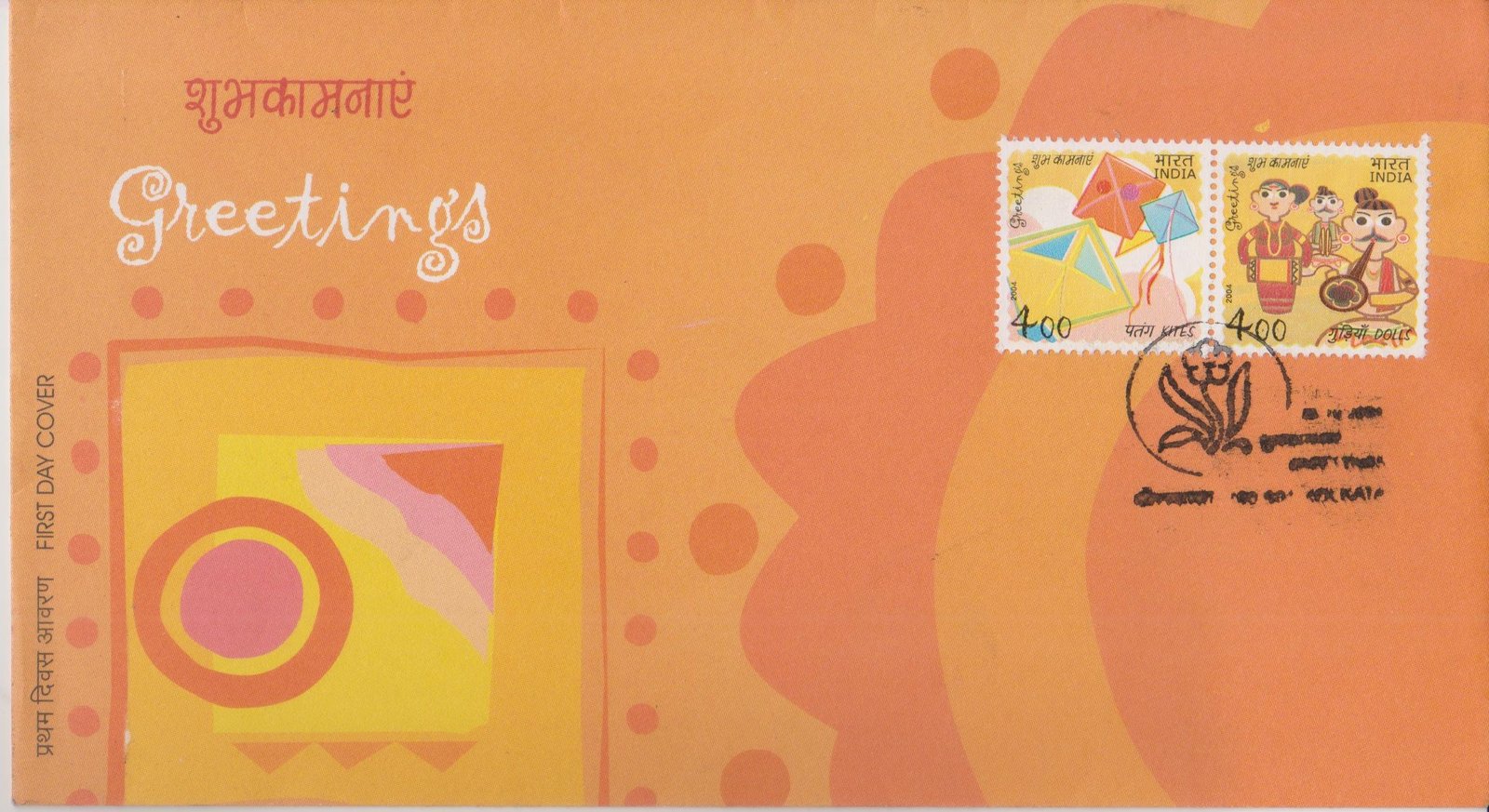
First Day Cover