
Floral pattern

Technical Data
| Date of Issue | December 11, 2009 |
|---|---|
| Denomination | Rs. 5 |
| Quantity | 800,000 |
| Perforation | 13 |
| Printer | India Security Press, Nasik |
| Printing Process | Wet Offset |
| Watermark | No Watermark |
| Colors | Multicolor |
| Credit (Designed By) | Sh. Sankha Samanta |
| Catalog Codes |
Michel IN 2442 Stamp Number IN 2380 Stanley Gibbons IN 2667 WADP Numbering System - WNS IN095.2009 |
| Themes | Greetings |
Nature’s Timeless Inspiration
Floral patterns have long been an integral part of Indian folk art, symbolizing beauty, fertility, purity, and spiritual harmony. Inspired by nature’s abundance, these decorative motifs appear in textiles, floor art, architecture, manuscripts, and ritual designs across the country. With their flowing symmetry and vibrant colours, floral patterns reflect India’s deep-rooted connection with nature and aesthetics.
In traditional art, flowers are not merely decorative elements; they carry symbolic meaning. The lotus represents purity and enlightenment, the marigold signifies auspiciousness, and jasmine reflects grace and devotion. These motifs often appear in concentric and balanced arrangements, similar to Mandala-inspired designs, reinforcing harmony and cosmic order.
Floral Motifs in Regional Traditions
Across India, floral patterns form the foundation of many folk art traditions:
- In Tamil Nadu, Kolam designs frequently incorporate floral symmetry drawn with rice flour at household entrances.
- In Rajasthan and Gujarat, Rangoli patterns are enriched with flower petals and vibrant pigments, especially during festivals like Diwali.
- In West Bengal, Alpana art uses rice paste to create delicate floral motifs symbolizing prosperity and welcome.
- Mughal architectural decorations in Agra and Delhi famously feature intricate floral carvings and inlay work inspired by Persian aesthetics.
Floral motifs are also central to Indian textile traditions such as block printing, embroidery, and handloom weaving, where stylized vines and blossoms create rhythmic, repeating designs.
Materials and Artistic Expression
Traditionally, floral patterns were created using natural materials such as:
- Flower petals (marigold, rose, jasmine)
- Rice flour and coloured powders
- Turmeric and vermillion
- Natural dyes extracted from plants
These materials reinforced the eco-friendly and sacred character of the art. Even today, floral Rangoli made from fresh petals remains a common sight during religious ceremonies and celebrations.
In folk expression, floral designs embrace slight variations and imperfections, making each creation unique. The flow of petals, curves of vines, and layering of colours reflect the artist’s creativity and devotion.
Commemorative Postage Stamp on Floral Patterns
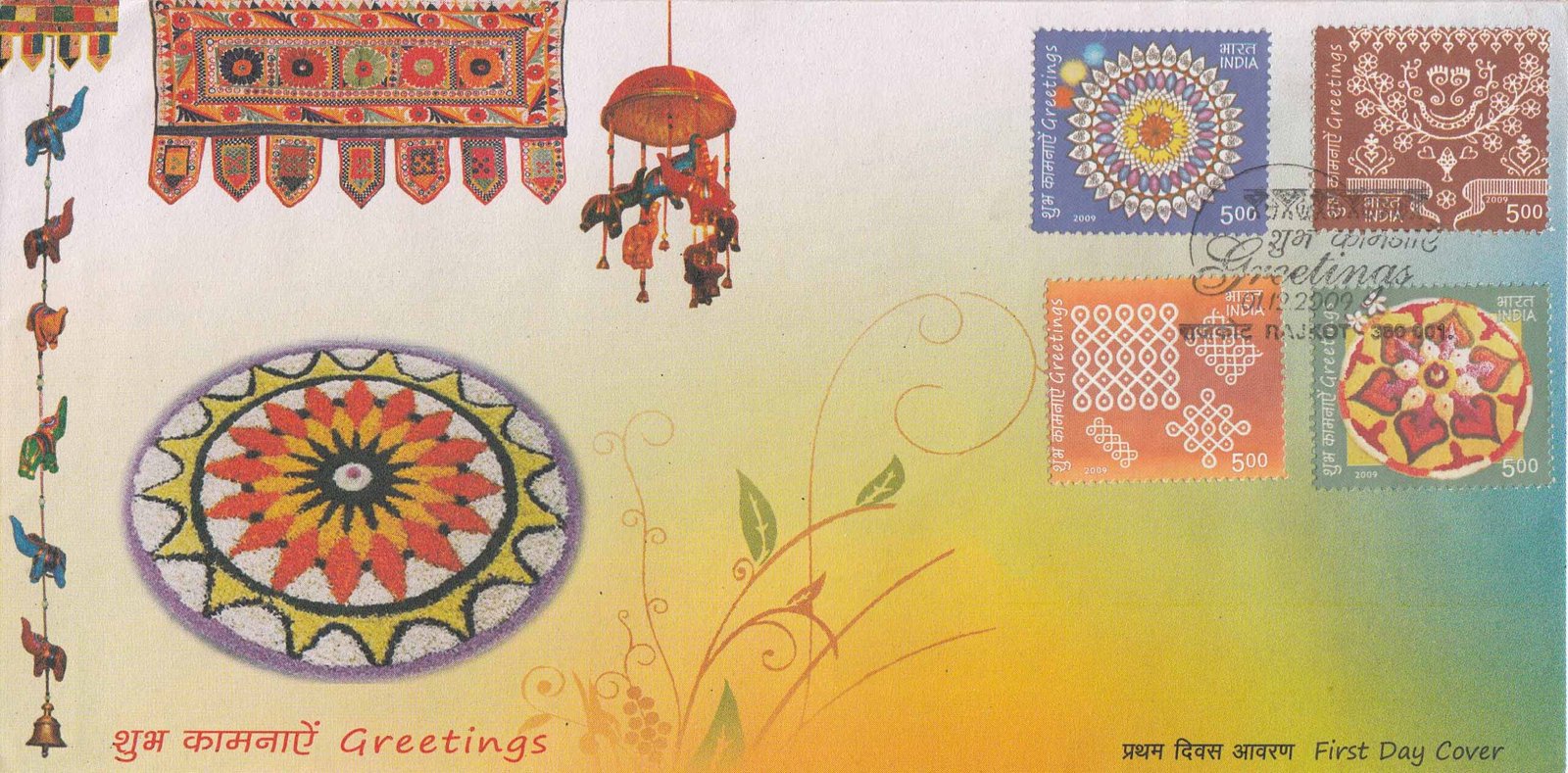
Recognizing the aesthetic and cultural importance of floral designs in Indian heritage, India Post has issued commemorative postage stamps celebrating traditional art forms that prominently feature floral motifs.
These commemorative stamps showcase India’s vibrant folk artistry and help preserve the legacy of decorative traditions passed down through generations. By featuring floral patterns, the stamps serve as miniature ambassadors of India’s artistic richness and natural inspiration.
Floral patterns continue to flourish in contemporary design, fashion, architecture, and graphic arts, blending tradition with modern creativity. Whether drawn at a doorstep, woven into fabric, carved in stone, or featured on commemorative postage stamps, floral motifs remain a timeless symbol of India’s cultural elegance and enduring harmony with nature.
First Day Cover
Leave a Comment
You must be logged in to post a comment.