
Mandala

Technical Data
| Date of Issue | December 11, 2009 |
|---|---|
| Denomination | Rs. 5 |
| Quantity | 800,000 |
| Perforation | 13 |
| Printer | India Security Press, Nasik |
| Printing Process | Wet Offset |
| Watermark | No Watermark |
| Colors | Multicolor |
| Credit (Designed By) | Sh. Sankha Samanta |
| Catalog Codes |
Michel IN 2439 Stamp Number IN 2377 Stanley Gibbons IN 2664 WADP Numbering System - WNS IN092.2009 |
| Themes | Greetings |
Sacred Geometry and Spiritual Symbolism
The Mandala, derived from the Sanskrit word meaning “circle,” is a powerful symbol in Indian folk art representing the universe, balance, and spiritual harmony. With roots stretching back thousands of years, Mandalas are sacred geometric patterns used in rituals, meditation, and decorative traditions across India.
In Indian culture, Mandalas are more than artistic designs—they symbolize wholeness, cosmic order, and the cyclical nature of life. Their symmetrical patterns and concentric formations reflect unity and interconnectedness.
Mandala in Rangoli and Kolam Traditions
Mandala-inspired designs are widely seen in floor art traditions such as Rangoli and Kolam. In Tamil Nadu, Karnataka, and Andhra Pradesh, Kolam patterns often follow geometric symmetry similar to Mandalas, drawn with continuous lines using rice flour.
In Western India, colourful Rangoli designs incorporate circular Mandala motifs filled with flowers, peacocks, mango leaves, and other nature-inspired elements. In Eastern India, Alpana floor art also reflects Mandala-like patterns created with rice paste.
These sacred designs are drawn at entrances to welcome guests and invite positive energy into homes, especially during festivals and auspicious occasions.
Yantra Mandalas: Energy and Devotion
Some Mandalas take the form of Yantras, sacred geometric diagrams believed to channel spiritual energy. “Yantra” in Sanskrit means instrument, and these designs are often drawn around sacred fire pits during religious ceremonies.
One popular example is the Nava Graha Mandala, symbolizing the nine planetary deities. These intricate patterns include triangles, circles, and multi-petalled lotus motifs arranged with mathematical precision. Creating such Mandalas requires skill, devotion, and concentration, making the process itself a meditative practice.
Materials and Artistic Expression
Traditionally, Mandalas in Indian folk art were created using natural materials such as:
- Rice flour
- Turmeric and vermillion
- Brick powder
- Flower petals
- Pulses and seeds
These materials not only enhanced beauty but also symbolized harmony with nature. Today, synthetic colours are often used, though traditional methods remain valued for their authenticity.
In folk art, imperfections are celebrated. Each Mandala reflects the individuality of its creator—the firmness or softness of lines, the choice of colours, and the interpretation of patterns make every design unique.
Commemorative Postage Stamp on Mandala Folk Art
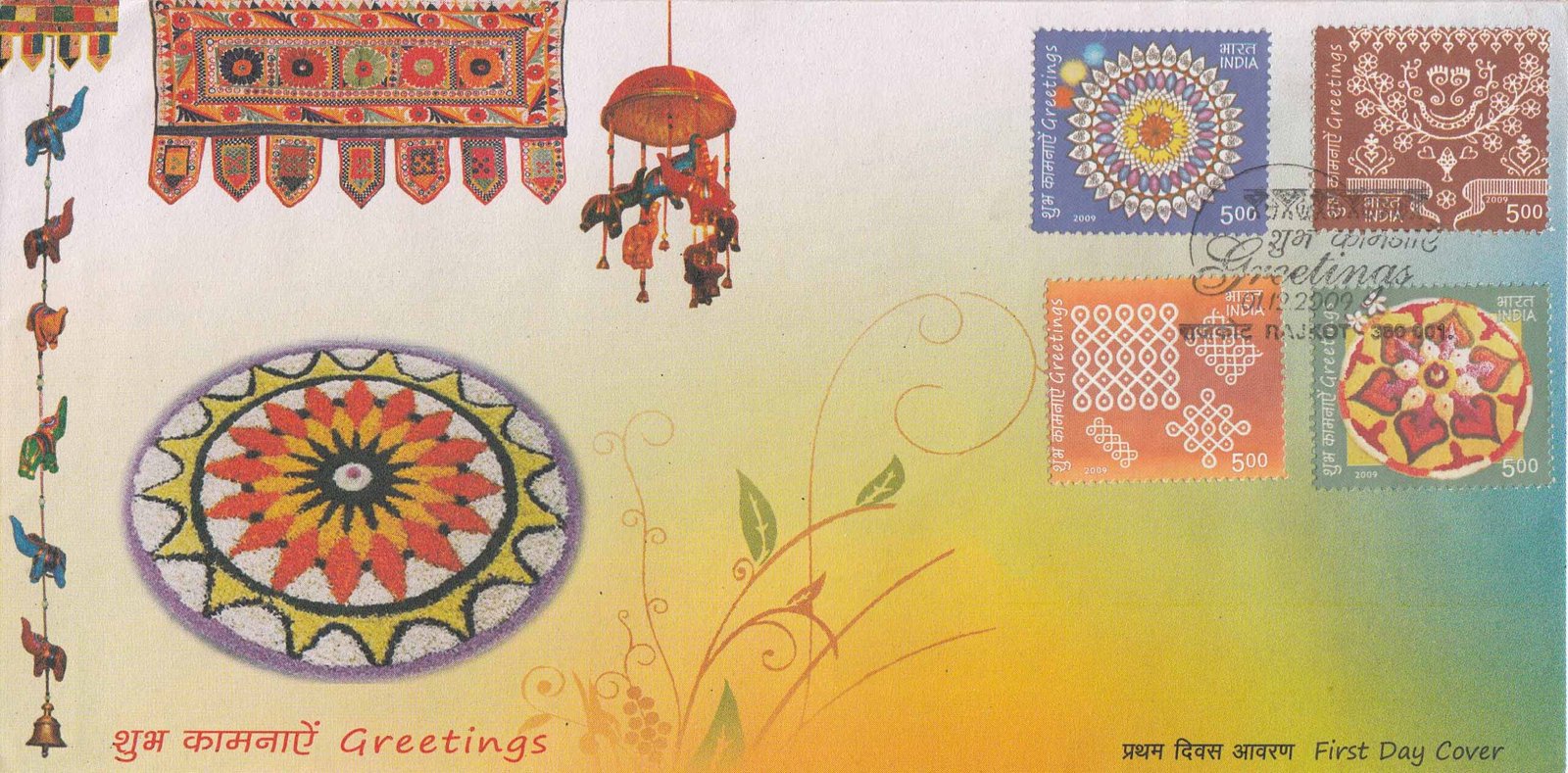
Recognizing the cultural and artistic significance of Mandala-inspired folk traditions, India Post has issued special commemorative postage stamps as part of its Greetings series.
These commemorative postage stamps celebrate India’s rich folk art heritage, including Mandala-based Rangoli and Kolam designs. By featuring these timeless patterns, India Post highlights the importance of preserving traditional art forms and promoting India’s cultural legacy.
The Mandala continues to inspire artists and spiritual seekers worldwide. From temple courtyards to festive home decorations and commemorative postage stamps, Mandalas remain a vibrant symbol of India’s enduring artistic and spiritual heritage.
First Day Cover
Leave a Comment
You must be logged in to post a comment.