
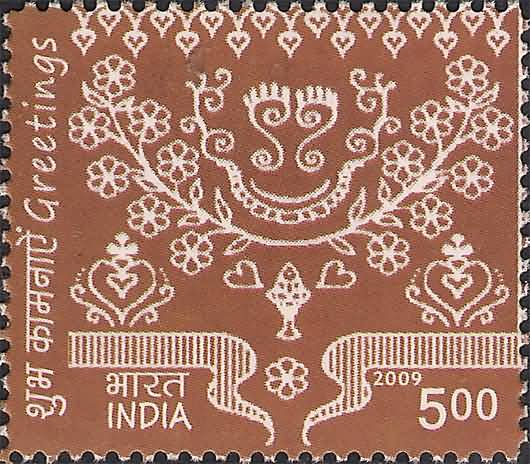
Pattern of Flowers and Hearts
Technical Data
| Date of Issue | December 11, 2009 |
|---|---|
| Denomination | Rs. 5 |
| Quantity | 800,000 |
| Perforation | 13 |
| Printer | India Security Press, Nasik |
| Printing Process | Wet Offset |
| Watermark | No Watermark |
| Colors | Multicolor |
| Credit (Designed By) | Sh. Sankha Samanta |
| Catalog Codes |
Michel IN 2441 Stamp Number IN 2379 Yvert et Tellier IN 2204 Stanley Gibbons IN 2666 WADP Numbering System - WNS IN094.2009 |
| Themes | Greetings |
A Symbol of Love and Harmony in Indian Decorative Art
The pattern of flowers and hearts beautifully blends nature and emotion into a unified decorative expression. Rooted in traditional artistic sensibilities, such motifs symbolize love, purity, affection, joy, and harmony. While floral patterns have long represented prosperity and spiritual balance in Indian folk traditions, the heart motif adds a universal symbol of human emotion and warmth.
In Indian decorative art, floral designs form the foundation of Rangoli, Kolam, Alpana, textile weaving, embroidery, and architectural ornamentation. When combined with heart shapes, these patterns take on a celebratory and festive character, often used in greeting designs, wedding décor, and special occasions that honor relationships and togetherness.
Cultural Significance of Floral and Heart Motifs
Flowers such as the lotus, marigold, and jasmine traditionally symbolize purity, auspiciousness, and devotion. The heart motif, though more universal in origin, harmonizes naturally with Indian decorative traditions by expressing compassion and unity.
Across regions:
- In Tamil Nadu, Kolam patterns sometimes incorporate stylized floral symmetry that can be adapted into heart-inspired festive designs.
- In Rajasthan and Gujarat, colourful Rangoli during Diwali and weddings often blends petals and symbolic shapes representing joy and celebration.
- Contemporary greeting art frequently merges floral vines with heart forms to express affection and festivity.
The combination creates rhythmic symmetry—flowers radiating outward while hearts form central or repeating motifs—evoking both emotional warmth and aesthetic balance.
Materials and Artistic Expression
Traditionally, such patterns are created using:
- Flower petals like marigold and rose
- Rice flour and coloured powders
- Natural dyes and pigments
- Decorative textiles and embroidery threads
These designs appear in home décor, fabrics, festival decorations, and handcrafted greeting art. The flowing curves of petals and the rounded contours of hearts complement each other visually, creating a soft, harmonious appearance.
Each pattern reflects individual creativity. Variations in symmetry, colour selection, and detailing make every design distinctive while preserving its symbolic essence.
Commemorative Postage Stamp on Floral and Heart Patterns
Celebrating themes of love, festivity, and artistic heritage, India Post has issued commemorative postage stamps in its Greetings series that feature vibrant floral designs combined with heart motifs.
These commemorative postage stamps highlight India’s decorative traditions while also embracing universal themes of affection and goodwill. By depicting patterns of flowers and hearts, the stamps serve as miniature expressions of celebration, unity, and artistic elegance.
The pattern of flowers and hearts continues to inspire contemporary designers, artisans, and illustrators. Whether drawn in Rangoli at a doorstep, embroidered on textiles, or featured on commemorative postage stamps, this motif remains a timeless expression of love, beauty, and cultural harmony.
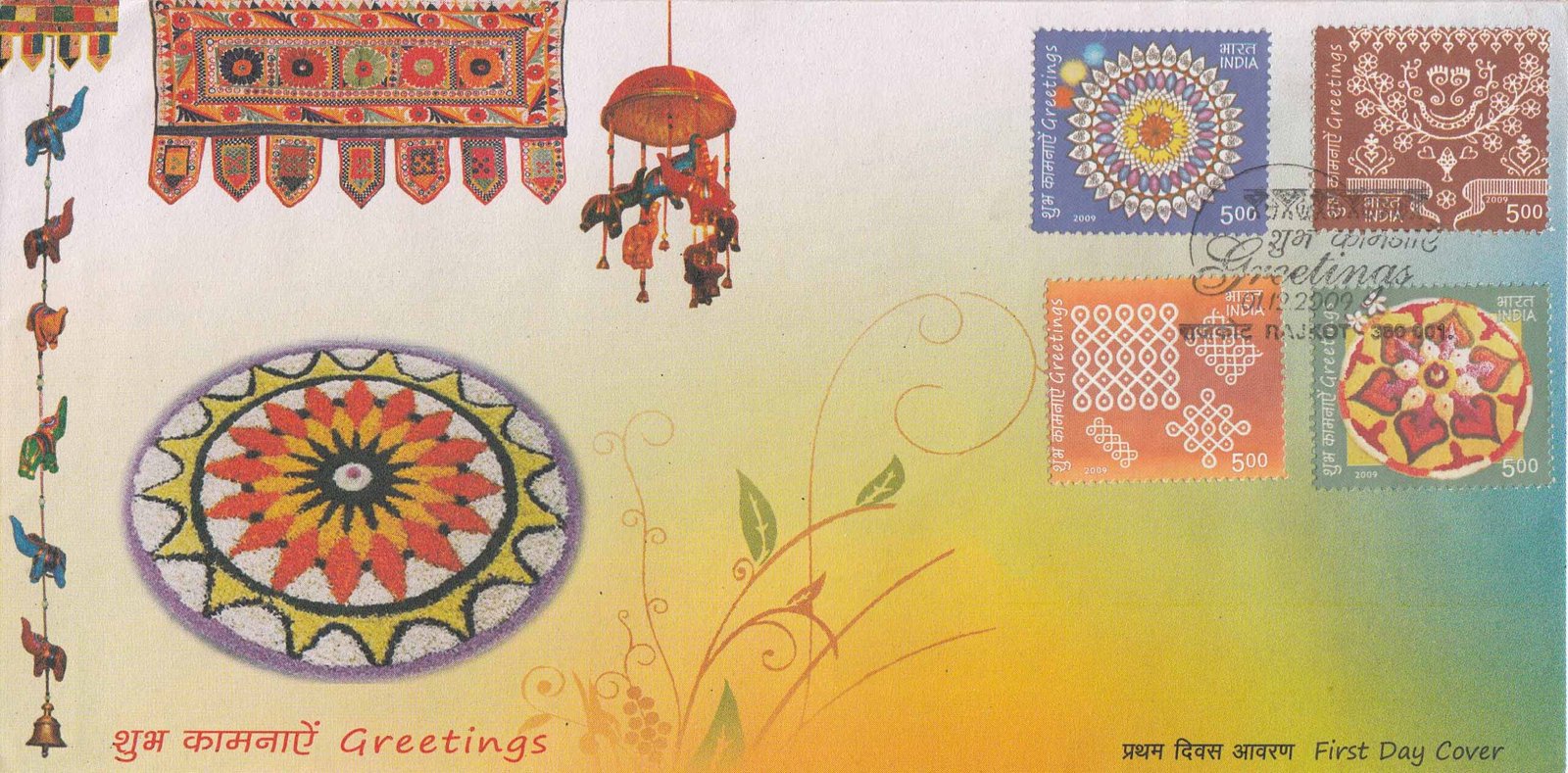
First Day Cover
Leave a Comment
You must be logged in to post a comment.