Handicrafts of India

Technical Data
| Date of Issue | November 15, 2002 |
|---|---|
| Denomination | Rs. 20 |
| Quantity | 100,000 |
| Perforation | comb13¼ x 13 |
| Printer | Calcutta Security Printers Ltd |
| Printing Process | Offset Lithography |
| Watermark | No Watermark |
| Colors | Multicolor |
| Credit (Designed By) | Shri Kamleshwar Singh |
| Catalog Codes |
Michel IN BL15 Stamp Number IN 1983e Yvert et Tellier IN BF14 Stanley Gibbons IN MS2102 |
| Themes | Crafts | Elephants | Textile |
Stamps in this Miniature Sheet

Traditional Crafts and Cultural Heritage of India
India has a rich and unbroken tradition of handicrafts that dates back to the Indus Valley Civilisation. The country’s diverse cultural, climatic, and geographical landscape has allowed a wide variety of crafts, techniques, and artistic traditions to flourish over centuries.
From rural cottage industries to highly skilled artisan work, Indian handicrafts represent both cultural identity and economic livelihood.
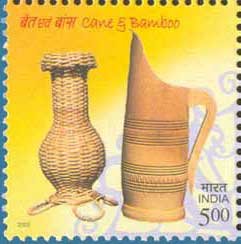
Cane and Bamboo Craft in India
Cane and bamboo work is widely practiced across India, especially in regions rich in natural resources like Assam. This craft is primarily a household or cottage industry and does not rely on mechanical devices.
It provides:
- Part-time employment to farmers during the off-season
- Full-time work for skilled artisans
Artisans create a variety of products such as decorative baskets, trays, and traditional items like chalani, showcasing both utility and artistic excellence.
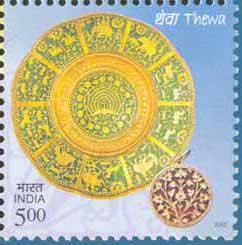
Thewa Art of Rajasthan
Thewa art is a unique form of meenakari ornamentation practiced in Rajasthan. This intricate art involves embedding finely worked gold designs onto colored glass.
The process includes:
- Preparing detailed designs on thin sheets of gold
- Treating and molding glass using heat and chemicals
- Mounting the glass into a polished silver frame
The final product is a stunning piece of jewelry or decorative art that reflects exceptional craftsmanship.
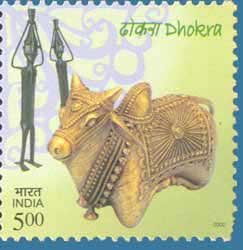
Dhokra Metal Craft
Dhokra is an ancient metal casting technique practiced by tribal communities in Chhattisgarh, Odisha, and West Bengal.
This craft uses the traditional lost wax technique, where:
- A wax model is created and covered with clay
- The mould is heated to melt the wax
- Molten metal is poured into the mould
Each piece is unique because the mould is used only once. The process involves multiple stages and requires great skill and precision.
Patan Patola: A Luxurious Textile Tradition
Among India’s finest textiles, Patan Patola holds a special place. Originating from Patan, this craft uses the complex double ikat weaving technique.
Key features include:
- Use of high-quality silk
- Intricate and time-consuming weaving process
- Bright, symmetrical patterns
Patola fabrics are not only prized for their beauty but also hold social and religious importance, often worn during special ceremonies.
Philatelic Recognition of Indian Handicrafts
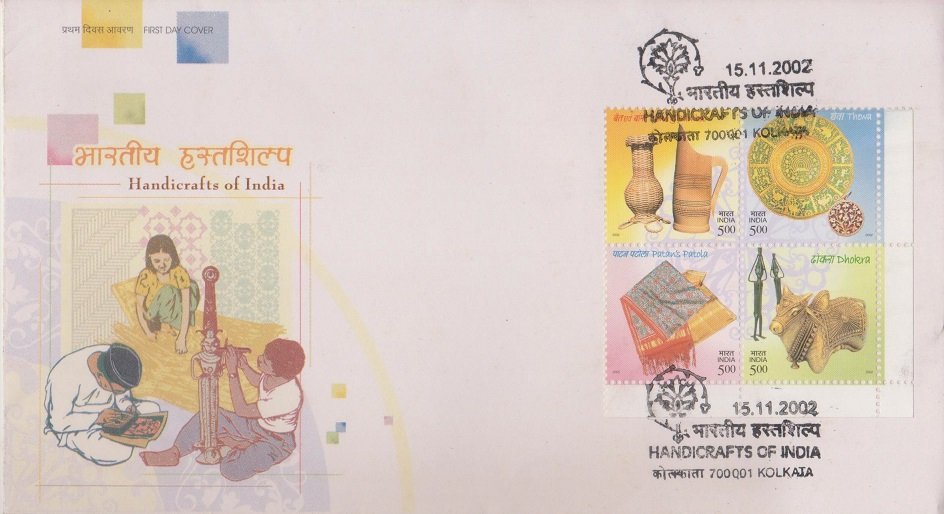
To celebrate India’s rich handicraft tradition, India Post issued a set of four commemorative postage stamps featuring:
- Cane and bamboo artifacts
- Thewa art
- Dhokra metal craft
- Patan Patola textiles
The First Day Cover of the issue depicts artisans at work, set against the backdrop of traditional motifs and patterns of Indian handicrafts, highlighting the creativity and heritage of Indian artisans.
Conclusion
Indian handicrafts represent a vibrant blend of tradition, skill, and cultural expression. From bamboo crafts of Assam to the intricate Patola textiles of Gujarat, each art form reflects the diversity and richness of India’s heritage.
These crafts not only preserve age-old traditions but also continue to provide livelihoods to artisans, making them an essential part of India’s cultural and economic fabric.
First Day Cover