
St. Anne’s Church Goa

Technical Data
| Date of Issue | January 28, 2009 |
|---|---|
| Denomination | Rs. 5 |
| Quantity | 800,000 |
| Perforation | 13 |
| Printer | India Security Press, Nasik |
| Printing Process | Photo Gravure |
| Watermark | No Watermark |
| Colors | Multicolor |
| Credit (Designed By) | Sh. Bharati Mirchandani |
| Catalog Codes |
Michel IN 2344 Stamp Number IN 2308c Stanley Gibbons IN 2568 WADP Numbering System - WNS IN006.2009 |
| Themes | Churches-Cathedrals-Basilicas-Chapels | UNESCO World Heritage Sites |
Architectural Heritage
St. Anne’s Church is one of Goa’s most remarkable ecclesiastical monuments and a significant example of colonial-era church architecture in India. Located in the village of Talaulim, approximately 10–12 kilometers from Panaji, the church once formed part of the larger metropolitan region of Old Goa, which was a prominent religious and cultural centre during Portuguese rule.
Historical Background of Saint Anne’s Church
The origins of Saint Anne’s Church date back to 1577, when Jesuit priests associated with St. Paul’s College of Old Goa acquired the property and constructed a chapel. Over time, the structure underwent reconstruction.
The present imposing church was rebuilt between 1681 and 1695. The reconstruction began under Msgr. Francisco de Rego and was completed by his successor, Fr. Antonio Francisco Da Cunha. The year of completion is engraved on the church’s main entrance, marking its historical significance.
With the gradual decline and abandonment of Old Goa in the 18th century and the administrative shift to Panaji, the surrounding region saw a reduction in prominence. However, Saint Anne’s Church continued to stand as a symbol of faith and architectural excellence.
Architectural Significance
Saint Anne’s Church Goa is notable for its massive structure and elegant design, reflecting the architectural style of the late 17th century. The church showcases elements typical of Goan ecclesiastical architecture influenced by European styles, combined with local craftsmanship.
Its grand façade, spacious interiors, and historical detailing make it an important monument within India’s architectural heritage. The church represents not only religious devotion but also the artistic and cultural exchanges that shaped Goa’s built environment.
Cultural and Heritage Importance
As part of India’s diverse architectural legacy, Saint Anne’s Church holds immense cultural value. It is a reminder of Goa’s colonial past and its role as a major centre of Christian missionary activity in Asia.
The preservation of monuments like Saint Anne’s Church is essential to maintaining the historical and architectural integrity of India’s cultural heritage. Conservation efforts ensure that such landmarks continue to inspire future generations.
Commemorative Postage Stamp on Saint Anne’s Church Goa
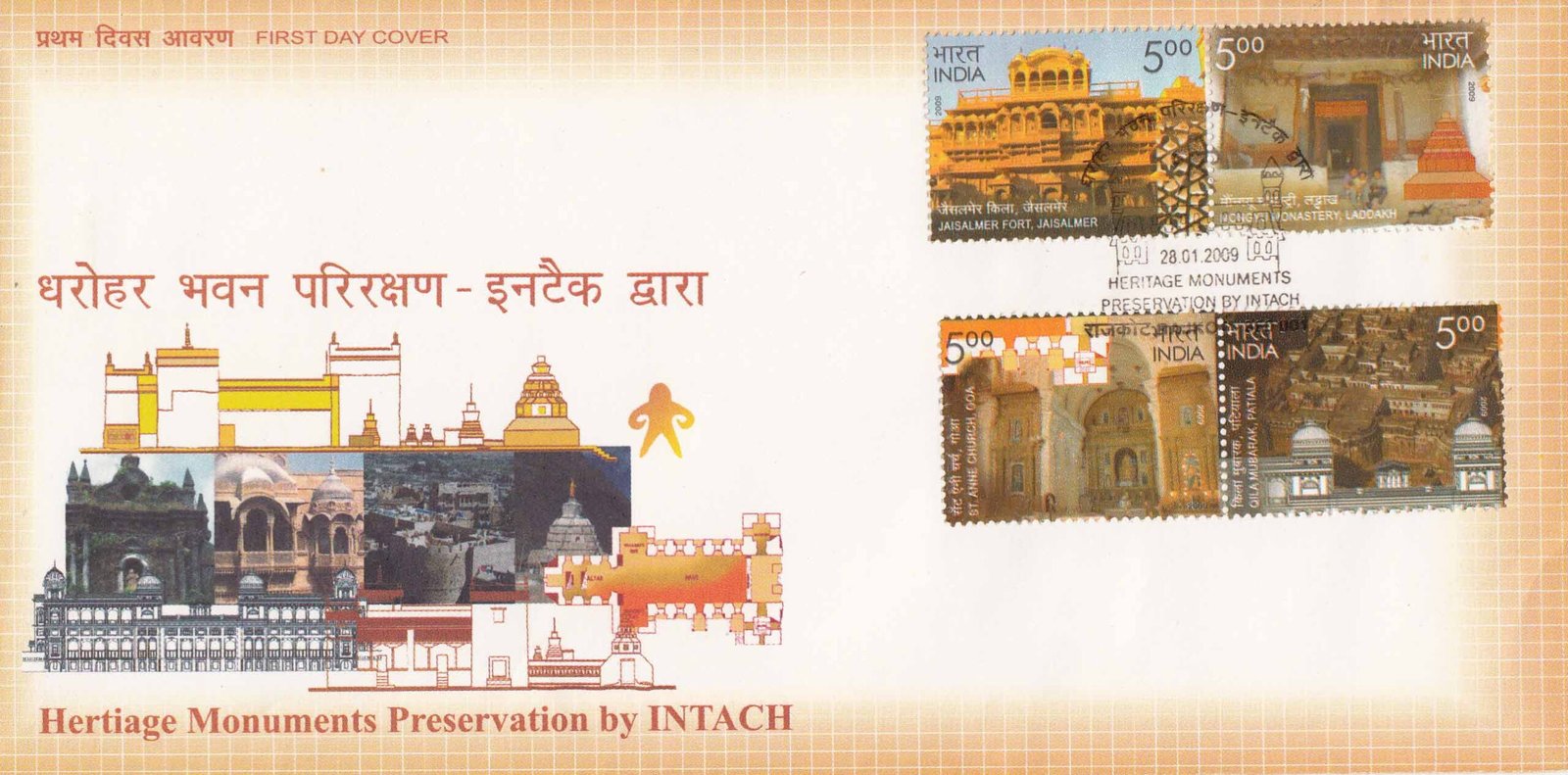
In recognition of its historical and architectural importance, India Post issued a commemorative postage stamp featuring Saint Anne’s Church Goa as part of a special series celebrating India’s architectural heritage.
The commemorative postage stamp highlights the grandeur of the church and emphasizes the importance of preserving heritage structures. Through this philatelic tribute, India Post reinforces national awareness about architectural conservation and cultural preservation.
Saint Anne’s Church Goa remains a proud testament to India’s rich and diverse architectural heritage. Its recognition through a commemorative postage stamp further cements its status as one of Goa’s most treasured historical landmarks.
First Day Cover
Leave a Comment
You must be logged in to post a comment.