
Heritage Railway Stations of India
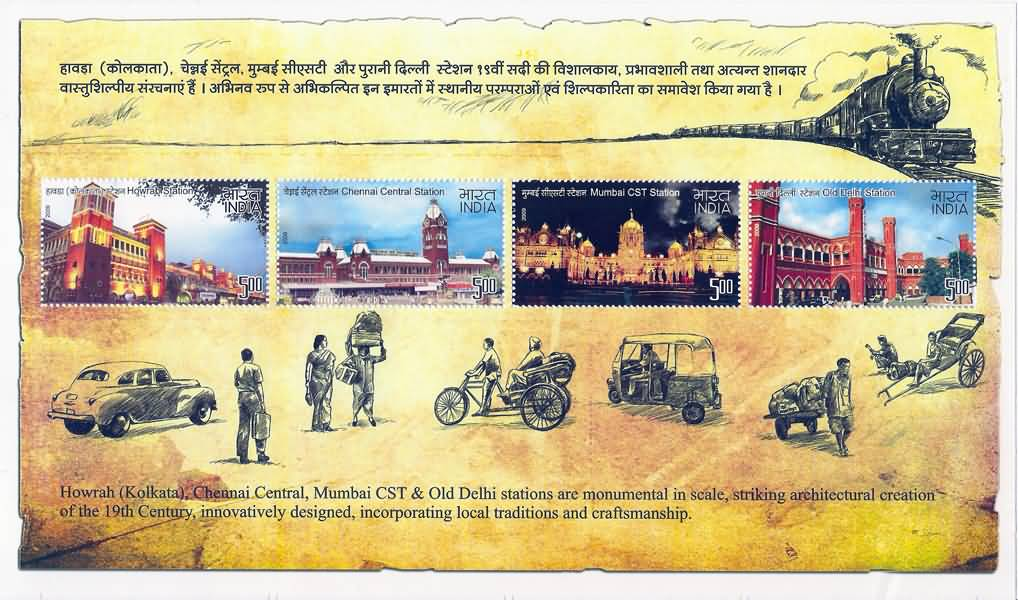
Technical Data
| Date of Issue | August 16, 2009 |
|---|---|
| Denomination | Rs. 20 |
| Perforation | 13 |
| Printer | Security Printing Press, Hyderabad |
| Printing Process | Wet Offset |
| Watermark | No Watermark |
| Colors | Multicolor |
| Credit (Designed By) | Shri Kamleshwar Singh |
| Catalog Codes |
Michel IN BL71 Stamp Number IN 2341a Stanley Gibbons IN MS2621 |
| Themes | Railways | Stations | UNESCO World Heritage Sites |
Stamps in this Miniature Sheet
A Legacy of Heritage and Progress
The story of Indian Railways spans over 150 years, symbolizing India’s industrial growth and national integration. From its modest beginnings in the 19th century to becoming one of the world’s largest rail networks, Indian Railways has played a vital role in shaping the country’s economic and social development.
On 15 August 1854, a historic train journey from Howrah to Panduah marked a major milestone in eastern India’s railway history. This heritage run has been commemorated through a special set of four stamps celebrating India’s iconic Metro Heritage Railway Stations. The beautifully designed miniature sheet captures the timeless charm and architectural grandeur of these historic stations.
The Beginning of Railways in India
The idea of introducing railways in India was first proposed in 1832. In 1844, the Governor-General permitted private entrepreneurs to establish railway companies. The first operational train ran on 22 December 1851 in Roorkee for engineering purposes.
A landmark moment came on 16 April 1853, when India’s first passenger train journey took place between Bori Bunder (Bombay) and Thane, covering 21 miles. Soon, the railway network expanded rapidly from Bombay, Madras, Calcutta, and Delhi, transforming transportation and trade across the subcontinent.
Howrah Railway Station: Gateway to Eastern India
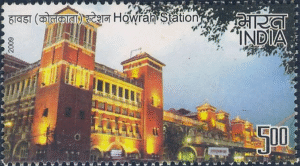
The historic Howrah railway station began operations in 1854 as a modest tin shed structure with limited facilities. The first East Indian Railway train, driven by Joshua Greenbo, ran from Howrah to Hooghly on 15 August 1854, covering 24 miles. This development eventually led to India’s first commercial railway goods corridor between Howrah and Raniganj.
Today, Howrah Station is among the largest railway stations in the world. With 23 platforms and more than 300 train pairs daily, it serves over a million passengers each day. Its grand colonial-era structure and vibrant atmosphere continue to make it a key gateway to eastern and northeastern India.
Chhatrapati Shivaji Maharaj Terminus: A UNESCO Heritage Icon
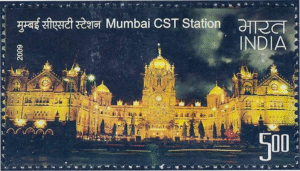
Formerly known as Victoria Terminus, the magnificent Chhatrapati Shivaji Maharaj Terminus stands as a masterpiece of Victorian Gothic architecture blended with Indian craftsmanship. Construction began in 1878 and was completed in 1888.
Designed by British architect F.W. Stevens, the building features high vaulted ceilings, intricate carvings, and decorative stonework using Coorla, Porbandar, and Seoni stones. Built entirely by indigenous labor at a cost of approximately Rs. 27 lakhs, this imposing structure remains one of Mumbai’s most iconic landmarks and a UNESCO World Heritage Site.
Chennai Central Railway Station: Victorian Grandeur in the South
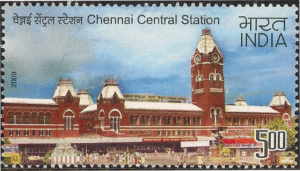
The historic Chennai Central railway station is another architectural gem of Indian Railways. Known for its striking Victorian clock tower, the station reflects colonial architectural brilliance combined with regional influences. It has long served as a crucial transportation hub for southern India.
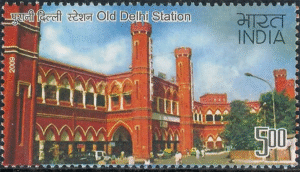
Old Delhi Railway Station: Gothic Elegance
Railways reached Delhi with the establishment of the grand Old Delhi railway station in 1867. Featuring Gothic architectural elements, deep verandas, and semi-octagonal turrets, the two-storey building remains a significant heritage structure despite later modifications and expansions.
Commemorative Stamps on Heritage Railway Stations of India
To honor these monumental landmarks, the India Post issued a Miniature Sheet consisting of special set of four commemorative stamps featuring the Metro Heritage Railway Stations of Kolkata, Mumbai, Chennai, and Delhi. These stamps celebrate not only architectural excellence but also the enduring legacy of Indian Railways as a lifeline of national progress.
A Timeless Symbol of National Development
The four Metro Heritage Stations stand as sentinels of India’s historical and technological evolution. From humble beginnings to monumental architectural marvels, Indian Railways continues to connect millions of people daily while preserving its rich heritage.
Through these commemorative stamps, the Department of Posts pays tribute to the legacy, resilience, and architectural brilliance of India’s railway heritage.
First Day Cover

Leave a Comment
You must be logged in to post a comment.