
Marwari
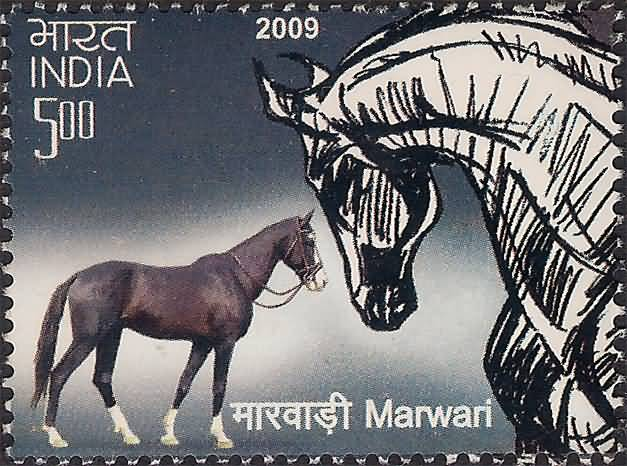
Technical Data
| Date of Issue | November 9, 2009 |
|---|---|
| Denomination | Rs. 5 |
| Quantity | 300,000 |
| Perforation | 13½ |
| Printer | Security Printing Press, Hyderabad |
| Printing Process | Wet Offset |
| Watermark | No Watermark |
| Colors | Multicolor |
| Credit (Designed By) | Shri Kamleshwar Singh |
| Catalog Codes |
Michel IN 2426 Stamp Number IN 2365 Stanley Gibbons IN 2648 WADP Numbering System - WNS IN079.2009 |
| Themes | Animals (Fauna) | Horses | Mammals |
The Royal Warhorse of Rajasthan
The Marwari horse is one of India’s most iconic and noble indigenous horse breeds. Originating from the Marwar region of Rajasthan, the Marwari horse is renowned for its bravery, loyalty, endurance, and distinctive appearance. Historically bred by the Rajput rulers as a powerful warhorse, it played a crucial role in India’s military history.
Origin and Historical Significance
The Marwari horse derives its name from Marwar, a region known for its warrior traditions and desert landscape. Rajput kings carefully bred these horses for strength, stamina, and battlefield performance. The breed earned a reputation for unwavering loyalty—stories abound of Marwari horses saving their riders even after being severely wounded in combat.
Over time, the Marwari transitioned from a warhorse to a versatile riding and sport horse, while still retaining its regal aura.
Distinctive Physical Characteristics
The Marwari horse stands between 152 and 160 cm in height and is known for its elegant yet sturdy build.
Key features include:
- Long, well-proportioned body
- Deep chest
- Slender, strong legs with well-formed hooves
- Long facial profile
- Unique inward-turning, pointed ears that often meet at the tips
- Natural pacing gait called revaal
Although predominantly brown, the Marwari horse is also found in roan, chestnut, bay, grey, palomino, and piebald colors. Hair whorls and their placement are traditionally considered important by breeders.
Uses and Modern Role
Today, the Marwari horse is primarily reared for:
- Riding and equestrian sports
- Ceremonial functions
- Light draft and agricultural work
- Cultural events and traditional celebrations
Its graceful movement and aristocratic presence make it especially popular in parades and wedding processions.
Conservation and Revival
At one time, the Marwari breed faced decline due to reduced military use and crossbreeding. However, dedicated conservation efforts by individuals and organizations such as the Indigenous Horse Society of India have helped restore its popularity and protect its lineage.
Preserving India’s Indigenous Horse Heritage
The Marwari horse remains a symbol of Rajasthan’s valor and India’s equestrian heritage. Its striking ears, noble bearing, and historic legacy continue to captivate horse enthusiasts around the world.
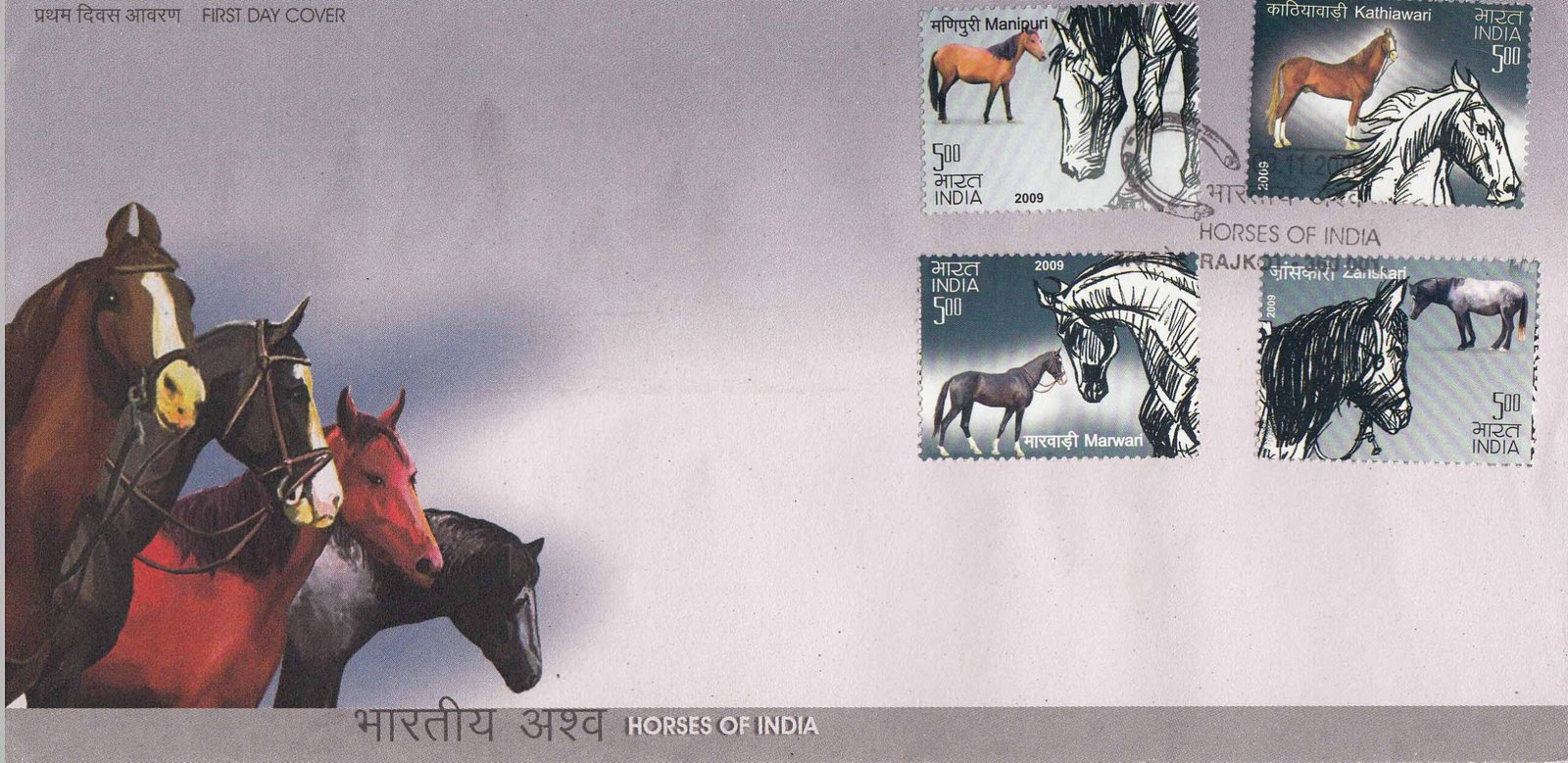
Recognizing the cultural and historical importance of indigenous horse breeds like the Marwari, India Post issued a commemorative postage stamp celebrating Indian horses, honoring their enduring contribution to India’s history, sport, and tradition.
First Day Cover
Leave a Comment
You must be logged in to post a comment.