Kabuki Actor, Japan

Technical Data
| Date of Issue | April 26, 2002 |
|---|---|
| Denomination | Rs. 15 |
| Quantity | 1,600,000 |
| Perforation | comb 13½ x 13 |
| Printer | Calcutta Security Printers Ltd |
| Printing Process | Offset Lithography |
| Watermark | No Watermark |
| Colors | Multicolor |
| Credit (Designed By) | Shri Kamleshwar Singh |
| Catalog Codes |
Michel IN 1900 Stamp Number IN 1953b Yvert et Tellier IN 1666 Stanley Gibbons IN 2067 WADP Numbering System - WNS IN013.02 |
| Themes | Actors | Anniversaries and Jubilees | Diplomacy | Suits and Costumes | Swords | Traditions |
The Icon of Traditional Japanese Theatre
A Kabuki actor represents one of the most celebrated forms of classical performing arts in Japan. Known for its dramatic storytelling, stylized movements, and elaborate costumes, Kabuki is a unique blend of music, dance, and theatre that reflects Japan’s rich cultural heritage.
Origin and Cultural Significance
Kabuki originated in Japan several centuries ago and has evolved into a highly refined theatrical tradition. It combines visual spectacle with powerful narratives, often portraying historical events, moral conflicts, and legendary tales.
Kabuki actors are central to this art form, using expressive gestures, stylized poses, and controlled movements to convey emotions and bring characters to life on stage.
Unique Features of a Kabuki Actor
A Kabuki actor is distinguished by several striking features:
- Elaborate costumes and dramatic stage presence
- Distinctive makeup known as kumadori, highlighting character traits
- Stylized movements and iconic poses
- Integration of music and dance within performances
These elements create a visually captivating experience and make Kabuki one of the most recognizable theatrical traditions in the world.
Commemorative Postage Stamp on Kabuki Actor
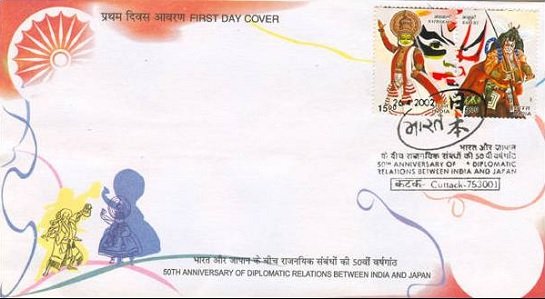
The cultural significance of Kabuki has been recognized internationally. To celebrate the 50th Anniversary of Diplomatic Relations between India and Japan, India Post issued a commemorative postage stamp featuring a Kabuki actor.
This stamp was part of a special miniature sheet that also included Kathakali, symbolizing the rich classical performing arts traditions of Japan and India. The Kabuki actor depicted on the stamp highlights the artistic excellence and creativity of Japanese theatre.
Role in India–Japan Cultural Relations
Kabuki serves as a cultural bridge between Japan and India. The inclusion of Kabuki alongside Kathakali in commemorative stamps reflects the shared appreciation for classical arts and strengthens cultural ties between the two nations.
This artistic exchange complements the broader diplomatic relationship established in 1952 and enriched over the decades.
Training and Artistic Mastery
Becoming a Kabuki actor requires years of dedication and disciplined training. Performers develop:
- Precision in movement and posture
- Mastery of traditional अभिनय techniques and expressions
- Strong coordination with music and stage elements
- Deep understanding of roles passed down through generations
Kabuki acting is often a hereditary profession, with skills and styles preserved within families.
Conclusion
A Kabuki actor is a guardian of Japan’s classical theatrical tradition. Through stylized performances, elaborate costumes, and expressive storytelling, Kabuki continues to captivate audiences worldwide. The commemorative postage stamp honoring Kabuki highlights its global cultural significance and its role in strengthening India–Japan relations.
First Day Cover