
Mongol Biyelgee
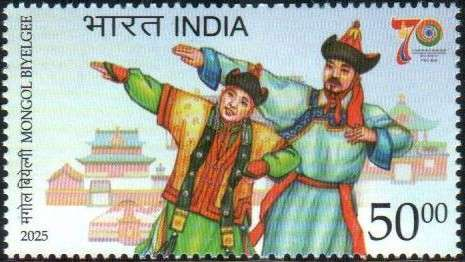
Technical Data
| Date of Issue | October 14, 2025 |
|---|---|
| Denomination | Rs. 50 |
| Quantity | 113,100 |
| Printer | Security Printing Press, Hyderabad |
| Printing Process | Wet Offset |
| Colors | Multicolor |
| Credit (Designed By) | Mr. Suresh Kumar |
| Catalog Codes |
Colnect codes IN 2025.10.14-01b |
| Themes | Diplomacy | Flowers | Joint Issues |
The Traditional Dance of the Mongolian Steppes
An Ancient Cultural Expression
Mongol Biyelgee is one of the most distinctive and ancient forms of traditional dance of Mongolia, deeply rooted in the nomadic lifestyle of the Mongolian people. The word “Biyelgee” literally means “dance performed with the body,” reflecting its unique style that emphasises upper-body movements rather than expansive footwork. This dance form originated among the nomadic communities of western Mongolia, particularly in the Altai mountain region.
Dance of the Nomads
Unlike stage-oriented dances, Mongol Biyelgee evolved within the confined spaces of traditional nomadic dwellings (gers or yurts). As a result, the dance is performed in a semi-sitting or standing posture, with expressive movements of the shoulders, chest, arms, hands, and facial expressions. Each movement symbolises everyday nomadic activities such as horse riding, hunting, milking animals, crafting tools, and celebrating seasonal cycles, making Biyelgee a living reflection of nomadic life.
Cultural and Spiritual Significance
Mongol Biyelgee is more than a performance art—it is a cultural narrative passed down orally through generations. The dance conveys values of harmony with nature, respect for animals, community bonding, and resilience. Closely linked with Mongolian folk music, costumes, and rituals, Biyelgee plays an important role during festivals, family celebrations, and community gatherings, reinforcing collective identity and cultural continuity.
Recognition and Preservation
Recognising its exceptional cultural value, UNESCO inscribed Mongol Biyelgee on the Representative List of the Intangible Cultural Heritage of Humanity in 2009. This global recognition highlighted the dance as a rare and fragile tradition, encouraging efforts for its preservation, documentation, and transmission to younger generations. Today, cultural institutions and practitioners in Mongolia actively work to keep Biyelgee alive through training, performances, and festivals.
A Living Symbol of Mongolian Heritage
Mongol Biyelgee stands as a powerful symbol of Mongolia’s intangible cultural heritage. Its subtle yet expressive movements capture the spirit of the steppes, the rhythm of nomadic life, and the deep connection between people and their environment. Even in modern times, the dance continues to resonate as a marker of identity and pride for the Mongolian people.
Philatelic Tribute to Shared Cultural Bonds
In recognition of the enduring cultural ties between India and Mongolia, India Post has issued commemorative postage stamps marking the 70th Anniversary of the establishment of Diplomatic Relations between India and Mongolia. Cultural traditions such as Mongol Biyelgee, rooted in ancient civilisations and spiritual heritage, symbolise the shared values of respect for tradition, cultural exchange, and people-to-people connections that continue to strengthen bilateral relations.
An Enduring Cultural Legacy
Mongol Biyelgee remains a vibrant testament to Mongolia’s nomadic heritage and artistic expression. Preserved through community memory and global recognition, it continues to dance across generations telling stories of the past while inspiring cultural pride and continuity in the present.
First Day Cover

Leave a Comment
You must be logged in to post a comment.