
Ramlila
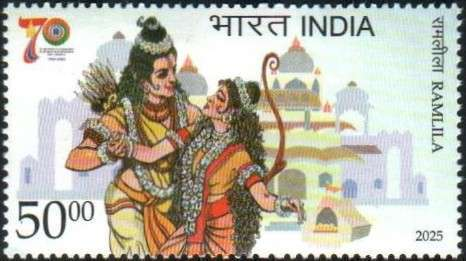
Technical Data
| Date of Issue | October 14, 2025 |
|---|---|
| Denomination | Rs. 50 |
| Quantity | 113,100 |
| Printer | Security Printing Press, Hyderabad |
| Printing Process | Wet Offset |
| Colors | Multicolor |
| Credit (Designed By) | Mr. Suresh Kumar |
| Catalog Codes |
Colnect codes IN 2025.10.14-01a |
| Themes | Diplomacy | Flowers | Joint Issues |
An Enduring Cultural Performance
Ramlila is one of India’s most vibrant and enduring forms of traditional theatre, depicting episodes from the Ramayana, the ancient epic that narrates the life and ideals of Lord Rama. The term Ramlila literally means “the play of Rama,” and it combines drama, music, dialogue, song, and ritual into a powerful community performance. Rooted in devotion and storytelling, Ramlila has been performed for centuries across India and in many parts of the world with Indian cultural influence.
Origins and Spread
The popularisation of Ramlila is closely associated with the 16th-century poet-saint Goswami Tulsidas, whose Ramcharitmanas made the Ramayana accessible to the masses in the Awadhi language. Over time, Ramlila evolved into a collective cultural expression, performed annually during the Navaratri period and culminating on Vijayadashami (Dussehra), symbolising the victory of righteousness over evil.
Community-Centred Theatre
Unlike conventional stage drama, Ramlila is deeply community-driven. Performances are often held in open grounds, temple precincts, or entire towns that transform into sacred performance spaces. In some traditions—most notably the Ramlila of Ramnagar (Varanasi)—the entire settlement becomes a living stage, with audiences moving from one location to another as the narrative unfolds. Performers are usually local residents, and roles are passed down through generations, reinforcing a strong sense of shared heritage.
Cultural and Spiritual Significance
Ramlila is not merely a theatrical enactment; it is a form of collective worship and moral instruction. Through the lives of Rama, Sita, Lakshmana, Hanuman, and other characters, Ramlila communicates timeless values such as truth, duty, compassion, sacrifice, and devotion. The performances foster social harmony, ethical reflection, and cultural continuity, making Ramlila a cornerstone of India’s intangible cultural heritage.
Diversity of Forms
Across regions, Ramlila adapts to local languages, music, costumes, and performance styles. From the classical, text-based traditions of North India to folk-influenced versions in other regions, each Ramlila reflects the cultural ethos of its community while remaining faithful to the epic’s core narrative. This diversity underscores the living and adaptive nature of the tradition.
Global Recognition
Acknowledging its outstanding cultural value, UNESCO inscribed Ramlila on the Representative List of the Intangible Cultural Heritage of Humanity in 2008. This recognition highlighted Ramlila’s role in sustaining community participation, oral traditions, and intergenerational knowledge transmission, while encouraging efforts for its preservation in a rapidly changing world.
Philatelic Tribute
Reflecting the cultural significance of Ramlila and its role in India’s shared heritage, the Department of Posts has issued commemorative postage stamps celebrating marking the 70th Anniversary of the establishment of Diplomatic Relations between India and Mongolia. Such philatelic tributes honour Ramlila as a living expression of faith, folklore, and collective memory, and help bring its legacy to a wider national and international audience.
A Living Epic
Ramlila continues to thrive as a dynamic cultural tradition, where devotion meets performance and history blends with living practice. Year after year, it brings communities together to relive the ideals of the Ramayana, reaffirming faith, moral values, and cultural identity. As a living epic enacted by the people and for the people, Ramlila remains a timeless celebration of India’s spiritual and artistic heritage.
First Day Cover

Leave a Comment
You must be logged in to post a comment.