
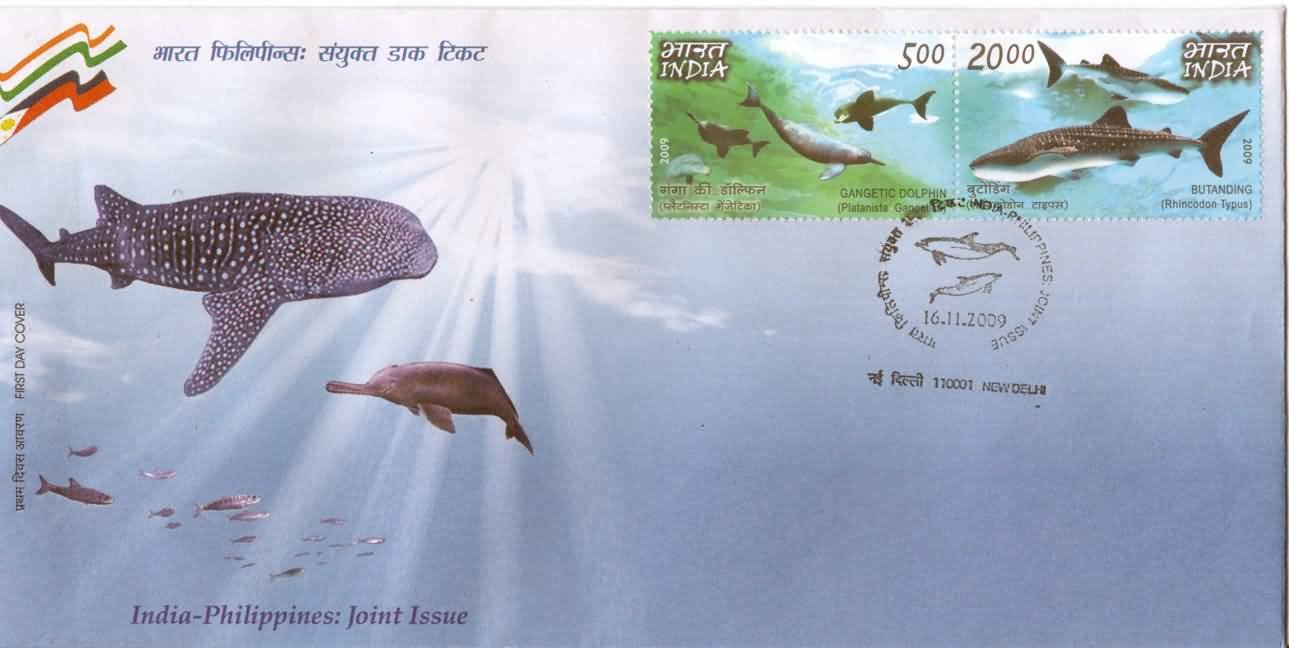
Butanding (Rhincodon typus)

Technical Data
| Date of Issue | November 16, 2009 |
|---|---|
| Denomination | Rs. 20 |
| Quantity | 1,500,000 |
| Perforation | 13 |
| Printer | India Security Press, Nasik |
| Printing Process | Wet Offset |
| Watermark | No Watermark |
| Colors | Multicolor |
| Credit (Designed By) | Shri Kamleshwar Singh Smt. Alka Sharma |
| Catalog Codes |
Michel IN 2436 Stamp Number IN 2374b Yvert et Tellier IN 2199 Stanley Gibbons IN 2660 WADP Numbering System - WNS IN089.2009 |
| Themes | Animals (Fauna) | Fishes | Joint Issues | Sea Life | Sharks |
The Gentle Giant of the Philippines
The Butanding, locally known in the Philippines as the Whale Shark (Rhincodon typus), is one of the most magnificent marine species in the world. As the largest living fish species, the Butanding holds a special place in marine biodiversity and conservation efforts.
Featured in the India–Philippines Joint Issue Commemorative Stamp, the Butanding symbolizes not only the rich marine heritage of the Philippines but also the shared commitment of both nations toward wildlife protection and ecological balance.
The Philippines: A Marine Biodiversity Hotspot
The Philippines is the world’s second-largest archipelago, consisting of 7,107 islands. Located in Southeast Asia, it lies within the Coral Triangle — one of the most biologically diverse marine regions on Earth.
These nutrient-rich waters provide an ideal habitat for a variety of marine species, including the beloved Butanding.
Scientific Name and Physical Characteristics
Scientifically known as Rhincodon typus, the Butanding is the largest species of shark and the largest fish in the world. It can grow up to 20 meters in length and weigh more than 30 tons.
Despite its enormous size, the Butanding is remarkably gentle. It is a slow-moving, filter-feeding shark with a very large mouth. Rather than hunting large prey, it feeds primarily on:
- Plankton
- Microscopic plants
- Small marine animals
Its calm nature and impressive size have earned it the nickname “gentle giant of the deep.”
Donsol: A Sanctuary for Whale Sharks
Donsol, located in Sorsogon province in the Philippines, has been declared a sanctuary for whale sharks. The area has developed a successful eco-tourism program that allows visitors to responsibly observe and swim alongside these magnificent creatures.
An annual animal festival is also held in Donsol to honor the Butanding, celebrating its ecological importance and raising awareness about marine conservation.
Threats to Marine Mammals and Conservation Efforts
Marine species like the Butanding face increasing threats due to:
- Accidental entanglement in fishing gear
- Habitat degradation
- Marine pollution
- Climate change impacts
These challenges highlight the urgent need for global cooperation in marine conservation.
To promote awareness, the Butanding was featured in a Joint Issue of Commemorative Postage Stamp by India Post and Philippine Postal Corporation. This philatelic collaboration marks decades of diplomatic relations between India and the Philippines while drawing attention to wildlife protection and ecological sustainability.
A Symbol of Ecological Responsibility
Life began in water, and endangered ocean species like the Butanding serve as a reminder of the fragile balance of marine ecosystems. Protecting the whale shark means safeguarding biodiversity, supporting sustainable tourism, and ensuring healthier oceans for future generations.
First Day Cover
Leave a Comment
You must be logged in to post a comment.