
Indian Cuisine: Popular
Technical Data
| Date of Issue | November 3, 2017 |
|---|---|
| Denomination | Rs. 120 |
| Quantity | 110,000 |
| Perforation | 13¾ |
| Printer | Security Printing Press, Hyderabad |
| Printing Process | Wet Offset |
| Watermark | No Watermark |
| Colors | Multicolor |
| Credit (Designed By) | Sh. Brahm Prakash |
| Catalog Codes |
Michel IN 3239-3244KB Stanley Gibbons IN 3383a |
| Themes | Food | Gastronomy |
A Celebration of Street Flavours
Commemorative Postage Stamps by India Post
Indian cuisine reflects an extraordinary 8,000-year-old culinary heritage, shaped by the interaction of diverse cultures, communities, and traditions across the subcontinent. Trade influences, including British and Portuguese contributions, further enriched the already vibrant food culture of India.
Characterized by its refined use of spices, grains, vegetables, and fruits, Indian cuisine is deeply influenced by geography, religion, climate, and cultural practices. It continues to evolve, adapting to new tastes while preserving its traditional roots.
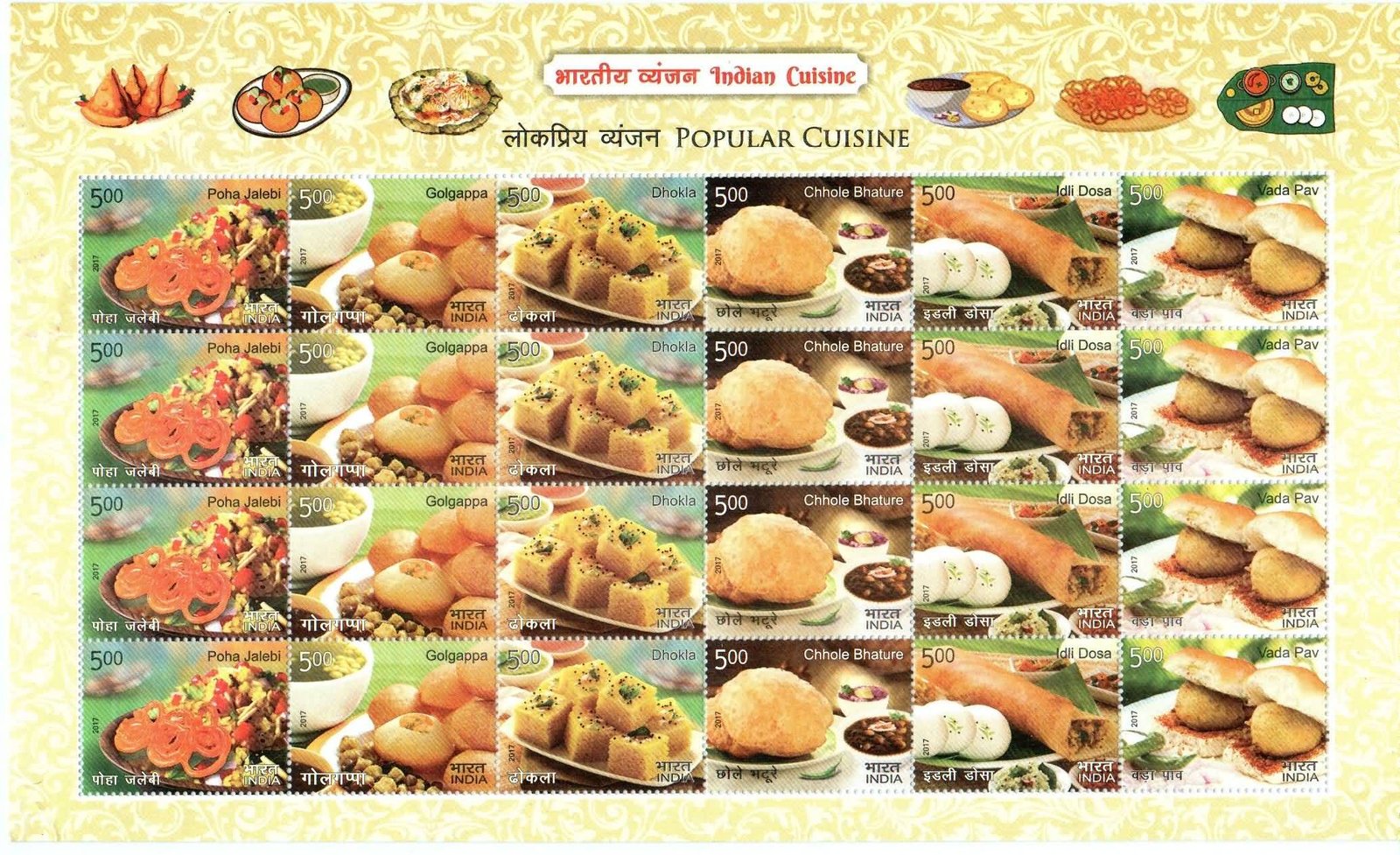
To honour this rich gastronomic diversity, the Department of Posts has released a set of 24 Commemorative Postage Stamps in the form of Sheetlets and Miniature Sheets, representing four categories of Indian cuisines. Among them is a delightful tribute to India’s beloved street foods.
Popular Cuisines – The Taste of Indian Streets
Indian streets are renowned for their vibrant food culture. Street food is not merely a quick snack—it is a social experience, a cultural symbol, and an essential part of everyday life. These dishes are celebrated for their bold flavours, affordability, and universal appeal.
The six types of Popular Cuisines depicted through these commemorative postage stamps are:
- Poha Jalebi
- Golgappa
- Dhokla
- Chhole Bhature
- Idli-Dosa
- Vada Pav
Poha Jalebi
A signature street food of Indore, Madhya Pradesh, Poha Jalebi is a unique combination of sweet and savoury flavours. Poha, made from flattened rice and garnished with sev, sliced onions, fennel seeds, and sometimes usal, is served alongside crispy, syrupy jalebis. This delightful pairing has become a hallmark of Indore’s food culture.
Golgappa
Golgappa is one of India’s most popular street snacks. It consists of a crisp, hollow puri filled with spiced mashed potatoes, chickpeas, tamarind chutney, chaat masala, and flavoured tangy water (imli pani).
Known by various regional names—Panipuri (Maharashtra), Pani ke Batashe (Haryana), Fulki (Madhya Pradesh), Phuchka (West Bengal and Bihar), Pakodi (Gujarat), and Gup Chup (Odisha, Jharkhand, Chhattisgarh)—this beloved snack reflects India’s culinary diversity.
Dhokla
Originating from Gujarat, Dhokla is a light and fluffy steamed savoury cake made from fermented rice and split chickpea batter. It can be enjoyed as breakfast, a side dish, or a snack. Its soft texture and mild flavour, tempered with mustard seeds and curry leaves, make it a favourite across the country.
Chhole Bhature
A celebrated dish of Punjabi cuisine, Chhole Bhature combines spicy chickpea curry (chana masala) with deep-fried bread made from refined flour (maida). Popular in many urban centres, especially Delhi, it is often enjoyed as a hearty breakfast or indulgent snack.
Idli-Dosa
A staple of South Indian cuisine, Idli and Dosa are made from fermented rice and urad dal batter. Idli is a soft, steamed savoury cake, while dosa is a crisp, thin pancake typically served with sambar and chutneys. Their nutritional value and delicious taste have made them popular across India and beyond.
Vada Pav
Originating in Maharashtra, Vada Pav is often referred to as India’s version of a burger. It consists of a deep-fried spiced potato dumpling (vada) placed inside a sliced bread bun (pav), usually accompanied by chutneys and a green chilli. It remains one of the most iconic and affordable street foods in India.
Commemorative Postage Stamps on Popular Cuisines
Through this philatelic issue presented as Sheetlets, the Department of Posts celebrates India’s dynamic street food culture. These commemorative postage stamps capture the essence of everyday culinary delights that unite people across regions, communities, and generations.
The release serves as a tribute to the flavours of Indian streets—preserving them not only in kitchens and markets but also in the timeless art of philately.
Leave a Comment
You must be logged in to post a comment.