
Indian Cuisine: Temple Bhog Prasad
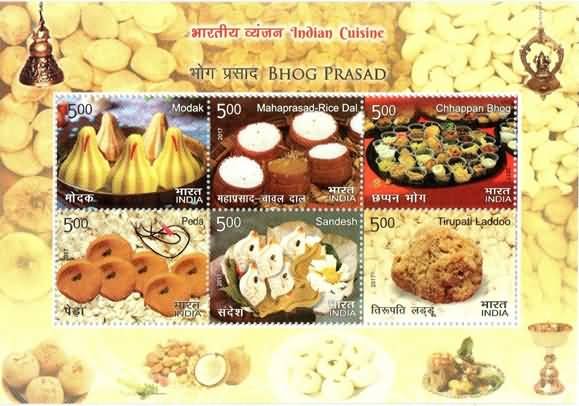
Technical Data
| Date of Issue | November 3, 2017 |
|---|---|
| Denomination | Rs. 30 |
| Quantity | 110,000 |
| Perforation | 13¾ |
| Printer | Security Printing Press, Hyderabad |
| Printing Process | Wet Offset |
| Watermark | No Watermark |
| Colors | Multicolor |
| Credit (Designed By) | Sh. Brahm Prakash |
| Catalog Codes |
Michel IN BL172 Yvert et Tellier IN BF160 Stanley Gibbons IN MS3395 |
| Themes | Food | Gastronomy |
Stamps in this Miniature Sheet
Indian Cuisine – A Celebration of Heritage and Flavour
Commemorative Postage Stamps by India Post
Indian cuisine is a vibrant reflection of the country’s rich cultural heritage and centuries of social interaction. With an 8,000-year history, Indian food traditions have evolved through the confluence of diverse communities, regional practices, and global influences. Trade links, including those with the British and Portuguese, further enriched the culinary landscape, adding new ingredients and techniques to an already diverse gastronomic tradition.
Today, Indian cuisine is regarded as one of the most diverse and sophisticated cuisines in the world, celebrated for its subtle and masterful use of spices, grains, vegetables, fruits, and regional ingredients. Religious beliefs, cultural customs, and traditional practices have played a defining role in shaping food habits across the subcontinent. Even today, Indian cuisine continues to evolve through cultural exchange and innovation.
Recognizing this extraordinary culinary heritage, the Department of Posts released a set of 24 Commemorative Postage Stamps representing four categories of Indian cuisines, presented in the form of Sheetlets and Miniature Sheets.
Bhog Prasad – Sacred Offerings in Indian Tradition
Among the four categories, Bhog Prasad holds a deeply spiritual and cultural significance. These sacred food offerings are prepared in temples across India and are steeped in history and devotion.
Temple Bhog Prasad recipes have remained largely unchanged over centuries. While high-quality ingredients and large-scale cooking are essential, the true “X-factor” lies in the devotion and dedication of temple cooks. These offerings symbolize faith, gratitude, and divine blessings.
The six types of Bhog Prasad depicted on the commemorative postage stamps are:
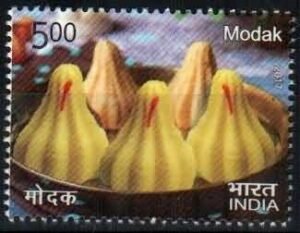
- Modak
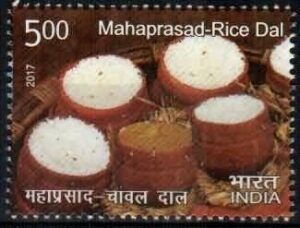
- Mahaprasad (Rice & Dal)
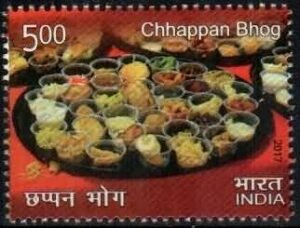
- Chhappan Bhog
- Peda
- Sandesh
- Tirupati Laddoo
Modak
Modak is a traditional Indian sweet made with a filling of freshly grated coconut and jaggery, enclosed in a soft outer shell prepared from rice flour or wheat flour mixed with khova or maida. It is especially revered as the favourite sweet of Lord Ganesha, making it an essential offering during Ganesh Chaturthi.
Mahaprasad – Rice & Dal (Jagannath Temple, Puri)
Mahaprasad refers to the sacred food offered to Lord Jagannath at the Jagannath Temple in Puri, Odisha. The offerings include various types of rice such as ghee rice, mixed rice, cumin and ginger rice, along with different varieties of dal—sweet dal, plain dal, vegetable-mixed dal, and more. Prepared in traditional temple kitchens, Mahaprasad is shared among devotees as a symbol of divine grace.
Chhappan Bhog
“Chhappan Bhog” literally means 56 dishes offered to a deity. The preparation itself becomes a grand culinary festival, showcasing an extraordinary variety of regional delicacies and their variations. This tradition reflects the richness of temple cuisine and devotional hospitality.
Peda (Mathura)
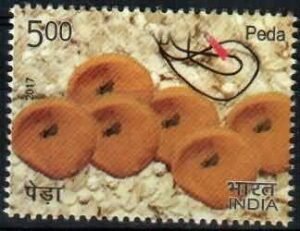
In Mathura, the birthplace of Lord Krishna, Mathura ke Peda is a cherished offering. Made by cooking fresh mawa, milk, sugar, and ghee, and flavored with cardamom, Peda holds both religious and cultural importance and remains a popular sweet across India.
Sandesh (Bengal)
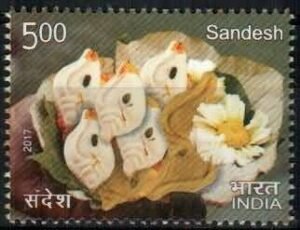
Sandesh, also known as Sondesh in Bengal, is a classic Bengali dessert made primarily from milk and sugar. Some variations use chhena (paneer) as the base ingredient. Light, delicate, and refined, Sandesh represents Bengal’s celebrated sweet-making tradition.
Tirupati Laddoo
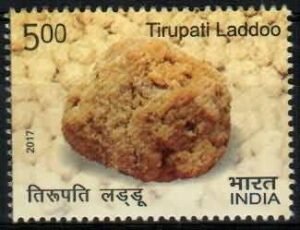
The tradition of offering laddoos to Lord Venkateswara at the Tirumala Venkateswara Temple dates back to 1715. Tirupati Laddoo is prepared using gram flour, cashew nuts, cardamom, ghee, sugar, sugar candy, and raisins. It holds a Geographical Indication (GI) tag, ensuring that only the Tirumala Tirupati Devasthanams are authorized to produce and sell it.
Commemorative Postage Stamps on Indian Cuisine
Through this special philatelic release, the Department of Posts pays tribute to India’s sacred culinary traditions. The 24 Commemorative Postage Stamps, issued in the form of Miniature Sheets, celebrate the spiritual, cultural, and historical significance of Indian cuisine.
These stamps not only honour India’s gastronomic legacy but also serve as collectible treasures for philatelists and food enthusiasts alike, preserving the flavours of tradition in miniature works of art.
Leave a Comment
You must be logged in to post a comment.