
Indian National Parks
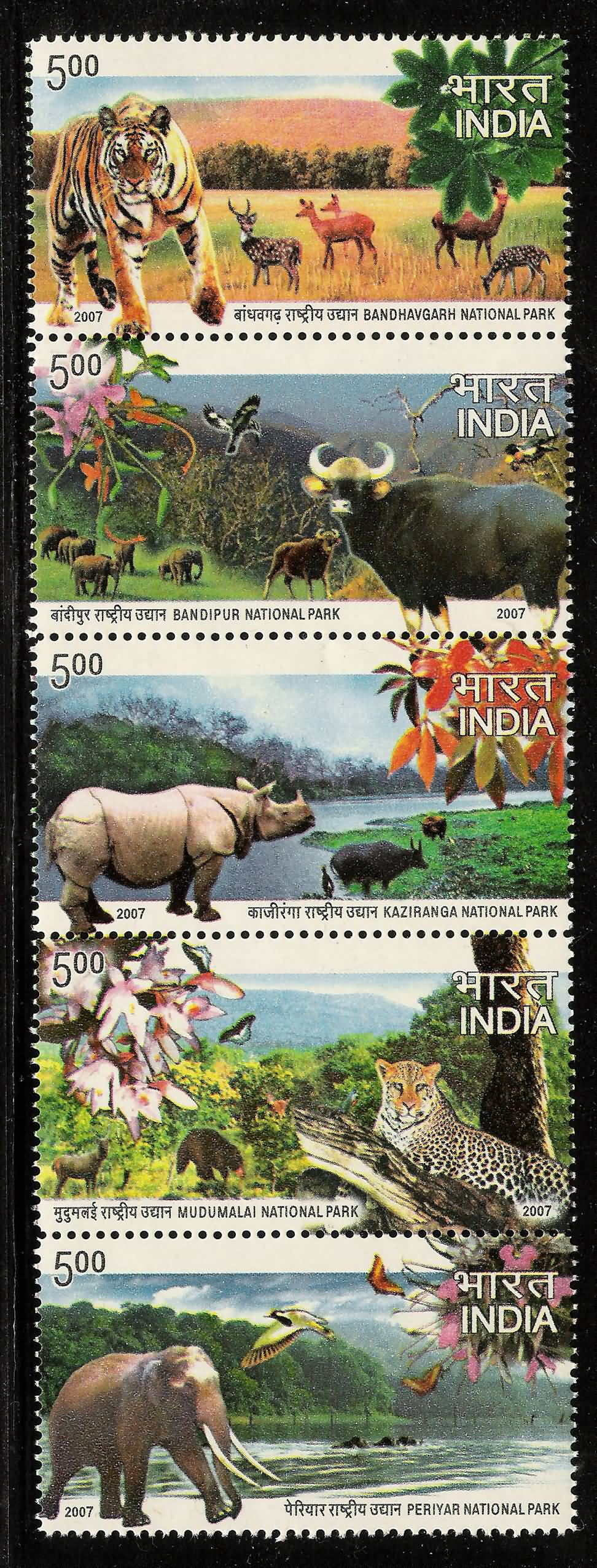
Technical Data
| Date of Issue | May 31, 2007 |
|---|---|
| Denomination | Rs. 25 |
| Perforation | 13 |
| Printer | India Security Press, Nasik |
| Printing Process | Photogravure |
| Watermark | No Watermark |
| Colors | Multicolor |
| Credit (Designed By) | Mr. Suresh Kumar |
| Catalog Codes |
Michel IN 2209-2213 Stamp Number IN 2199 Yvert et Tellier IN 1974-1978 Stanley Gibbons IN 2404a |
| Themes | Animals (Fauna) | Elephants | Leopards | Mammals | National Parks | Rhinoceroses | Tigers | Wild Cats |
Stamps in this Se-Tenant
Celebrating India’s Rich Biodiversity
India’s rich biodiversity has fascinated generations. The country is home to over 500 species of mammals, 2,000 species of birds, 500 species of reptiles, and nearly 30,000 species of insects. Alongside this natural wealth, India also has a long-standing tradition of wildlife conservation rooted in its cultural and historical heritage.
However, rapid population growth and expanding land use have placed immense pressure on forests and water bodies. Habitat destruction, deforestation, and illegal poaching now pose serious threats to wildlife. While shikar (sport hunting) was once a major danger in the 19th and early 20th centuries, today habitat loss and commercial poaching are the primary conservation challenges.
Recognizing the urgency, India began establishing wildlife sanctuaries and national parks in the early 20th century. Today, the country has more than 450 Wildlife Sanctuaries and over 85 National Parks dedicated to preserving its ecological heritage.
A landmark step in conservation was the enactment of the Wildlife Protection Act, 1972, which provides legal safeguards for endangered species such as the one-horned Indian Rhinoceros, Indian Elephant, Tiger, and Musk Deer. Under this Act, State Governments are empowered to declare protected areas as Wildlife Sanctuaries or National Parks, ensuring the preservation of diverse ecosystems.
Famous National Parks of India
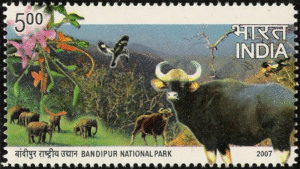
Bandipur National Park
Located in Karnataka at the foothills of the Western Ghats, Bandipur National Park spans approximately 875 sq. km. at elevations ranging from 780 to 1455 meters. Declared a National Park in 1974, it is renowned for its large elephant herds and sandalwood trees.
The park’s mix of deciduous forests, evergreen forests, and scrubland—nourished by the Moyar River—supports wildlife such as the Indian Elephant, Tiger, Gaur, Sambar, Chital, Four-Horned Antelope, Wild Pig, Black-Naped Hare, and Indian Porcupine. It is also rich in birdlife, including Peafowl and Grey Jungle Fowl.
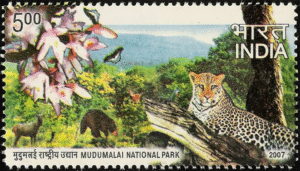
Mudumalai National Park
Situated in Tamil Nadu and separated from Bandipur by the Moyar River, Mudumalai National Park lies on a plateau at the base of the Nilgiri Hills. Declared a National Park in 1990, it covers 321 sq. km. of diverse terrain.
Mudumalai is home to Tiger, Leopard, Elephant, Bison, Sambar, Spotted Deer, Hyena, Wild Dog, Python, and Jackal. The park also boasts remarkable avian diversity, including the Malabar Grey Hornbill and King Vulture. Its varied vegetation includes rainforest, evergreen and deciduous forests, bamboo groves, teak, sandalwood, and flame-of-the-forest trees.
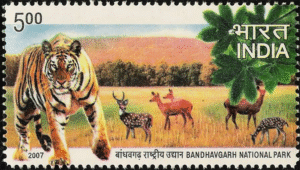
Bandhavgarh National Park
Located in Madhya Pradesh, Bandhavgarh National Park is globally known for its thriving tiger population. Once the hunting reserve of the Rewa royal family, it was declared a National Park in 1968 and now spans 542.40 sq. km.
The park features teak forests, grasslands, and scrublands, supporting around 22 mammal species and 250 bird species. It is famously associated with the discovery of the rare white tiger. Other wildlife includes Nilgai, Chausingha, Chital, Black Buck, Wild Boar, Rhesus Macaque, and Hanuman Langur.
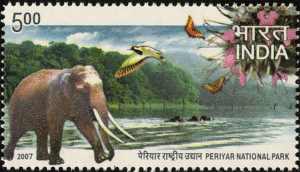
Periyar National Park
Established in 1895 and declared a Tiger Reserve in 1978, Periyar National Park in Kerala covers 777 sq. km., including 360 sq. km. of dense evergreen forests. The park derives its name from the scenic Periyar Lake.
Periyar is home to 35 species of mammals, including the Indian Elephant, Nilgiri Langur, Bonnet Macaque, Malabar Giant Squirrel, and Barking Deer. It is also one of the few habitats of the Nilgiri Tahr. With nearly 285 bird species, including hornbills, kingfishers, and cormorants, it is a paradise for bird enthusiasts.
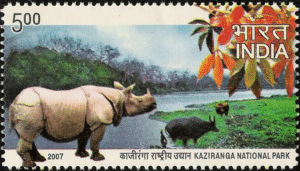
Kaziranga National Park
Kaziranga National Park in Assam, situated along the southern bank of the Brahmaputra River, is one of the last strongholds of the endangered one-horned Indian Rhinoceros. Initially declared a reserve forest in 1908 and later a National Park in 1974, Kaziranga earned UNESCO World Heritage status in 1985.
Conservation efforts have dramatically increased the rhino population over the decades. Besides rhinos, the park shelters Elephant, Tiger, Wild Buffalo, Swamp Deer, Leopard, Hoolock Gibbon, and numerous reptiles. It is also a haven for migratory birds such as Greylag Geese and Bar-Headed Geese during winter.
Commemorative Stamps on National Parks of India
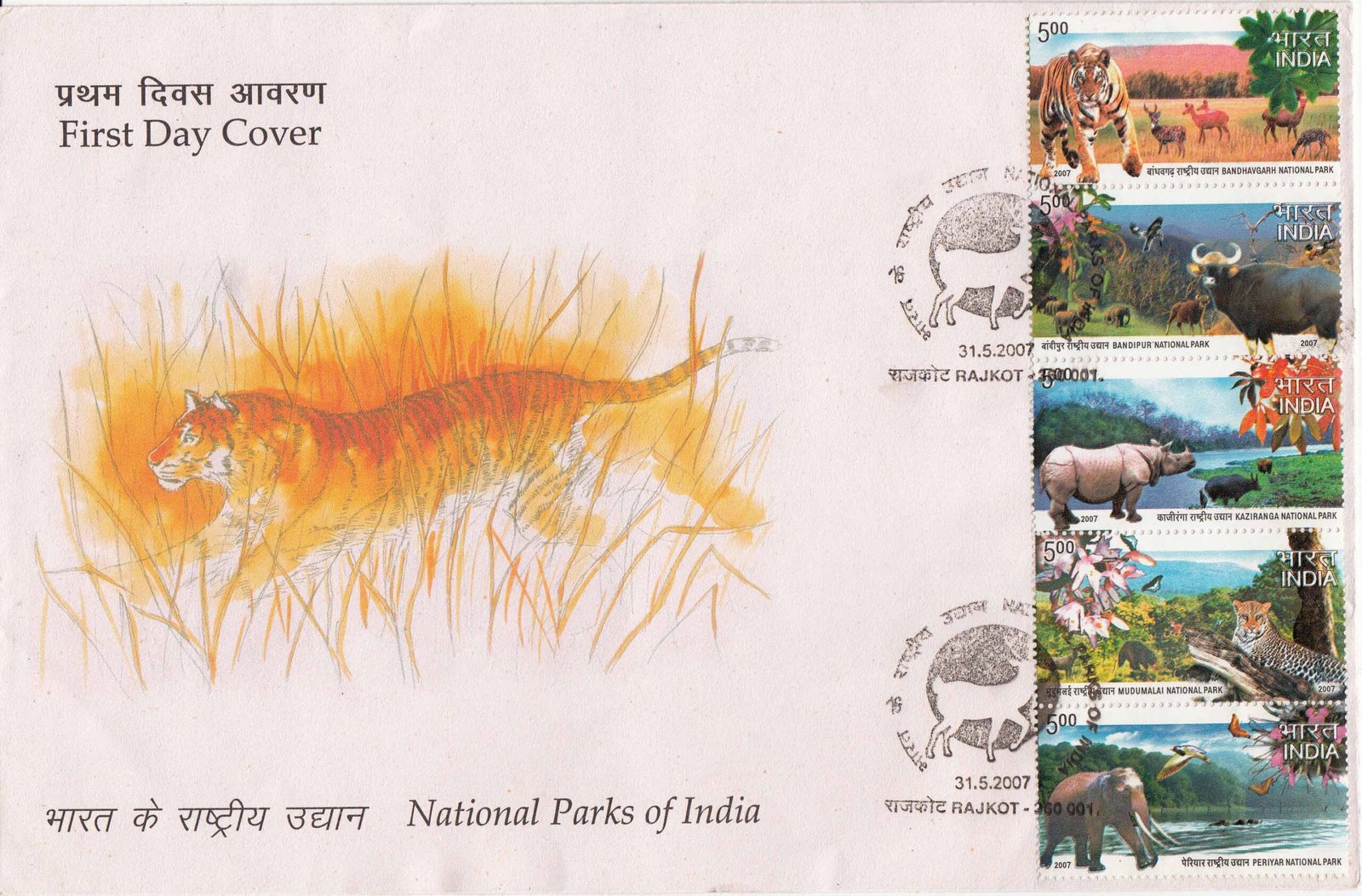
To celebrate India’s extraordinary natural heritage, India Post has issued a set of five commemorative postage stamps featuring these iconic National Parks of India.
These stamps not only highlight the scenic beauty and wildlife diversity of each park but also raise awareness about the importance of conservation. While acknowledging the progress made in protecting India’s biodiversity, the series reinforces the need to continue preservation efforts with greater commitment.
India Post proudly showcases the National Parks of India, honoring the country’s wildlife and inspiring citizens to safeguard this priceless natural legacy for future generations.
First Day Cover
Leave a Comment
You must be logged in to post a comment.