
Indian Perfumes: Jasmine

Technical Data
| Date of Issue | August 1, 2019 |
|---|---|
| Denomination | Rs. 50 |
| Quantity | 200,000 |
| Perforation | 13¾ x 13½ |
| Printer | Security Printing Press, Hyderabad |
| Printing Process | Wet Offset |
| Watermark | No Watermark |
| Colors | Multicolor |
| Credit (Designed By) | Ms. Nenu Gupta Sh. Bharati Mirchandani Sh. Pallab Bose |
| Catalog Codes |
Michel IN BL214 Stamp Number IN 3128a Yvert et Tellier IN BF201 Stanley Gibbons IN MS3621 |
| Themes | Perfumes | Plants (Flora) |
Stamps in this Miniature Sheet
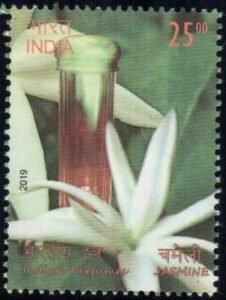
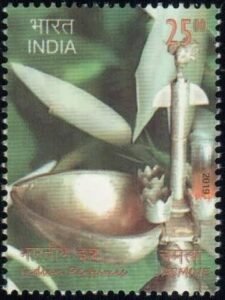
Jasmine Scents – The Soul of Indian Fragrance Heritage
The story of Indian perfumery is as ancient as its civilization, tracing its roots back to the Indus Valley Civilization, flourishing through the Mauryan and Gupta periods. Fragrance was not just an adornment but a way of life — celebrated in art, literature, and tradition. The great poet Kalidasa vividly described the use of perfumes by the protagonists in his plays, symbolizing purity, beauty, and refinement.
A Timeless Fragrance from the Heart of India
Among India’s many natural perfumes, Jasmine stands as a true classic — delicate, luxurious, and deeply evocative. Known as the “King of Oils,” jasmine has enchanted people for centuries with its sweet, warm, and floral aroma that balances sensuality with serenity. The fragrance is both heady and soothing, with subtle fruity undertones that make it one of the most loved botanical scents in the world.
In ancient and royal India, Jasmine ittar (oil-based perfume) held a special place in the courts and hearts of many. It was the favourite fragrance of the Nizams of Hyderabad, symbolizing sophistication and grace. Even today, the legacy of jasmine continues to bloom in traditional perfumery hubs such as Chandni Chowk in Delhi, Lucknow, Agra, and Hyderabad, where families carry forward the art of ittar-making.
The Flower of Many Names and Many Lands
Jasmine grows abundantly across Uttar Pradesh, West Bengal, the Western Ghats, and Southern India. Known as Juhi in Hindi, Jui in Bengali, and Usimalligai in Tamil, this fragrant flower holds deep cultural and spiritual significance across regions. It adorns temples, bridal hairstyles, and homes — symbolizing purity, devotion, and eternal love.
The Art of Extraction – Nature’s Fragrance Bottled
The creation of jasmine perfume is a work of patience and craftsmanship. The essential oil is extracted from the flowers through the traditional enfleurage or solvent extraction method. The result is a deep brown oil with a golden sheen and rich, long-lasting aroma. Remarkably, it takes around 8,000 carefully hand-picked blossoms to produce just one gram of Jasmine Absolute, making it one of the most precious natural essences in the world.
A Scent with Healing and Spiritual Power
Beyond its fragrance, jasmine is treasured for its therapeutic and spiritual benefits. The scent of Jasminum sambac is said to be rejuvenating, energizing, and uplifting, while Jasminum grandiflorum exudes an intense, romantic, and calming aroma. Its fragrance has been used in aromatherapy, ayurvedic treatments, and spiritual practices, connecting body, mind, and soul through its soothing essence.
A Fragrant Legacy Celebrated
The story of Jasmine finds a beautiful expression through philately — captured in a postage stamp that celebrates India’s perfumed legacy. The Jasmine stamp stands as a fragrant symbol of India’s age-old connection to nature, art, and spirituality.
Each petal, each drop of Jasmine oil, tells a story of dedication and harmony — just as each stamp tells the story of a nation that cherishes its timeless traditions and exquisite craftsmanship.
Leave a Comment
You must be logged in to post a comment.