
Cochin
Technical Data
| Date of Issue | October 6, 2010 |
|---|---|
| Denomination | Rs. 5 |
| Quantity | 400,000 |
| Perforation | 13 |
| Printer | India Security Press, Nashik |
| Printing Process | Wet Offset |
| Watermark | No Watermark |
| Colors | Multicolor |
| Credit (Designed By) | Shri Kamleshwar Singh |
| Catalog Codes |
Michel IN 2516 Stamp Number IN 2454 Stanley Gibbons IN 2753 WADP Numbering System - WNS IN060.2010 |
| Themes | Philatelic Exhibitions | Stamps |
A Historic Maritime Princely State
Kingdom of Cochin encompassed much of present-day Thrissur district, Chittoor taluk, Kochi taluk, and parts of Kanayannur, Aluva, and Paravur taluks, all of which now form part of Kerala. Owing to its strategic coastal location along the Arabian Sea, Cochin emerged as an important centre of trade and political activity over several centuries.
Historical Evolution
Over time, the princely state of Cochin came under the influence of several powers. The indigenous rulers were at various periods controlled or influenced by the Portuguese, the Dutch, the British, and even the Zamorin of Kozhikode (Calicut).
Around 1530 AD, under Portuguese influence, Cochin developed into a prosperous port town. The Portuguese constructed Fort Emmanuel, the first European fort in the region, establishing a significant colonial foothold.
In 1663, the Dutch defeated the Portuguese and took control of Cochin, building Fort Williams. Their dominance, however, was later challenged by Hyder Ali and Tipu Sultan of Mysore, who asserted control over the region for a time.
By 1814, Kochi had come under the British Empire. Despite British paramountcy, Cochin retained its identity as a princely state. Notably, in 1947, Cochin became the first Indian princely state to willingly accede to the Indian Union. In November 1956, it was merged with the Malabar district of the erstwhile Madras State to form the present-day state of Kerala.
Philatelic Significance
Cochin holds an important place in India’s postal history. The state issued its own postage stamps from 1892 to 1949 in denominations of pies and puttans. These stamps, often bearing distinctive designs and inscriptions, reflected the administrative framework of the princely state.
Today, the stamps of Cochin are prized by philatelists for their historical importance and as enduring symbols of the state’s rich maritime and cultural legacy.
Commemorative Stamp
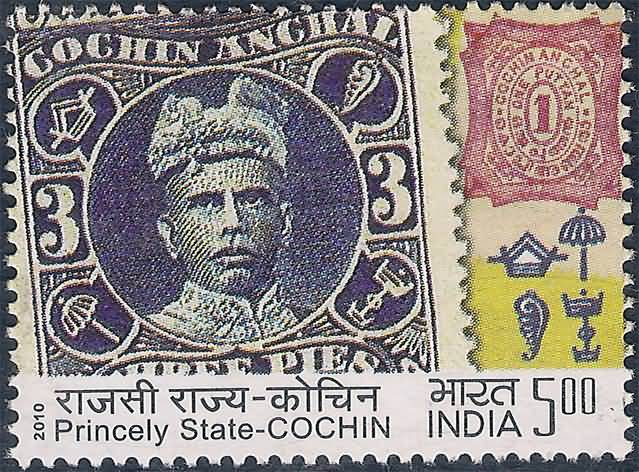
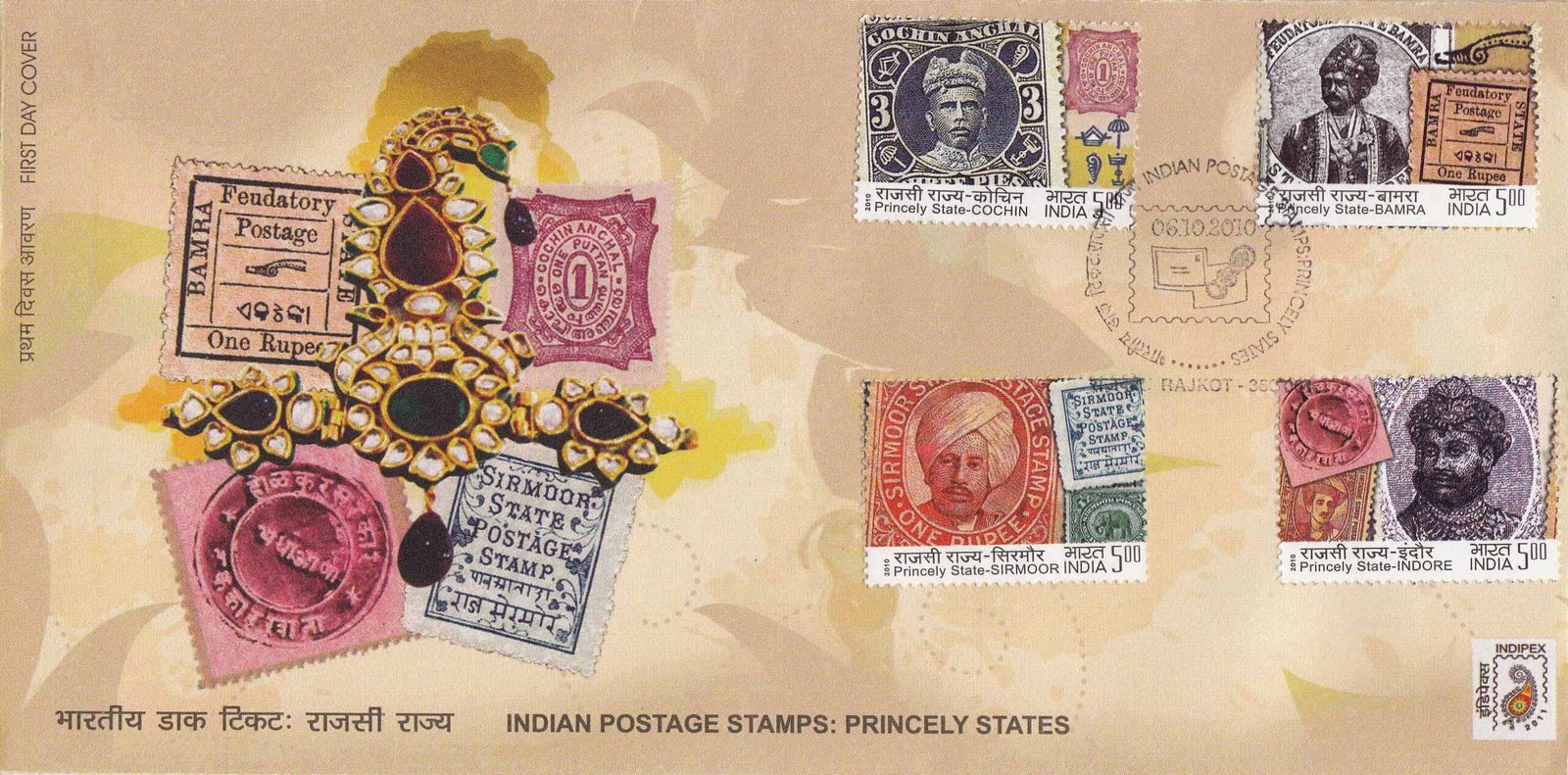
To honour the historical and philatelic legacy of Cochin State, India Post issued a commemorative postage stamp. The stamp celebrates the state’s contribution to India’s rich heritage, particularly its role in governance, cultural development, and the evolution of postal services during the princely era.
First Day Cover
Leave a Comment
You must be logged in to post a comment.