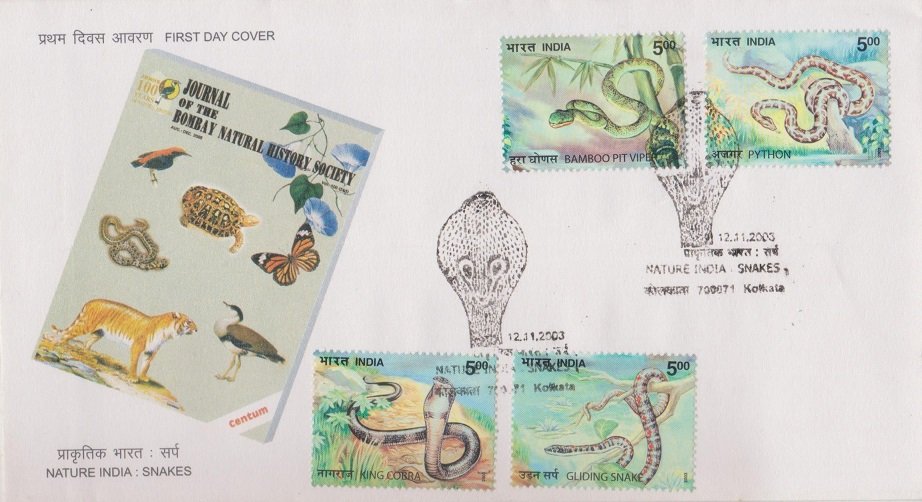
King Cobra

Technical Data
| Date of Issue | November 12, 2003 |
|---|---|
| Denomination | Rs. 5 |
| Quantity | 800,000 |
| Perforation | comb 13½ x 13 |
| Printer | Madras Security Printers |
| Printing Process | Offset Lithography |
| Watermark | No Watermark |
| Colors | Multicolor |
| Credit (Designed By) | Sh. Sankha Samanta |
| Catalog Codes |
Michel IN 1995 Stamp Number IN 2035 Yvert et Tellier IN 1760 Stanley Gibbons IN 2169 WADP Numbering System - WNS IN052.03 |
| Themes | Animals (Fauna) | Reptiles | Snakes |
The Majestic Serpent
The King Cobra, also known as the Hamadryad, is the largest venomous snake in the world and one of the most remarkable reptiles found in India. Renowned for its size, power and striking appearance, it commands both fear and admiration.
Habitat and Distribution
The King Cobra is not very common but is found in and around dense forests and hilly regions of peninsular India. It prefers thick jungles where it can remain concealed while hunting and nesting.
Physical Features and Behaviour
This species is known for its unique defensive posture. Like the cobra, it can raise a significant portion of its body—sometimes up to one-third of its length—and spread its hood, creating an intimidating display. It has earned a reputation for alertness, courage and occasional aggressiveness, making it one of the most formidable snakes in India.
Diet and Hunting
Unlike most snakes, the King Cobra primarily feeds on other snakes, including venomous ones. This specialised diet is reflected in its scientific name Ophiophagus, meaning “snake-eater.” It is an efficient predator, using its venom to subdue prey.
Reproduction and Nesting
One of the most unique features of the King Cobra is its nesting behaviour. The female builds a nest using leaves and debris, carefully gathering them with loops of her body. She lays eggs within this nest, covers them and often remains nearby to guard them—an unusual trait among snakes.
Ecological Importance
As a top predator, the King Cobra plays a crucial role in maintaining ecological balance by controlling the population of other snakes. This helps regulate the food chain within its habitat.
Commemorative Stamp
To highlight the importance and uniqueness of such species, India Post featured the King Cobra in a commemorative stamp series under “Nature India.” This initiative also coincided with the efforts of the Bombay Natural History Society to promote awareness and conservation of wildlife.
Conclusion
The King Cobra stands as a symbol of power and mystery in the natural world. Despite its fearsome reputation, it is an essential part of the ecosystem. Protecting such species is vital to preserving the delicate balance of nature and appreciating the incredible diversity of life.
First Day Cover