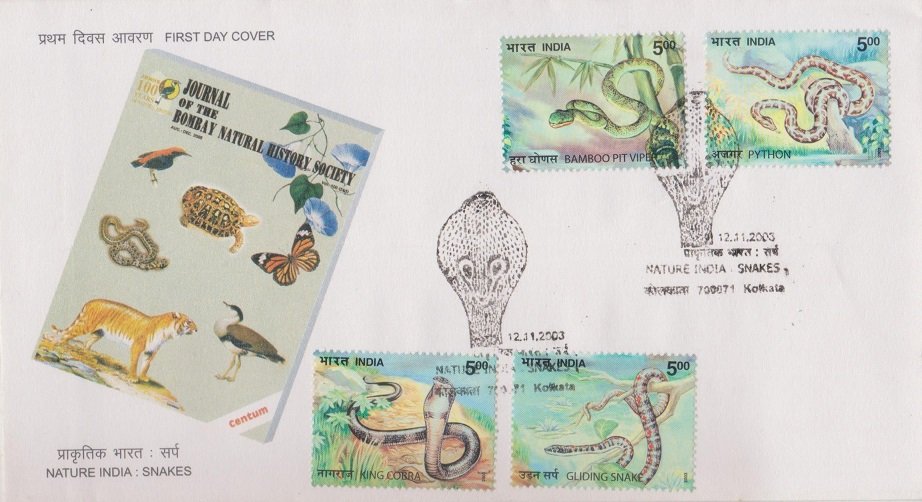
Python (Python molurus)

Technical Data
| Date of Issue | November 12, 2003 |
|---|---|
| Denomination | Rs. 5 |
| Quantity | 800,000 |
| Perforation | comb 13½ x 13 |
| Printer | Madras Security Printers |
| Printing Process | Offset Lithography |
| Watermark | No Watermark |
| Colors | Multicolor |
| Credit (Designed By) | Sh. Sankha Samanta |
| Catalog Codes |
Michel IN 1993 Stamp Number IN 2033 Yvert et Tellier IN 1758 Stanley Gibbons IN 2167 WADP Numbering System - WNS IN050.03 |
| Themes | Animals (Fauna) | Reptiles | Snakes |
The Gentle Giant of the Forests
The Indian Python is one of the largest and most widely distributed non-venomous snakes found in India. Known for its immense size and strength, it is a remarkable yet generally non-aggressive reptile that plays an important role in the ecosystem.
Habitat and Distribution
The Indian Python is typically a jungle dweller, inhabiting dense forests, open woodlands and rocky terrains. It is highly adaptable and can also be found near water bodies. A skilled climber, it often hides among tree branches, and it is equally proficient in swimming.
Physical Features and Behaviour
This species is characterised by its large, muscular body and patterned skin, which provides effective camouflage in its surroundings. Despite its intimidating size, the Indian Python is non-venomous and relies on constriction to subdue its prey.
Diet and Feeding
The python feeds on a variety of animals including mammals, birds and reptiles, with a preference for mammals. It captures its prey by coiling around it and applying pressure until the prey is subdued, after which it swallows it whole.
Ecological Importance
As a predator, the Indian Python helps regulate populations of rodents and other small animals, thereby maintaining ecological balance. Its presence is vital for the health of forest ecosystems.
Threats and Conservation
Due to excessive hunting for its skin, the Indian Python has faced a significant decline in numbers. Recognising this threat, it has been classified as an endangered species and is protected under Schedule I of the Indian Wildlife (Protection) Act, 1972.
Commemorative Stamp
To raise awareness about the importance of conserving such species, India Post featured the Indian Python in a set of commemorative postage stamps under the “Nature India” series. This initiative also aligns with the efforts of the Bombay Natural History Society, which has long contributed to the study and conservation of wildlife in the Indian subcontinent.
Conclusion
The Indian Python, often misunderstood due to its size, is a vital and fascinating part of India’s biodiversity. Protecting this gentle giant ensures the preservation of ecological balance and highlights the importance of conserving the country’s rich natural heritage.
First Day Cover