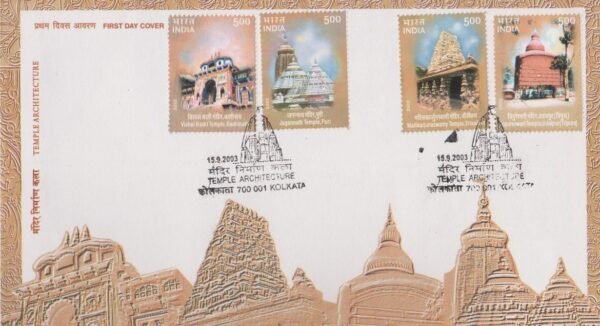
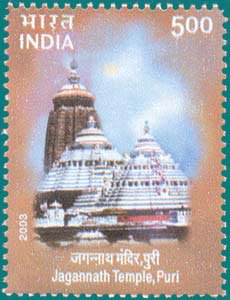
Jagannath Temple, Puri
Technical Data
| Date of Issue | September 15, 2003 |
|---|---|
| Denomination | Rs. 5 |
| Quantity | 2,400,000 |
| Perforation | comb 13½ x 13¼ |
| Printer | Security Printing Press, Nashik |
| Printing Process | Photogravure |
| Watermark | No Watermark |
| Colors | Multicolor |
| Credit (Designed By) | Sh. Sankha Samanta |
| Catalog Codes |
Michel IN 1974 Stamp Number IN 2018 Yvert et Tellier IN 1739 Stanley Gibbons IN 2147 WADP Numbering System - WNS IN028.03 |
| Themes | Architecture | Buildings | Temples |
The Jagannath Temple is one of the most important and revered temples in India. Located in the holy city of Puri, the temple is dedicated to Jagannath, a manifestation of Vishnu. It is a major pilgrimage centre and an outstanding example of traditional temple architecture.
Historical Background
The construction of the temple began in the 12th century under the patronage of Anantavarman Chodaganga Deva. The work was later completed in the 13th century by Anangabhima Deva III. Since then, the temple has stood at the heart of Puri as a powerful symbol of devotion and religious heritage.
Architectural Features
The Jagannath Temple is known for its imposing structure and towering spire that dominates the skyline of Puri. The temple reflects the richness and grandeur of the Kalinga Architecture style, which is characterized by massive stone structures, intricately carved surfaces and a majestic vertical tower.
Religious Significance
The temple is famous for the grand Ratha Yatra, an imposing festival during which the deities are taken out of the temple in magnificent chariots and paraded through the streets. This festival attracts millions of devotees from across India and the world.
Commemoration
Recognizing the cultural and architectural significance of this sacred monument, India Post issued a commemorative postage stamp celebrating the diversity and splendour of India’s temple architecture, with the Jagannath Temple as one of its distinguished subjects.
First Day Cover