
Indraprastha Girls School
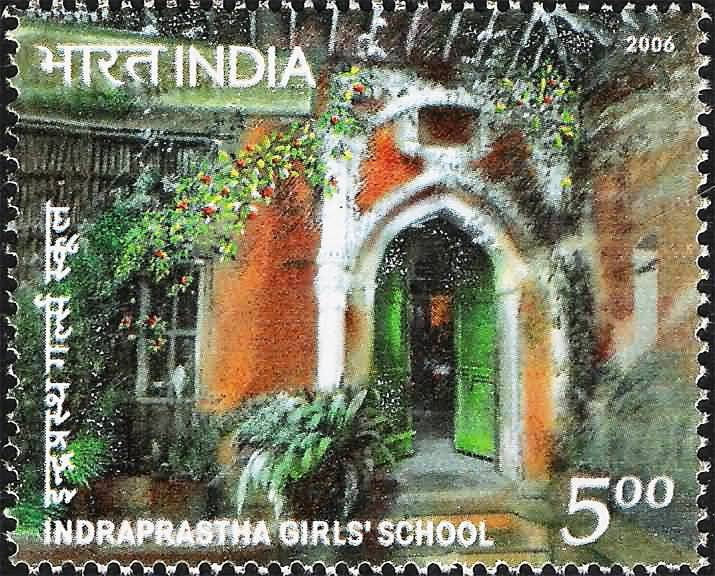
Technical Data
| Date of Issue | July 8, 2006 |
|---|---|
| Denomination | Rs. 5 |
| Quantity | 800,000 |
| Perforation | line14 x 13¼ |
| Printer | India Security Press, Nasik |
| Printing Process | Photogravure |
| Watermark | No Watermark |
| Colors | Multicolor |
| Credit (Designed By) | Sh. Bharati Mirchandani |
| Catalog Codes |
Michel IN 2146 Stamp Number IN 2157 Yvert et Tellier IN 1911 Stanley Gibbons IN 2333 WADP Numbering System - WNS IN026.2006 |
| Themes | Anniversaries and Jubilees | Buildings | Schools |
Pioneer of Women’s Education
In the late nineteenth and early twentieth centuries, modern education had not yet reached most women in India, particularly in North India. A major step toward changing this situation came in March 1904, when Annie Besant wrote a pamphlet titled “The Education of Indian Girls.” Her ideas inspired the Theosophical Society and its Indraprastha Lodge to promote education for girls while respecting Indian traditions and values.
As a result, a group of progressive citizens decided to establish a girls’ school in Delhi. On 21 May 1904, the Indraprastha Girls School was founded with just seven students, marking a historic beginning for women’s education in the city.
Founders and Early Support
The leading force behind the institution was Lala Jugal Kishore, who personally visited homes to collect funds and persuade families to send their daughters to school. Creative fundraising efforts such as the “One Rupee Fund” and “Hundred Rupee Fund” helped sustain the institution in its early years.
Other founding members included:
- Rai Pearey Lal
- Lala Sultan Singh Rais
- Seth Banwari Lal Lohiya
- Lala Pearey Lal
- Lala Balkrishan Das
- Rai Bishamber Nath
Early Campus and Curriculum
The school began in a three-storeyed haveli called Bhajan Bhawan, located behind the historic Jama Masjid in Old Delhi. The building was generously donated by Lala Balkrishan Das, who also served as the first Secretary of the School Society.
The early curriculum included:
- Religious studies
- Cookery and needlework
- Singing of hymns
- First aid and child health
- Arts and crafts
Along with education, the institution aimed to instill patriotism and responsibility among young girls.
Growth and Development
As the school gained acceptance, it became a model for girls’ education, and several other girls’ schools were established in the region between 1906 and 1912.
In 1924, Indraprastha College for Women was founded in the same building, beginning with only two students.
The school also achieved another milestone in 1923 by becoming the first girls’ school in Delhi to introduce science subjects. A hostel was later built to accommodate students coming from outside the city.
Role of Miss Leonora G’meiner
At a time when women teachers were scarce, Leonora G’meiner came from Australia at the request of Annie Besant. She devoted herself to educating girls from conservative families and later became the Founder Principal of Indraprastha College for Women. Her efforts helped combine Eastern traditions with Western educational methods, emphasizing discipline and dedication.
Distinguished Visitors
Many prominent national leaders visited the school and appreciated its pioneering role in women’s education, including:
- Rabindranath Tagore
- Bal Gangadhar Tilak
- Motilal Nehru
- Sarojini Naidu
- Tej Bahadur Sapru
- Annie Besant
Legacy
For more than a century, the Indraprastha Girls School has played a remarkable role in pioneering education for girls of all communities and religions in India.
Recognizing its historic contribution, India Post issued a commemorative postage stamp to honour this institution and its role in advancing women’s education in India.
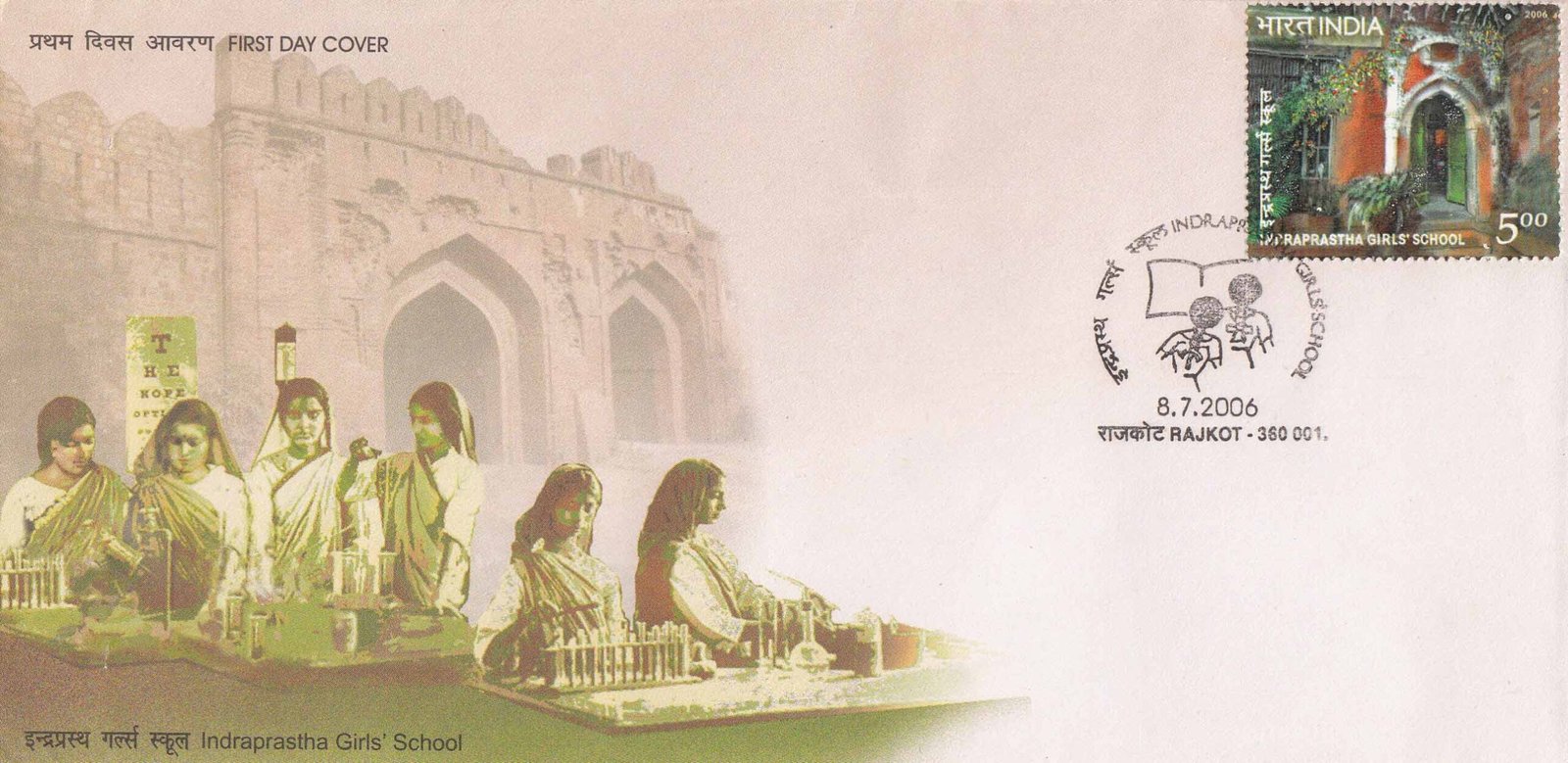
First Day Cover
Leave a Comment
You must be logged in to post a comment.