
International Year of biodiversity
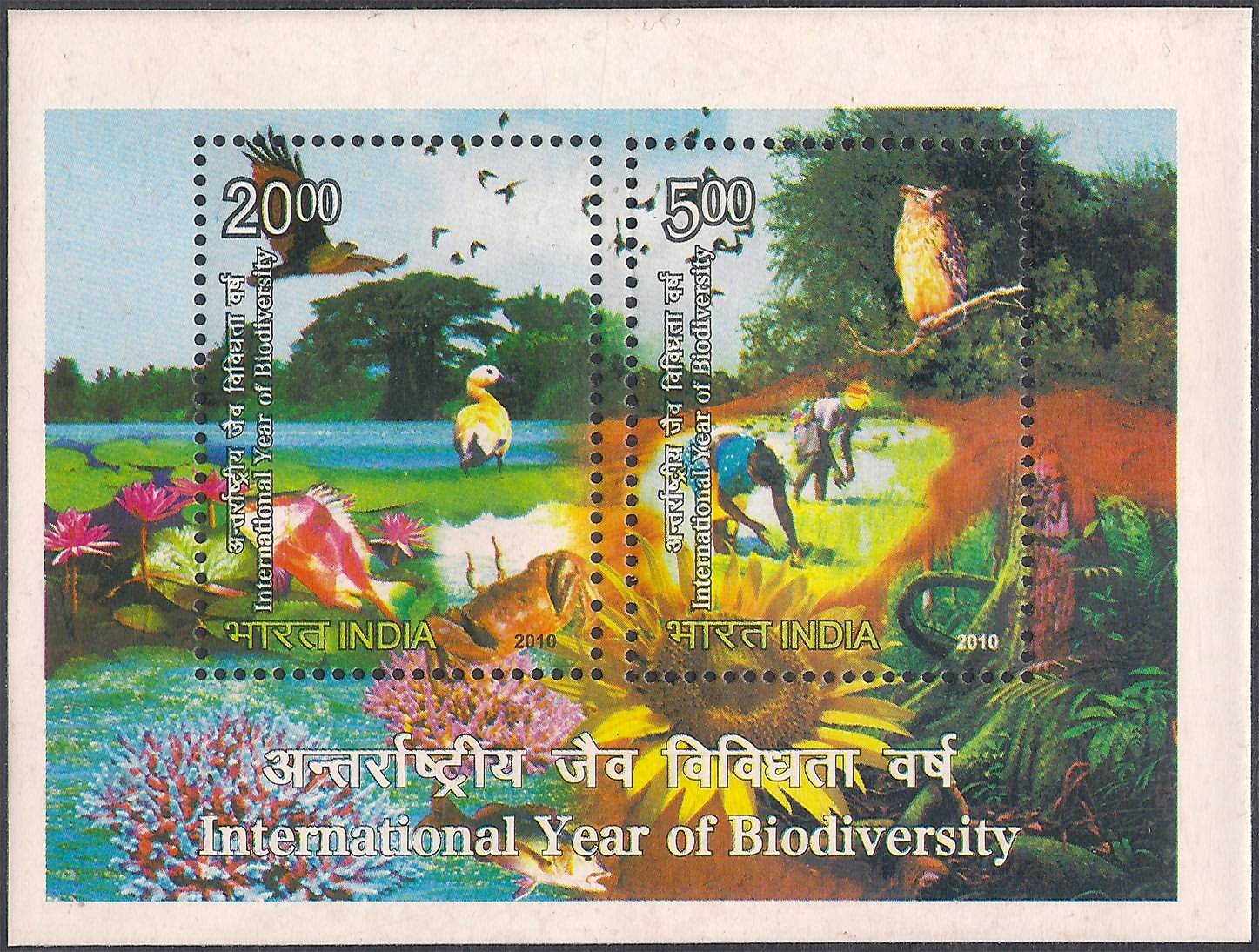
Technical Data
| Date of Issue | June 5, 2010 |
|---|---|
| Denomination | Rs. 25 |
| Quantity | 400,000 |
| Perforation | 13 |
| Printer | Security Printing Press, Hyderabad |
| Printing Process | Wet Offset |
| Watermark | No Watermark |
| Colors | Multicolor |
| Credit (Designed By) | Mr. Suresh Kumar |
| Catalog Codes |
Michel IN BL81 Stamp Number IN 2428a Stanley Gibbons IN MS2721 |
| Themes | Agriculture | Animals (Fauna) | Birds | Crustaceans | Environment Protection | Fishes | International Years | Plants (Flora) |
Stamps in this Miniature Sheet
Sustaining Life on Earth
Biodiversity refers to the incredible variety of life forms found within ecosystems, biomes, and across the entire planet. It encompasses all living organisms — plants, animals, microorganisms — and the ecosystems they form. Simply put, biodiversity represents the total diversity of life on Earth.
Biodiversity plays a vital role in maintaining ecological balance and supporting ongoing evolutionary processes. The survival of humankind depends directly and indirectly on the essential ecosystem services that biodiversity provides.
Ecological Functions of Biodiversity
Biodiversity supports several critical natural processes, including:
- Photosynthesis and pollination
- Transpiration and climate regulation
- Maintenance of atmospheric gas balance
- Hydrological cycles
- Chemical and nutrient cycling
- Soil formation and maintenance
- Waste decomposition and pest control
Beyond ecological functions, biodiversity also holds immense aesthetic, cultural, and recreational value, enriching human life in countless ways.
India – A Megadiverse Nation
India is recognized as one of the world’s megadiverse countries. Although it occupies only 2.4% of the global land area, India supports nearly 7–8% of the world’s recorded biodiversity.
The country’s vast range of physical features and climatic conditions has given rise to diverse ecosystems, including:
- Forests
- Grasslands
- Wetlands
- Coastal and marine systems
- Deserts
India’s forest ecosystems are particularly remarkable, ranging from temperate alpine forests in the Himalayas to tropical wet evergreen forests in the Western Ghats and Northeast. In fact, India has 16 major forest types, reflecting its ecological richness.
India is also one of the eight primary centres of origin of cultivated plants, making it exceptionally rich in agricultural biodiversity.
Threats to Biodiversity
Despite its richness, biodiversity is being lost at an alarming rate, largely due to human activities. Habitat destruction, ecosystem fragmentation, pollution, and overexploitation have caused many species to decline.
The loss of biodiversity weakens ecosystems and reduces their ability to withstand growing global challenges such as climate change, freshwater scarcity, food insecurity, and resource conflicts. Biodiversity loss is closely linked to many of the pressing issues of the 21st century, including sustainable agriculture, migration, and environmental degradation.
Protecting biodiversity is therefore essential for sustainable development, ecological resilience, and human welfare.
International Year of Biodiversity – 2010
The year 2010 was proclaimed the International Year of Biodiversity (IYB) by the United Nations General Assembly. Countries around the world, including India, observed this occasion to promote awareness about biodiversity conservation and encourage global action to safeguard life on Earth.
Miniature Sheet on Biodiversity
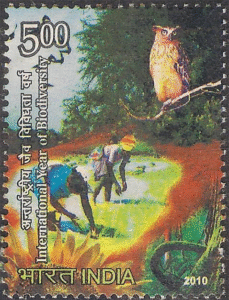
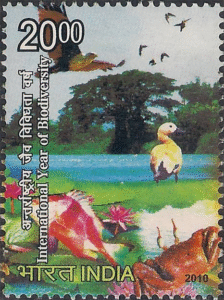
To mark World Environment Day and celebrate biodiversity, a Miniature Sheet consisting of two commemorative postage stamps was issued. These stamps highlight the importance of conserving biodiversity and reinforce the message of environmental protection and sustainable living.
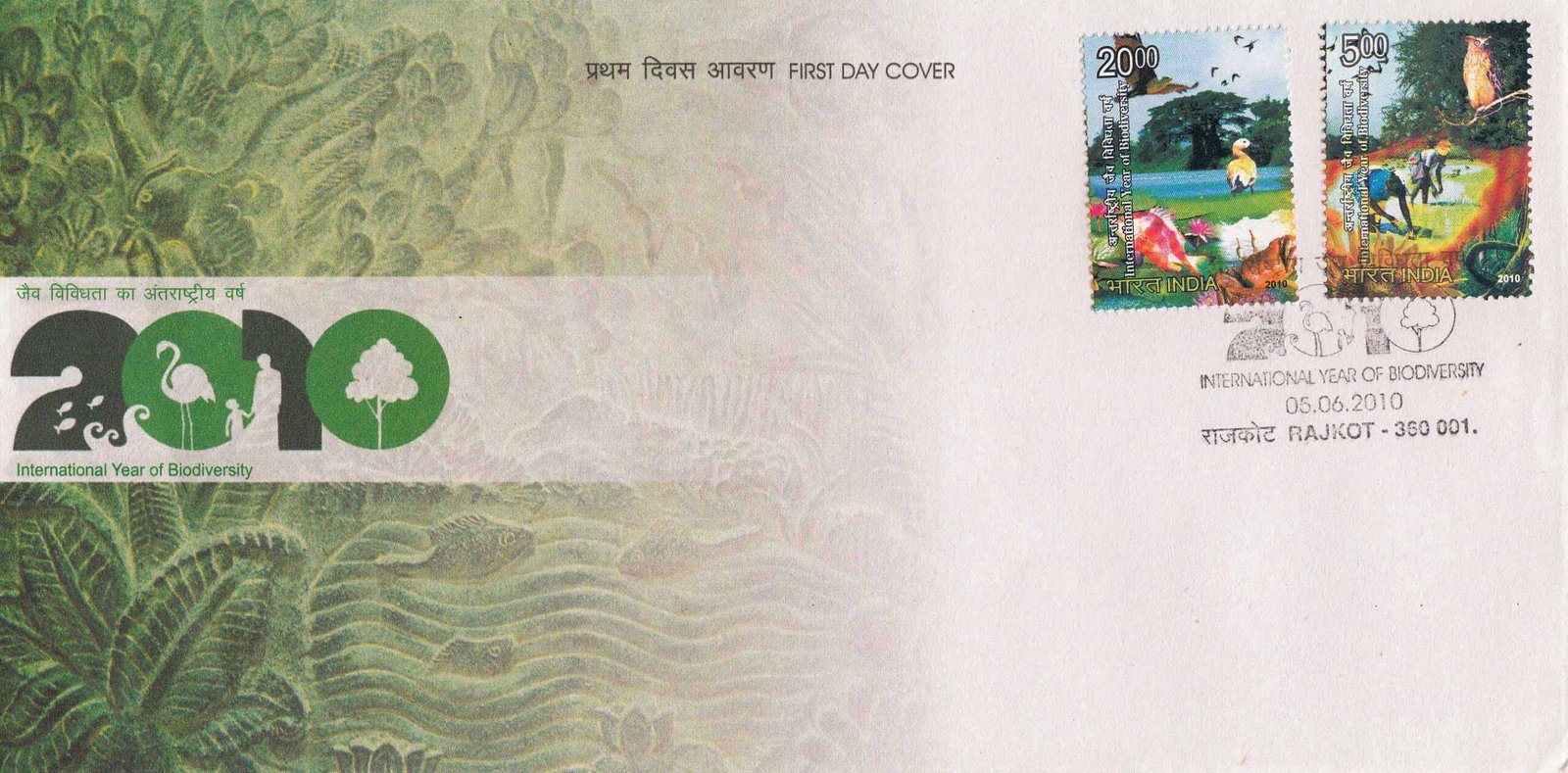
First Day Cover
Leave a Comment
You must be logged in to post a comment.