
Balarama

Technical Data
| Date of Issue | July 27, 2009 |
|---|---|
| Denomination | Rs. 5 |
| Quantity | 1,000,000 |
| Perforation | 13 |
| Printer | India Security Press, Nasik |
| Printing Process | Photo Gravure |
| Watermark | No Watermark |
| Colors | Multicolor |
| Credit (Designed By) | Sh. Sankha Samanta |
| Catalog Codes |
Michel IN 2385 Stamp Number IN 2334h Stanley Gibbons IN 2609 WADP Numbering System - WNS IN045.2009 |
| Themes | Poems |
The Powerful Avatar in the Dashavatara Tradition
Balarama is revered in Hindu tradition as the elder brother of Lord Krishna and is considered one of the significant incarnations of Lord Vishnu in certain versions of the Dashavatara. Known for his immense strength, simplicity, and devotion to dharma, Balarama occupies an important place in Vaishnav theology and devotional literature.
In many traditions, Balarama replaces Buddha as the eighth or ninth avatar of Vishnu, highlighting regional and philosophical variations within the Dashavatara concept.
Balarama in Geetagovinda and Dashavatara
The celebrated Sanskrit devotional masterpiece Gita Govinda, composed by saint poet Jayadeva, elaborates on the ten incarnations of Vishnu in the famous Dashavatara stotra. In certain traditional interpretations and temple traditions, Balarama is included among these incarnations.
In devotional poetry and performance traditions, Balarama is depicted as a symbol of agricultural prosperity and physical strength. His presence reflects the pastoral and rural roots of Krishna devotion, emphasizing harmony with nature and righteous living.
Symbolism and Attributes of Balarama
Balarama is commonly portrayed with:
- A plough (hala), symbolizing agriculture and fertility
- A mace, representing strength and protection
- Fair complexion and simple attire
- Serpent associations, linking him with Shesha
He is regarded as an embodiment of strength balanced with virtue. As a guardian of dharma, Balarama’s character reflects discipline, moral order, and devotion.
Cultural and Artistic Influence
The figure of Balarama has inspired:
- Temple sculptures and relief carvings
- Classical dance depictions in Dashavatara performances
- Devotional songs and kirtans
- Traditional paintings in various regions of India
Through works like Geetagovinda, the Dashavatara tradition gained widespread artistic expression, influencing literature, philosophy, visual arts, and performing arts across India.
Commemorative Stamp on Dashavatara
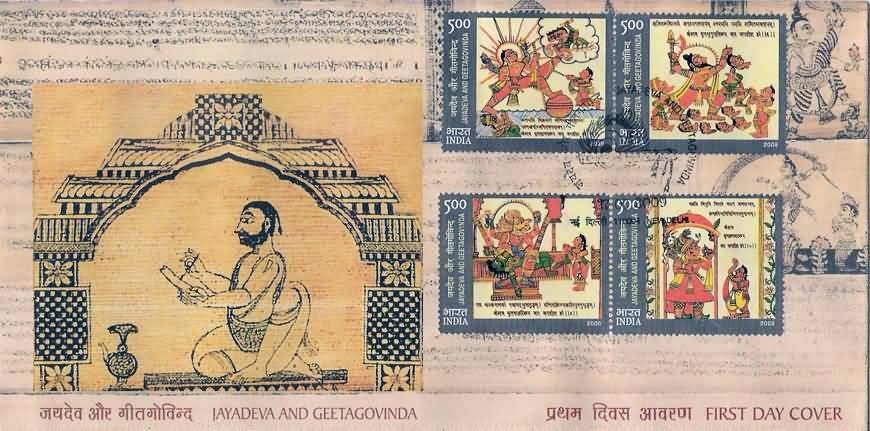
Recognizing the cultural and devotional significance of Jayadeva’s compositions, India Post issued a commemorative postage stamp dedicated to Jayadeva and Geetagovinda. The Dashavatara theme, which in certain traditions includes Balarama, is celebrated in this philatelic tribute.
Balarama: A Symbol of Strength and Righteousness
Balarama stands as a powerful representation of physical strength guided by moral integrity. As part of the broader Dashavatara tradition, he reflects the diversity and richness of Hindu belief systems.
Through devotional poetry, temple worship, artistic traditions, and commemorative stamps, Balarama’s legacy continues to inspire faith and cultural expression across generations.
First Day Cover
Leave a Comment
You must be logged in to post a comment.