
Buddha

Technical Data
| Date of Issue | July 27, 2009 |
|---|---|
| Denomination | Rs. 5 |
| Quantity | 1,000,000 |
| Perforation | 13 |
| Printer | India Security Press, Nasik |
| Printing Process | Photo Gravure |
| Watermark | No Watermark |
| Colors | Multicolor |
| Credit (Designed By) | Sh. Sankha Samanta |
| Catalog Codes |
Michel IN 2386 Stamp Number IN 2334i Stanley Gibbons IN 2610 WADP Numbering System - WNS IN046.2009 |
| Themes | Poems |
The Ninth Avatar in the Dashavatara Tradition
Gautama Buddha is revered not only as the founder of Buddhism but also as the ninth avatar of Lord Vishnu in the Dashavatara tradition of Hinduism. In Vaishnav philosophy, Buddha is regarded as a divine incarnation who appeared to guide humanity toward compassion, non-violence, and spiritual awakening.
The inclusion of Buddha in the Dashavatara reflects India’s rich spiritual inclusiveness and the harmonious blending of philosophical traditions.
Buddha in Geetagovinda and Dashavatara
The celebrated Sanskrit devotional masterpiece Gita Govinda, composed by saint poet Jayadeva, beautifully describes the ten incarnations of Vishnu in the famous Dashavatara stotra. Among them, Buddha is portrayed as a compassionate teacher who discouraged ritual animal sacrifice and emphasized mercy and ethical living.
Jayadeva’s lyrical verses transformed the Dashavatara theme into a profound devotional experience. The hymn describing Buddha highlights his role in spreading the message of kindness and non-violence, values that continue to resonate across cultures.
These sacred verses are sung in temples and performed in classical dance traditions, particularly in Odisha, where the Jagannath tradition integrates elements of Vaishnav devotion.
Spiritual Significance of Buddha as an Avatar
In the Dashavatara sequence, Buddha represents:
- Compassion and ahimsa (non-violence)
- Moral reform and spiritual enlightenment
- The redirection of humanity toward ethical conduct
His teachings emphasized the path of wisdom, meditation, and detachment from worldly suffering. In Vaishnav interpretation, the Buddha avatar appeared to reform misguided practices and restore balance in society.
Influence on Art, Literature and Performance
The figure of Buddha has profoundly influenced Indian art and culture, including:
- Temple sculptures and mural paintings
- Classical and devotional music
- Dance performances depicting Dashavatara themes
- Manuscript illustrations and pattachitra art
Through works like Geetagovinda, the Dashavatara tradition—including the Buddha avatar—became deeply embedded in India’s devotional and artistic expressions.
Commemorative Stamp on Dashavatara
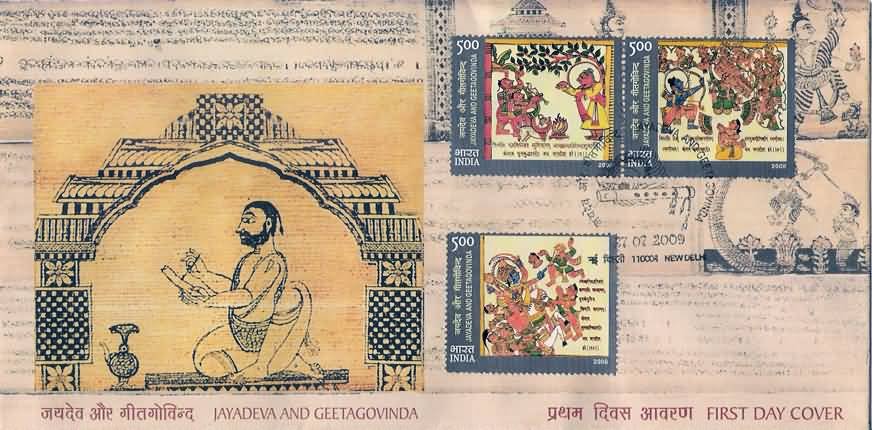
To honor the enduring legacy of Jayadeva and his devotional composition, India Post issued a commemorative postage stamp dedicated to Jayadeva and Geetagovinda. The Dashavatara theme, including the depiction of Buddha, is featured in this philatelic tribute.
Buddha: A Symbol of Compassion and Enlightenment
As both a historical spiritual leader and a revered avatar in Hindu belief, Buddha represents peace, wisdom, and transformation. His presence in the Dashavatara underscores the inclusive and evolving nature of Indian spirituality.
Through devotional poetry, temple traditions, and commemorative stamps, the legacy of Buddha continues to inspire millions across the world.
First Day Cover
Leave a Comment
You must be logged in to post a comment.