
Jayadeva
Technical Data
| Date of Issue | July 27, 2009 |
|---|---|
| Denomination | Rs. 5 |
| Quantity | 1,000,000 |
| Perforation | 13 |
| Printer | India Security Press, Nasik |
| Printing Process | Photo Gravure |
| Watermark | No Watermark |
| Colors | Multicolor |
| Credit (Designed By) | Sh. Sankha Samanta |
| Catalog Codes |
Michel IN 2389 Stamp Number IN 2334a Stanley Gibbons IN 2602 WADP Numbering System - WNS IN037.2009 |
| Themes | Poems |
The Celebrated Poet of Gita Govinda
Jayadeva was one of the most revered Sanskrit poets of medieval India, best known as the author of the devotional masterpiece Gita Govinda. His lyrical composition celebrating Lord Krishna and the Dashavatara tradition occupies a distinguished place in Indian literature, music, and devotional practice.
Jayadeva’s poetry is admired for its spiritual depth, musical elegance, and artistic refinement.
Life and Historical Background
Jayadeva is believed to have lived in the 12th century and is traditionally associated with Kenduli in present-day Odisha, though some accounts also link him to Bengal. He flourished during the reign of King Lakshmana Sena of the Sena dynasty.
Though historical details about his life remain limited, literary tradition portrays him as a devoted Vaishnava saint deeply immersed in Krishna bhakti. His wife, Padmavati, is often described as a gifted dancer who performed his compositions.
Gita Govinda: A Devotional Masterpiece
The Gita Govinda is a lyrical Sanskrit poem that vividly depicts the divine love of Radha and Krishna. Structured into twelve cantos with melodious songs (ashtapadis), it blends devotion (bhakti), classical poetics, and musical rhythm.
The opening section of Gita Govinda includes the famous Dashavatara Stotra, in which Jayadeva glorifies the ten incarnations of Vishnu — from Matsya and Kurma to Rama and Krishna. Through this hymn, he contributed significantly to popularizing the Dashavatara theme across India.
The text remains integral to temple rituals, especially in the Jagannath Temple tradition of Odisha, and continues to inspire classical dance forms such as Odissi and Bharatanatyam.
Literary and Cultural Influence
Jayadeva’s contribution extends beyond devotional poetry. His work influenced:
- Sanskrit and regional bhakti literature
- Classical Indian music traditions
- Temple performances and ritual singing
- Miniature painting traditions depicting Krishna Leela
- Dance dramas based on the Dashavatara
The musical quality of Gita Govinda ensured that it was not merely read but sung and performed, making it a living literary tradition.
Spiritual Philosophy
Jayadeva’s poetry emphasizes:
- Divine love as the highest form of devotion
- Union of the individual soul with the Supreme
- Emotional surrender (bhakti) as a spiritual path
- The harmony of art and spirituality
His depiction of Radha-Krishna devotion blends sensual imagery with deep mysticism, elevating human love into a metaphor for divine union.
Commemorative Stamp on Jayadeva
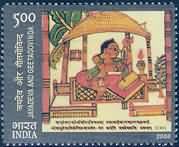
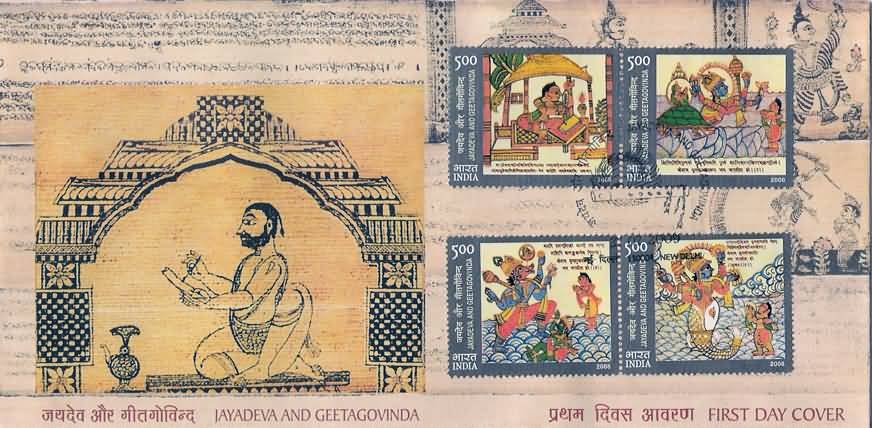
To honor his immense literary and spiritual contribution, India Post issued commemorative postage stamp dedicated to Jayadeva and the Dashavatara theme of Gita Govinda. These philatelic tributes celebrate his enduring impact on India’s devotional and artistic heritage.
The commemorative stamps serve as cultural reminders of his timeless poetic legacy.
Jayadeva’s Enduring Legacy
Jayadeva remains one of India’s most influential devotional poets. Through Gita Govinda, he bridged literature, music, dance, and spirituality in a way few poets have achieved.
Centuries after its composition, his work continues to resonate in temples, classical performances, and philatelic commemorations — a testament to the lasting power of devotion expressed through art.
First Day Cover
Leave a Comment
You must be logged in to post a comment.