
Kurma the Tortoise
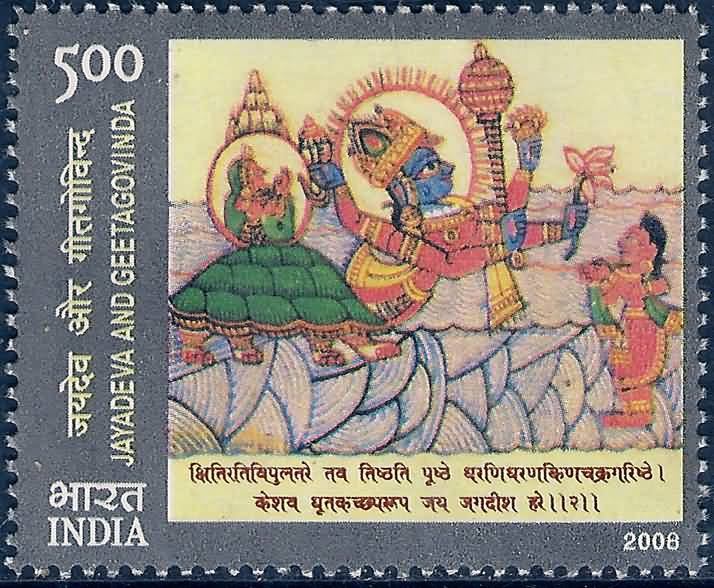
Technical Data
| Date of Issue | July 27, 2009 |
|---|---|
| Denomination | Rs. 5 |
| Quantity | 1,000,000 |
| Perforation | 13 |
| Printer | India Security Press, Nasik |
| Printing Process | Photo Gravure |
| Watermark | No Watermark |
| Colors | Multicolor |
| Credit (Designed By) | Sh. Sankha Samanta |
| Catalog Codes |
Michel IN 2390 Stamp Number IN 2334b Stanley Gibbons IN 2603 WADP Numbering System - WNS IN039.2009 |
| Themes | Poems |
The Divine Tortoise in Dashavatara
Kurma, the second incarnation of Lord Vishnu in the sacred Dashavatara tradition, is revered as the divine Tortoise who supported the churning of the cosmic ocean. The Kurma avatar symbolizes stability, patience, and the foundation required to restore balance in the universe.
This incarnation demonstrates how divine strength often works silently, providing support during moments of great transformation.
The Legend of Kurma and Samudra Manthan
According to Hindu mythology, the gods (Devas) and demons (Asuras) sought the nectar of immortality (Amrita) hidden within the cosmic ocean. To obtain it, they undertook the great churning known as Samudra Manthan.
Mount Mandara was used as the churning rod, and the serpent Vasuki served as the rope. However, the mountain began to sink into the ocean due to its immense weight. At this critical moment, Vishnu incarnated as Kurma, the giant tortoise, and supported the mountain on his back.
With this divine foundation, the churning continued, ultimately producing Amrita and several other celestial treasures, restoring strength and balance to the gods.
Kurma in Geetagovinda and Dashavatara
The revered Sanskrit devotional masterpiece Gita Govinda, composed by Jayadeva, celebrates the Dashavatara of Vishnu, including the Kurma incarnation. In the Dashavatara Stotra, Jayadeva poetically praises the divine tortoise who upheld Mount Mandara during the cosmic churning.
Through devotional poetry, Kurma is portrayed as the silent yet essential force behind the restoration of cosmic harmony.
The hymns from Gita Govinda have been sung in temples and incorporated into classical dance traditions, strengthening the cultural and spiritual legacy of the Dashavatara.
Symbolism of the Kurma Avatar
The Kurma incarnation represents:
- Stability during times of upheaval
- Patience and endurance
- The importance of a strong foundation
- Cooperation between opposing forces for a greater purpose
Kurma teaches that great achievements require support, perseverance, and balance.
Influence on Indian Art and Tradition
The Kurma avatar has been depicted in temple carvings, manuscript paintings, and classical performances illustrating the Samudra Manthan episode. Sculptural panels across India portray the tortoise form beneath Mount Mandara, symbolizing divine support.
This imagery continues to inspire spiritual reflection on resilience and cosmic balance.
Commemorative Stamp on Dashavatara
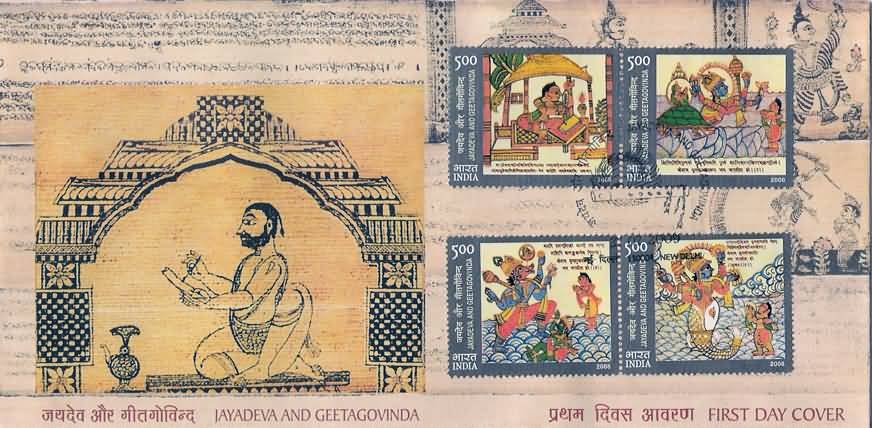
To honor India’s spiritual and literary heritage, India Post issued commemorative postage stamp celebrating Jayadeva and the Dashavatara theme of Gita Govinda. Kurma, as one of the principal incarnations of Vishnu, is an important part of this philatelic tribute.
Kurma: The Eternal Foundation of Balance
Kurma the Tortoise remains a powerful symbol of steadiness and divine support. Celebrated in Gita Govinda, temple art, sacred narratives, and commemorative stamps, the Kurma avatar continues to inspire faith and resilience.
Through silent strength and unwavering support, Kurma reminds humanity that stability is the foundation upon which cosmic harmony is restored.
First Day Cover
Leave a Comment
You must be logged in to post a comment.