
Matsya the Fish

Technical Data
| Date of Issue | July 27, 2009 |
|---|---|
| Denomination | Rs. 5 |
| Quantity | 1,000,000 |
| Perforation | 13 |
| Printer | India Security Press, Nasik |
| Printing Process | Photo Gravure |
| Watermark | No Watermark |
| Colors | Multicolor |
| Credit (Designed By) | Sh. Sankha Samanta |
| Catalog Codes |
Michel IN 2392 Stamp Number IN 2334d Stanley Gibbons IN 2605 WADP Numbering System - WNS IN038.2009 |
| Themes | Poems |
The First Avatar of Vishnu in Dashavatara
Matsya, the first incarnation of Lord Vishnu in the sacred Dashavatara tradition, is worshipped as the divine Fish who saved humanity and sacred knowledge from a great cosmic deluge. The Matsya avatar symbolizes protection, guidance, and the preservation of life during times of catastrophic change.
As the earliest of the ten incarnations, Matsya represents the beginning of divine intervention to restore balance in creation.
The Legend of Matsya Avatar
According to Hindu mythology, King Satyavrata (later known as Vaivasvata Manu) discovered a tiny fish seeking protection. The fish warned him of an impending flood that would submerge the world. As the fish grew rapidly in size, it revealed itself as Vishnu.
Matsya instructed Manu to build a great boat and gather the seeds of life, sages, and sacred scriptures. When the deluge arrived, Matsya appeared in a gigantic form, towing the boat safely through turbulent waters and protecting creation from destruction.
In some traditions, Matsya also recovered the stolen Vedas from a demon, restoring sacred knowledge to humanity.
Matsya in Geetagovinda and Dashavatara
The revered Sanskrit devotional masterpiece Gita Govinda, composed by Jayadeva, celebrates the Dashavatara of Vishnu, beginning with Matsya. In the Dashavatara Stotra, Jayadeva poetically glorifies the fish incarnation who navigated the cosmic waters and safeguarded the world.
Through devotional poetry, Matsya is portrayed as the divine guide who protects both life and sacred wisdom during times of chaos.
The verses of Gita Govinda continue to be sung in temples and performed in classical dance traditions, preserving the spiritual essence of the Dashavatara.
Symbolism of Matsya Avatar
The Matsya incarnation represents:
- Protection during catastrophe
- Preservation of sacred knowledge
- Divine guidance through uncertainty
- Renewal and continuity of life
Matsya teaches that even in the midst of destruction, divine grace ensures survival and new beginnings.
Influence on Indian Art and Culture
Matsya has been depicted in temple carvings, manuscript illustrations, miniature paintings, and classical dance dramas portraying the great deluge. Artistic representations often show the fish form guiding Manu’s boat across vast waters.
This imagery reflects humanity’s enduring belief in divine protection and renewal.
Commemorative Stamp on Dashavatara
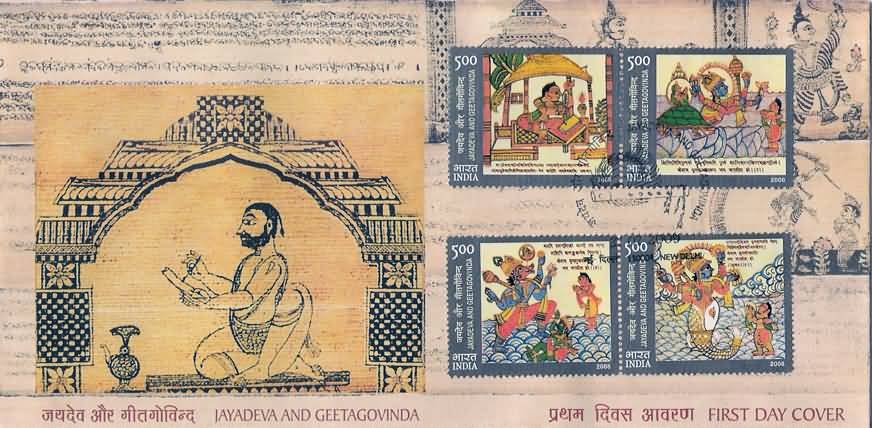
To honor India’s rich spiritual and literary heritage, India Post issued commemorative postage stamp celebrating Jayadeva and the Dashavatara theme of Gita Govinda. Matsya, as the first avatar of Vishnu, holds a prominent place in this philatelic tribute.
Matsya: The Eternal Guide Through Change
Matsya the Fish stands as a timeless symbol of preservation and divine guidance. Celebrated in Gita Govinda, sacred narratives, temple art, and commemorative stamps, the Matsya avatar continues to inspire faith and resilience.
Through protection and wisdom, Matsya reminds humanity that even the greatest storms can lead to renewal and hope.
First Day Cover
Leave a Comment
You must be logged in to post a comment.