
Vamana the Dwarf

Technical Data
| Date of Issue | July 27, 2009 |
|---|---|
| Denomination | Rs. 5 |
| Quantity | 1,000,000 |
| Perforation | 13 |
| Printer | India Security Press, Nasik |
| Printing Process | Photo Gravure |
| Watermark | No Watermark |
| Colors | Multicolor |
| Credit (Designed By) | Sh. Sankha Samanta |
| Catalog Codes |
Michel IN 2393 Stamp Number IN 2334e Stanley Gibbons IN 2606 WADP Numbering System - WNS IN042.2009 |
| Themes | Poems |
The Divine Incarnation in Dashavatara
Vamana, the fifth avatar of Lord Vishnu in the Dashavatara tradition, is revered as the divine dwarf who restored cosmic balance through wisdom and humility. Known for his symbolic three strides that measured the universe, Vamana represents the triumph of righteousness over pride and ego.
The story of Vamana highlights how divine intelligence and humility can overcome even the greatest worldly power.
Vamana in Geetagovinda and Dashavatara
The celebrated Sanskrit devotional masterpiece Gita Govinda, composed by saint poet Jayadeva, beautifully narrates the ten incarnations of Vishnu in the famous Dashavatara stotra. In this hymn, Vamana is glorified as the dwarf Brahmin who subdued the mighty king Bali through divine strategy rather than force.
Jayadeva’s lyrical verses portray Vamana’s cosmic transformation from a small ascetic to the vast Trivikrama form, covering heaven and earth in two strides and leaving no space for the third. King Bali, in devotion and humility, offered his own head, symbolizing surrender to divine will.
The Dashavatara hymns describing Vamana are sung in temples and performed in classical dance traditions across India, especially in regions deeply influenced by Vaishnav devotion.
Symbolism and Spiritual Meaning of Vamana
Vamana symbolizes:
- Humility as a form of divine strength
- The restoration of dharma
- The limitation of ego and pride
- The protection of cosmic order
His incarnation demonstrates that righteousness does not always require physical force; wisdom and moral authority can achieve greater victories.
Influence on Art, Dance and Devotional Traditions
The story of Vamana has inspired:
- Temple sculptures depicting the Trivikrama form
- Classical dance dramas portraying the Bali episode
- Devotional songs and kirtans
- Traditional manuscript and textile paintings
Through works like Geetagovinda, the Dashavatara theme — including Vamana — gained immense popularity and became deeply embedded in India’s cultural and artistic traditions.
Commemorative Stamp on Dashavatara
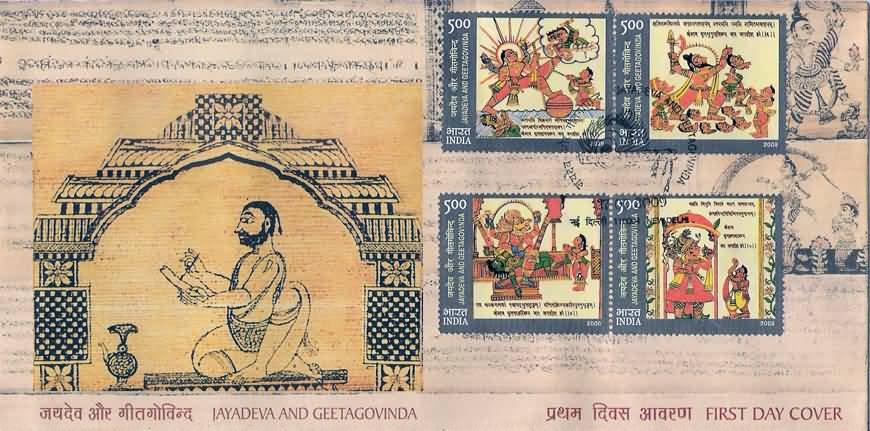
To honor the enduring cultural legacy of Jayadeva and his composition Geetagovinda, India Post issued a commemorative postage stamp dedicated to Jayadeva and the Dashavatara theme. Vamana, as one of the principal avatars, is represented in this philatelic tribute.
Vamana: The Eternal Lesson of Humility
Vamana the Dwarf remains a powerful symbol of humility, wisdom, and divine justice. As part of the Dashavatara tradition immortalized in Geetagovinda, his story continues to inspire faith, artistic expression, and moral reflection across generations.
Through sacred literature, temple rituals, classical performances, and commemorative stamps, the legacy of Vamana endures as a timeless message of righteousness prevailing over pride.
First Day Cover
Leave a Comment
You must be logged in to post a comment.